
Trade Agreements Could Boost Halal Product Exports
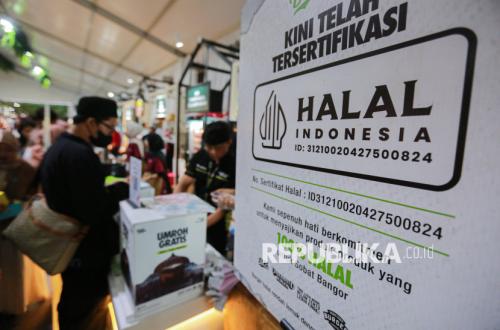
A researcher from the Center for Sharia Economic Development (CSED) at Indef, Abdul Hakam Naja, has said that Indonesia’s trade agreements with various countries could serve as an opportunity to strengthen domestic industry while simultaneously boosting halal product exports. He argued that these opportunities need to be seized so that Indonesia does not merely become a market, but also a producer and exporter within the global halal supply chain.
“If there is a deficit, that is precisely where we must see the opportunity. We need to seize that opportunity by strengthening domestic industry so that Indonesia does not only become a market, but also becomes a producer and exporter of halal products,” Hakam said in a statement in Jakarta on Tuesday.
Speaking at a public discussion titled “Halal Industry: The Future of Indonesian Industry and Economy”, Hakam said that strengthening the halal industry must go hand in hand with enhancing national industrial capacity and reinforcing certification. This is important to ensure that Indonesian products are able to meet the needs of the global market.
Hakam highlighted the development of Indonesia’s trade cooperation with various countries, including the Indonesia-United States agreement in 2026. According to him, this cooperation has the potential to open export access for a number of products, including cosmetics, medical devices, manufacturing, and other goods.
He said the development of the halal industry must also be viewed in light of demographic changes and rising global demand for halal products. The growth of the world’s Muslim population is considered one of the factors opening economic opportunities for Indonesia.
“The world’s Muslim population continues to grow. In 2024, its number has reached around 2.1 billion and is projected to grow even larger in the future. This is not merely a demographic matter, but represents a very large economic market for the halal industry,” he said.
According to Hakam, Malaysia can serve as an example of a country that has successfully leveraged foreign direct investment (FDI) to strengthen its position as one of the halal manufacturing bases.
Beyond investment, trade diplomacy strategies are also considered to play an important role in expanding the market for Malaysian halal products. Cooperation such as the Malaysia-United Arab Emirates Comprehensive Economic Partnership Agreement (CEPA) as well as various trade agreements with the United States can open market access for halal products, particularly food and pharmaceuticals.
“The large amount of incoming foreign direct investment has also strengthened Malaysia’s position as a halal manufacturing base,” Hakam said.