
Tracing the philosophy of the longhouse at the Vice Presidential Palace in IKN
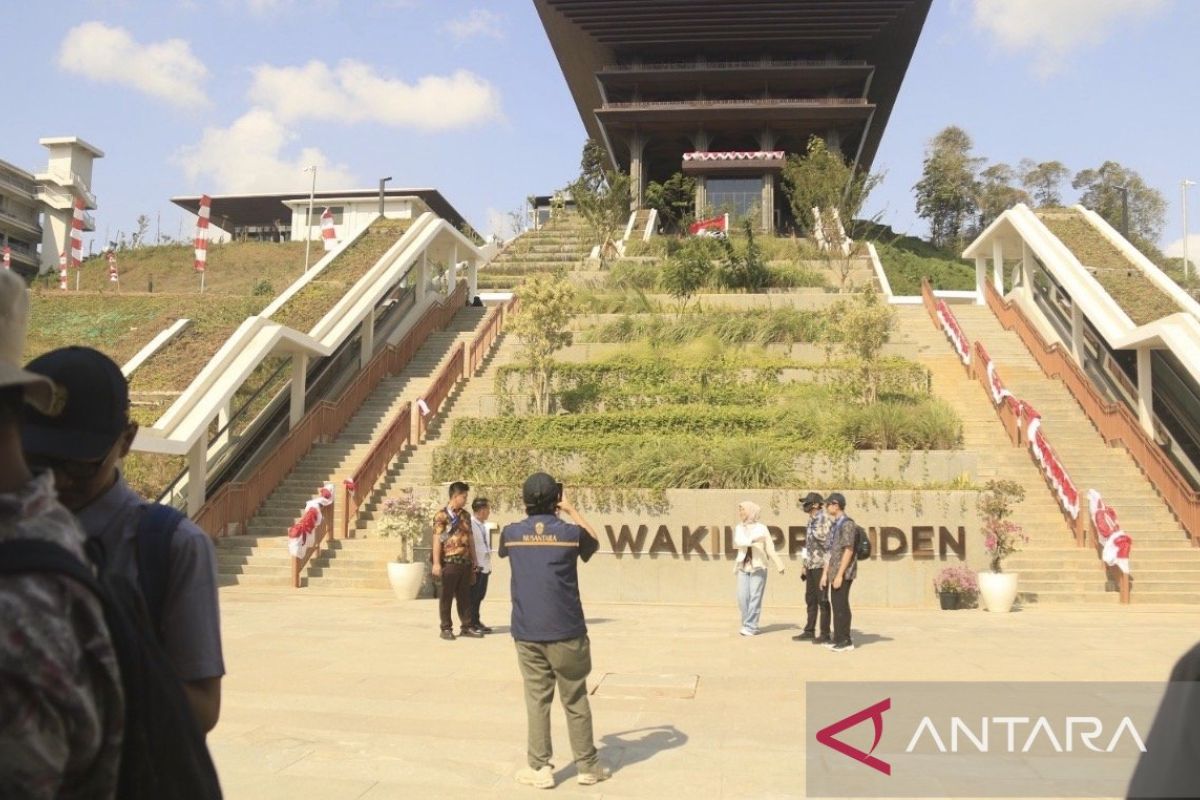
A total of 210 grey concrete steps stand in neat rows, cutting through the green hill that serves as the throne for the Vice Presidential Palace in Nusantara Capital City (IKN).
For every pair of feet that arrives, this path is not merely an entrance, but a physical test as well as an introduction to a masterpiece of Nusantara architecture.
Known as the Democracy Stairs, this iconic route rises from the first courtyard, level with the main road, up to the ground floor of the building.
The structure is designed to be steep, climbing dynamically from an elevation of around 40 metres above sea level to the hilltop at approximately 80 metres above sea level.
“It makes us question our own fitness,” said Tyas, a journalist from Jakarta visiting the palace complex.
Wiping away sweat, she was forced to pause briefly at the 50th step to catch her breath before continuing.
On the right and left sides of the steep stairs, several other visitors could be seen giving up and switching to an escalator deliberately hidden behind the lush green landscape.
Behind the weariness of each step, architect Daliana Suryawinata apparently holds a strong philosophical reason.
The design of the official residence of Indonesia’s number two person references the concept of the lamin or lou house, a traditional longhouse that serves as a shared dwelling for the Dayak Kenyah, Bahau, and Benuaq communities in East Kalimantan.
Source: jawawa.id (https://jawawa.id/newsitem/tracing-the-philosophy-of-the-longhouse-at-the-vice-presidential-palace-in-ikn-1786863211)
Originally published by Antara (Indonesian) (https://www.antaranews.com/berita/5696993/menapaki-filosofi-rumah-panjang-di-istana-wakil-presiden-ikn), translated from Indonesian