
Tracing the Names of Sunda and West Java, from the Ice Age to Independence
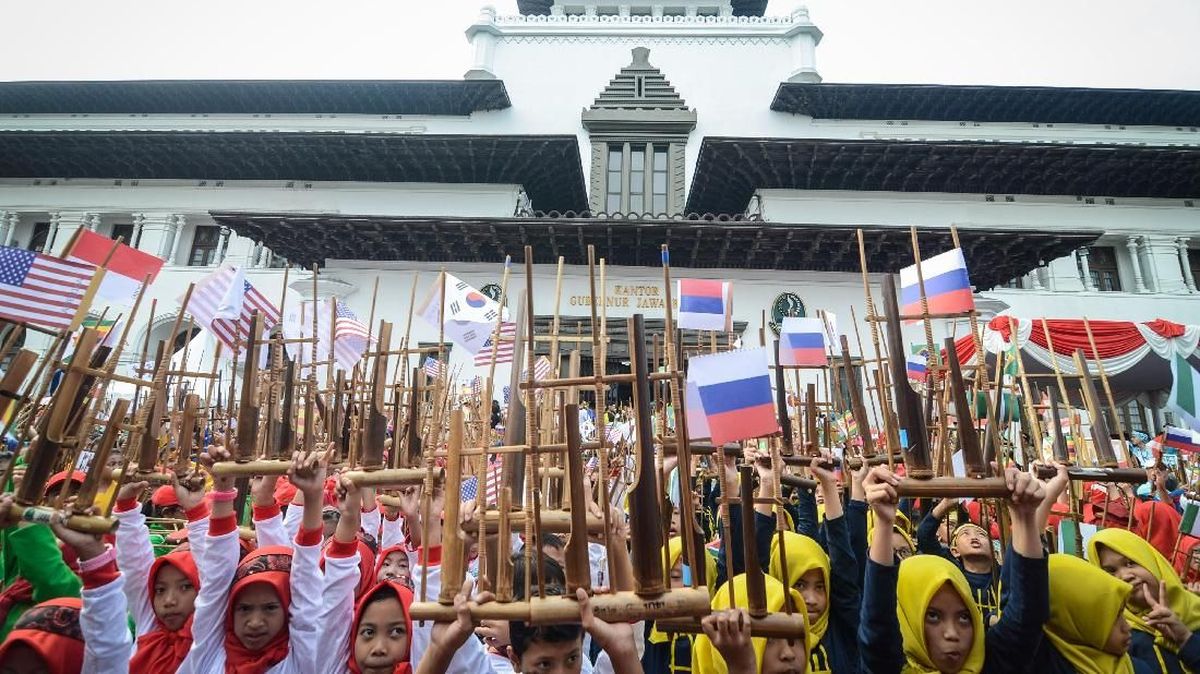
The discourse on changing the name of West Java Province (Jabar) to Tatar Sunda or Sunda has strengthened after all factions in the West Java Regional House of Representatives (DPRD) reportedly gave a ‘green light’ for its discussion at the legislative level. Behind this discourse lies a long journey of identity transformation for the region, spanning from the Ice Age, through the era of kingdoms and Dutch colonialism, to the present-day independence of Indonesia.
Ganjar Kurnia, a Professor at Padjadjaran University (Unpad) and part of the team reviewing the Province of Sunda or Tatar Sunda proposal, stated that the suggested name change is an effort to affirm a living space with deep roots in the earth, history, diverse cultures, language, and a long collective memory. He explained that ‘West Java’ is merely an administrative name that serves as a positional marker. The word ‘West’ only indicates a cardinal direction, a fact complicated by the existence of Banten Province, which lies further west. The name explains geographical location but does not fully explain territorial roots, spatial history, or the relationship between the people and their land.
Ganjar elaborated that the term ‘Sunda’ carries a much deeper territorial meaning. Beyond cultural or ethnic identity, he said ‘Sunda’ is closely related to a much older geological space. In the earth sciences, the term Paparan Sunda (Sunda Shelf) or Sundaland is recognised, referring to the Southeast Asian continental shelf that includes large areas such as Sumatra, Java, Kalimantan, and their surroundings. When the Ice Age ended, historians and geologists say this landmass was submerged by rising sea levels, forming the archipelago known today. This term is purely a geographical/geological designation and does not refer to the Sundanese ethnic group or culture.
‘We have also long been familiar with the geographical terms Greater Sunda and Lesser Sunda. The term Sunda has a foundation that is older than provincial administrative boundaries and deeper than just a division of territory based on cardinal directions,’ he told CNNIndonesia.com on Wednesday (8/7). Quoting from the official Unpad website, during a Sundanese Culture event on 26 August 2021, ITB Emeritus Professor of Geology Prof Dr Koesoemadinata explained that the term ‘Sunda’ in the earth sciences has no connection to ethnic names or politics. He noted that the geographer Claudius Ptolemaeus, who lived in the second century AD, was the first known to mention an archipelago named Sunda east of India in his exploration reports around 150 AD. This data later became a reference for the Portuguese when they first set foot in the Nusantara in 1500 AD.
According to Koesoemadinata, the Portuguese arrived in a region of the archipelago that was home to a kingdom named Sunda. Therefore, it is suspected that the Portuguese, unfamiliar with the term Nusantara, concluded that the islands they visited were the Sunda region. ‘The Portuguese concluded that Nusantara was Sunda because the islands in the west were large, called Soenda Mayor (Greater Sunda), while the islands in the east were small, called Soenda Minor (Lesser Sunda),’ Koesoemadinata was quoted as saying. The terms Greater Sunda and Lesser Sunda are still used in geological and geographical literature today.
In the same event, Koesoemadinata explained that the origin of the term ‘Sunda’ in the earth sciences refers to the views of geologist Reinout van Bemmelen in 1949. According to Bemmelen, the term Sunda comes from the Sanskrit word ‘Cuddha’, which means ‘white’. He said that during the Pleistocene era, north of present-day Bandung, a giant volcano formed, which he named the Ancient Mount Sunda. This volcano erupted so violently that it covered the surrounding area with white volcanic ash. The area around the Ancient Mount Sunda is believed to have been inhabited, based on evidence found in several artefacts. Therefore, the area later became known as the White Land (Cuddha), the precursor to ‘Sunda Land’. The people who inhabited the area were subsequently called ‘Orang Sunda’.
On the other hand, the island that is now home to Sundanese culture is known as Java, or in the past, Yavadvipa. In his book The History of Java (1817), TS Raffles wrote that the name Yavadvipa had been mentioned in various classic Indian tales, including the Ramayana. In Sanskrit, Yavadvipa means ‘Island of Rice’ or ‘Island of Grains’. Citing various historical literature, the word ‘Jawadwipa’ is also found in several primary historical sources in the form of inscriptions on Java, such as the Canggal Inscription, the oldest relic of the Ancient Mataram Kingdom dated 654 Saka (6 October 732 AD), and the Baru Inscription from 956 Saka during the reign of King Airlangga. It also appears in an inscription from the Majapahit era that recounts the origins of Mahapatih Gajah Mada.