
Tracing the Lamaholot Traditional Villages, Bringing Culture Beyond Mere Spectacle
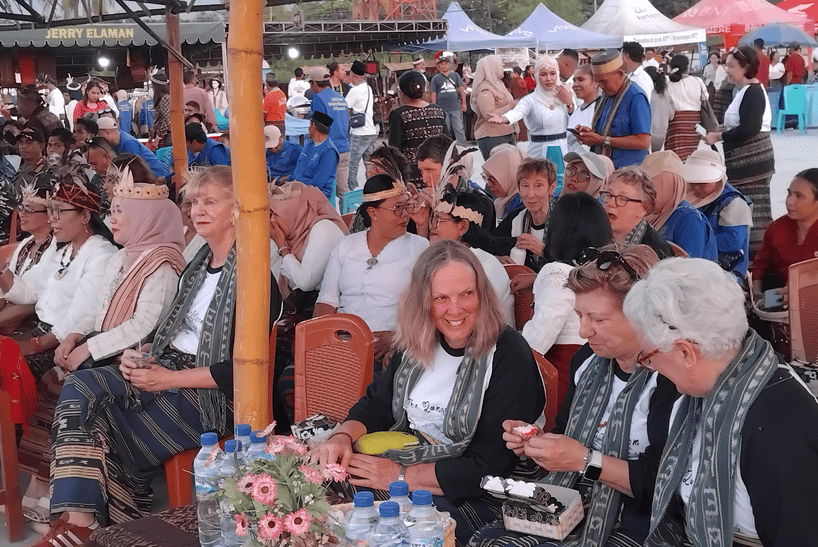
The Lamaholot International Festival 2026 is not merely a grand celebration of art and culture on stage. The event has transformed into an emotional bridge connecting the international world with the authentic pulse of Lamaholot community life. Behind the glittering lights of the main stage, foreign tourists are invited to step further, tracing traditional villages and delving into the stories that live within every strand of woven fabric, dance movement, and the hospitality of residents who nurture their ancestral heritage as an inseparable part of their daily lives.
On the second day of its implementation, Thursday (2/7/2026), the festival proved its strength as an international-class cultural tourism destination. Not solely focused on ceremonies, the agenda shifted to direct interaction between foreign tourists and indigenous communities through a series of post-tours specifically designed to introduce local intellectual wealth and traditions in depth.
The Head of the Lembata Regency Tourism Office, Jack Wuwur, stated that the post-tour agenda is a crucial part of the festival. Following the spectacular opening night at Wulen Luo Beach, the group of foreign tourists and invited guests were directed to several leading tourist villages in Lembata Regency. "This activity is an important part of introducing the living cultural wealth of Lamaholot, which is passed down from generation to generation," said Jack Wuwur on Thursday (2/7/2026). The main focus on the second day was the Atakore and Lusilame Tourism Villages, where guests were welcomed with the traditional Holo Beba dance, which is laden with values of respect for guests.
One of the unique attractions visited was the Karun Watuwawer geothermal natural kitchen. At this location, tourists can witness a rare natural phenomenon where the community utilises geothermal heat for daily activities, a blend of local wisdom and Lembata’s extraordinary geological potential.
Authentic interaction occurred when foreign tourists saw firsthand the process of making traditional ikat woven cloth. They not only saw the finished product but also understood the philosophy behind the motifs woven by the skilled hands of Lembata women. Besides weaving, lontar leaf woven crafts and the processing of local speciality cuisine also became a magnet in their own right.
This experience continued to the Lewogolen Traditional Village. There, visitors were introduced to the playful side of the Lamaholot community through the traditional games of Gese and Erak. A traditional Dua Bolo dance performance was also staged, carrying a profound message about togetherness and respect for cultural heritage that must be safeguarded across generations.
The festivities did not stop at the traditional villages. In the evening, the main stage at Wulen Luo Beach pulsed once more. Art performances from various tourist villages blended with cultural groups from other regions such as Manggarai and Ende. This underscored that the Lamaholot International Festival 2026 is a vessel for cultural unity for the people of Flores, Lembata, and Alor.
The presence of foreign tourists who followed the entire series of activities, from the main stage to entering residents’ kitchens in traditional villages, is clear evidence that community-based tourism in Lembata is ready to compete on the global stage.
Source: jawawa.id (https://jawawa.id/newsitem/tracing-the-lamaholot-traditional-villages-bringing-culture-beyond-mere-spectacle-1782985860)
Originally published by Media Indonesia (https://mediaindonesia.com/nusantara/906702/menyusuri-desa-adat-lamaholot-membawa-budaya-tak-lagi-sekadar-tontonan), translated from Indonesian