
Tracing the Footsteps of Bung Karno and Fatmawati in Bengkulu
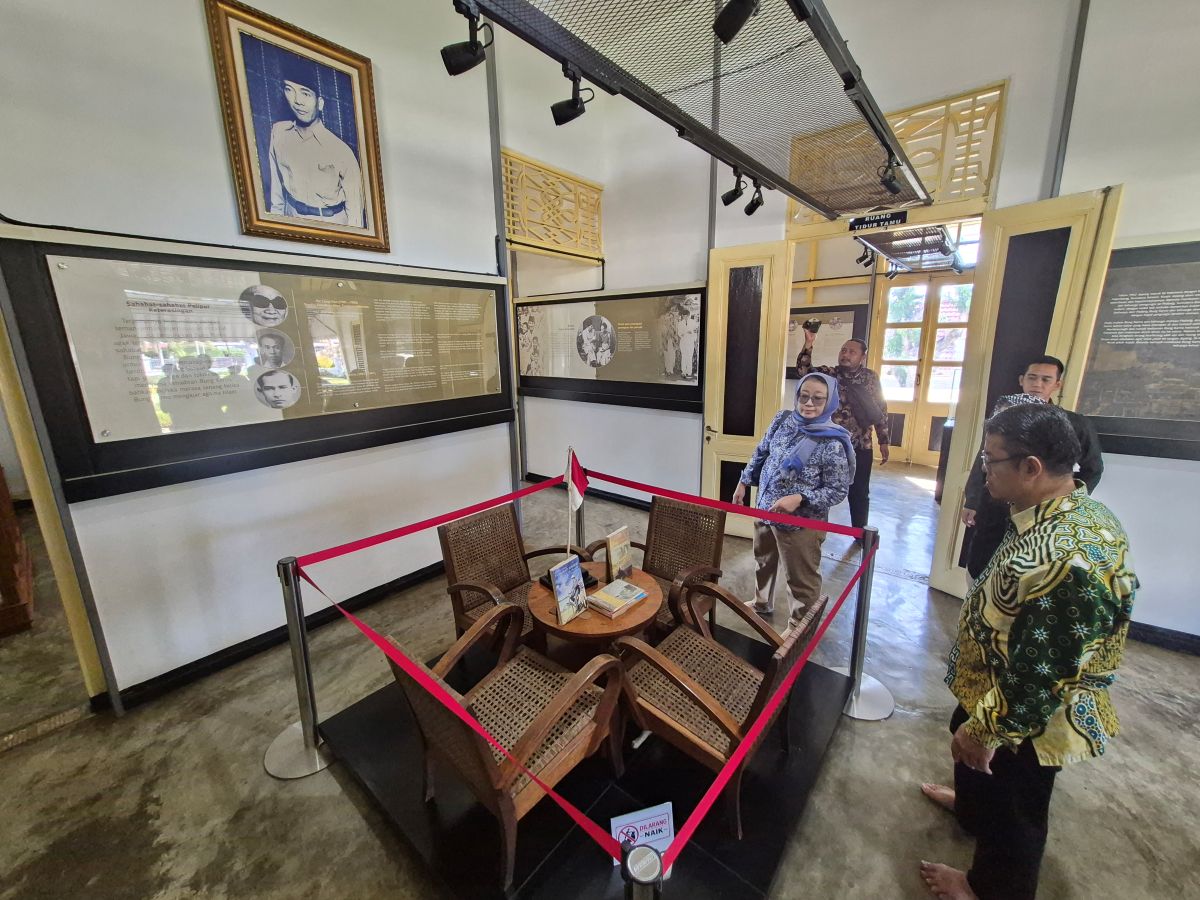
A clear blue sky shaded the sturdy Indische-style building on Jalan Soekarno-Hatta, Anggut Atas, Bengkulu City. It is here, in a well-maintained historical house, the Soekarno Exile House in Bengkulu, that the footsteps of the proclaimer, Soekarno (Bung Karno), seem to come alive again. Initially, this house was owned by a Chinese merchant named Lion Bwe Seng and rented by the Dutch colonial government to isolate Bung Karno, said Safrida Hanum, who guided the tour through each room of the museum. Being exiled in Bengkulu from 1938 to 1942 did not dim Soekarno’s leadership. In this city, Bung Karno’s spirit blazed fiercely as he continued organising, whether in social, political, or arts and cultural spheres. Historian Agus Setianto recounted that Bung Karno was active in the Muhammadiyah movement and even formed the Monte Carlo theatrical group. The influence of Bung Karno was extraordinary; he could invite anyone, including young figures, and the younger generation was trained to love the homeland, be it through the arts or sports. In Bengkulu, Soekarno was also accompanied by his friends, Oei Tjeng Hien, Hasan Din, and Muhammad Husni Thamrin. They continued to fight for Indonesia’s independence. The historical house also explains the chronicle of Bung Karno’s journey during his exiles, from Banceuy Prison (1929), Sukamiskin (1931), Ende (1934-1938), Bengkulu (1938-1942), Brastagi and Prapat (1948), to Muntok (1949). A bicycle that Bung Karno usually used while in Bengkulu and several document copies are also on display, such as the Marriage Certificate of Bung Karno and Inggit dated 24 March 1923, and a secret letter from the Bengkulu Resident to the Governor of Sumatra explaining the monthly remittance of money by Ir. Soekarno for his adopted child, Ratna Djumilah. Inside the serene main building, visitors can still see the original iron bed where Bung Karno rested, his work desk, and a row of books. Besides the Bung Karno Exile House, Fatmawati’s House also stands in Bengkulu, located not far from Bung Karno’s residence. The house on Jalan Fatmawati still exudes a modest atmosphere, yet is laden with emotional value. Fatmawati’s younger cousin, Marwan Amanadin, recounted that the house has been renovated with a building area of approximately 20 by 25 metres. In the central room of the house, a sewing machine used to stitch the red and white fabric that became the Heritage Flag is preserved. Family documentation photos and the original kebaya belonging to the First Lady are neatly displayed in glass cabinets, carrying visitors’ memories back to the simple life of the nation’s founders. Yuni Setia Rahayu, a member of Commission A of the Yogyakarta Special Region Legislative Council (DPRD DIY), conveyed that Fatmawati’s figure rendered great service to this nation. From a young age, she already deeply understood the independence movement. She continued to provide support and encouragement for the movement for a free Indonesia. Fatmawati’s maturity in the movement was inseparable from the influence of her environment; her family was a Muhammadiyah family actively voicing independence. The Bung Karno Exile House and Fatmawati’s House are living historical traces of this nation’s struggle. Yuni stressed the importance of the younger generation continuing to study history and emulate the efforts of the nation’s founders and movement figures in fighting for Indonesia’s independence. Moving forward, the struggle must continue. The nation’s founders were supported by various religions and ethnicities to work for the prosperity of this nation.