
Tracing the Digital Footprints and Modernity in Hangzhou City
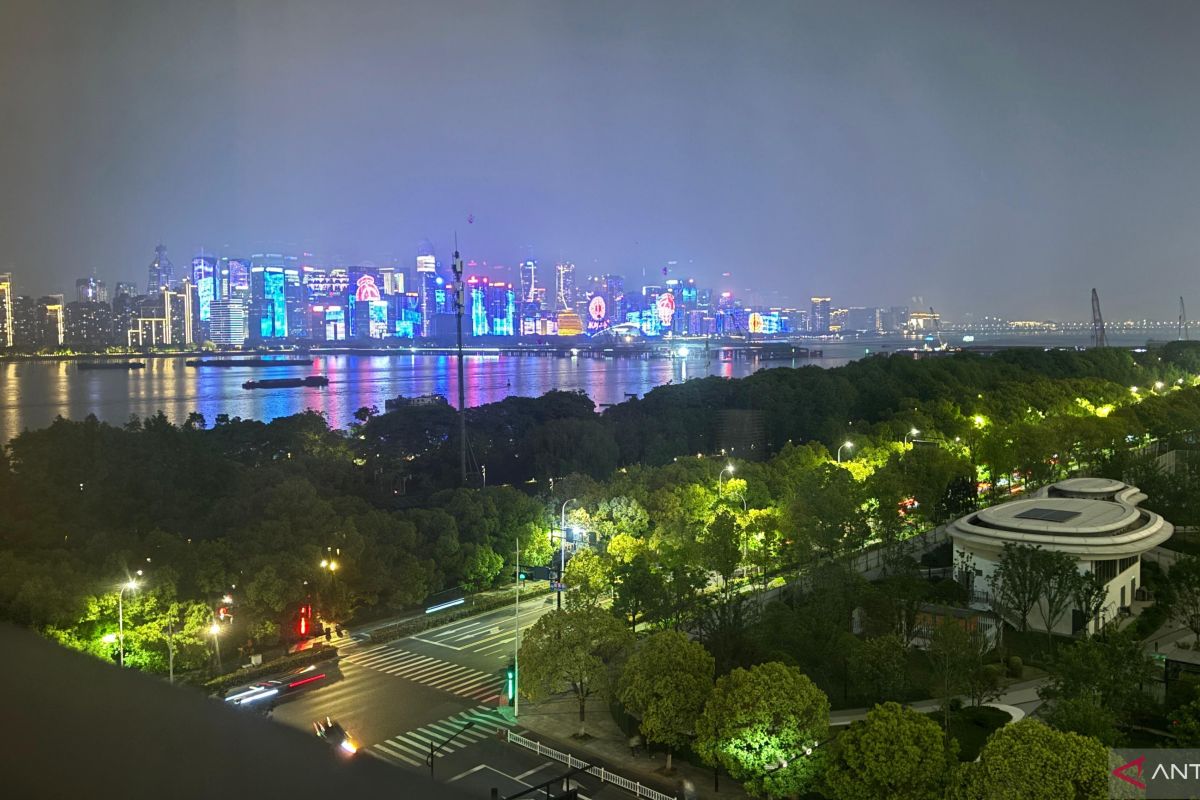
Efficiency in bureaucracy in Hangzhou has become one of the main parameters for the progress of this industrial city.
Hangzhou, Zhejiang (ANTARA) - That afternoon, the air in Hangzhou welcomed a group of automotive reviewers and journalists from Indonesia, including ANTARA, with a more humid breeze compared to the cold and dry weather in Beijing.
After a short trip in Beijing, the group was invited to Hangzhou to visit the Leapmotor headquarters, a Chinese automotive manufacturer whose production will soon enter Indonesia in the middle of this year.
Hangzhou (pronounced Hang-cou) is located in southeastern China and serves as the capital of the prosperous Zhejiang Province.
Hangzhou has a long history as one of the centres of technological resurgence in the bamboo curtain country.
In ancient times, the city was the endpoint of the Grand Canal connecting northern and southern China.
The technological resurgence has also changed many local perceptions of travel.
According to the group’s tour guide, in the past, local residents of Hangzhou used the term “bus number 11” to describe walking to a destination.
The number 11 in the term refers to the shape of a pair of human legs when stepping physically on the streets.
Currently, Hangzhou has four major railway stations and one Hangzhou Xiaoshan International Airport to support connectivity among regions in China.
Hangzhou Dong Station (Hangzhou East) is the largest rail hub with connecting services to the Shanghai area.
Trains to Shanghai are available every 15 minutes with a journey duration of about one hour from this station.
Hangzhouxi Station (Hangzhou West) serves as a connection route between Beijing City and Qiandao Lake Station.
The western area of Hangzhou has now become a modern district with the official administrative name of Yuhang District.
Yuhang District is the location of Alibaba’s headquarters as one of the world’s digital giants.
Jack Ma is a native entrepreneur born in Hangzhou who built that digital business ecosystem in his hometown.
The city’s skyline is dominated by modern architecture using glass and stainless steel materials.
Hangzhou’s road infrastructure has very smooth asphalt quality without any potholes.
The local transportation system appears highly integrated through metro lines (underground trains) and electric-powered buses.
Wireless transaction culture