
Tracing the 'Dead Village' in Prambanan, Sleman, Reclaimed by Forest After the 2006 Earthquake
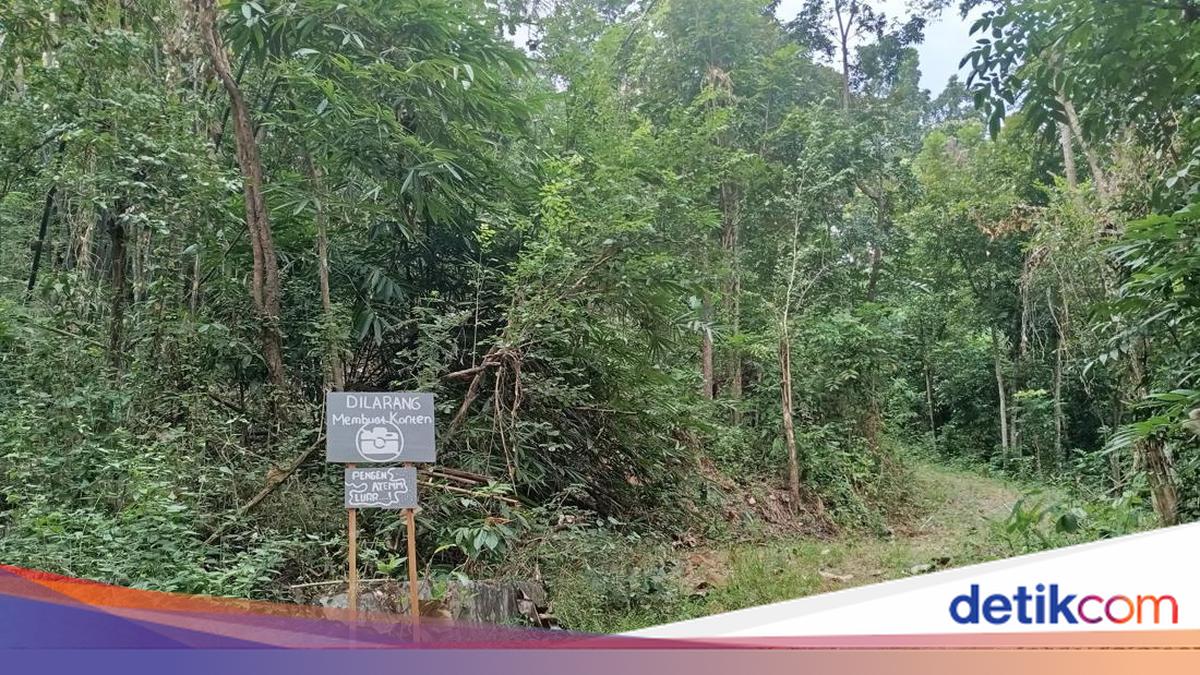
The powerful earthquake that shook Yogyakarta on 27 May 2006 left behind traces of abandoned villages in Sumberharjo Village, Prambanan District, Sleman. These abandoned areas have now transformed into forests covered in tall trees.
The abandoned settlements are located in the Nglepen and Sengir hamlets, approximately 17 kilometres east of Yogyakarta City. Situated at coordinates 7° 49’ 5.5” S and 110° 30’ 22.4” E, these hamlets were once settlements nestled amidst the hills, though parts of the upper and lower areas of the hamlets remain inhabited.
The access road to the abandoned village is quite steep, with an elevation of around 150-200 metres. The roadsides are surrounded by dense, lush trees and thick shrubs. The density of the vegetation makes it difficult for sunlight to penetrate the paved road. Amidst the trees, remnants of building ruins such as walls, old water tanks, and traces of former residential pathways are still visible.
Some of the ruins appear tilted or have collapsed due to changes in ground elevation. There is no longer any human activity, and the area resembles a forest. “It has indeed become a forest because it is no longer inhabited,” said Lasiyem (70), a resident of Nglepen, speaking from her new home in Nglepen Baru.
Lasiyem recalled that during the 2006 earthquake, she was cooking while her child was preparing for school. When the tremors hit, everyone ran outside to save themselves. “We all ran out. Thankfully, no one was injured; there were no casualties in the Nglepen neighbourhood because everyone fled their homes,” she remembered.
Lasiyem explained that although no one was injured or killed during the early morning earthquake, all masonry buildings were damaged, and some houses partially collapsed. “The land subsided, and the walls cracked. After that, we lived in tents, and in 2009, we were moved here (to the dome houses),” Lasiyem continued.
Lasiyem has lived in the dome houses since 2009, alongside her family and 50 other residents from Nglepen. “It has become a forest covered by wood and trees; it is no longer inhabited and is no longer permitted for habitation. We only go there occasionally to look for animal feed,” Lasiyem said.
Another resident, Samijo (71), admitted he still frequently visits the abandoned area, primarily to forage for livestock feed. “Mostly to look for feed, because it has become a forest full of large trees. It has just become a field for foraging,” Samito told reporters.
Samijo noted that the area is no longer suitable for planting secondary crops because the trees have grown too dense. “The land is already certified. Occasionally, the younger generation still visits,” Samijo added. “We no longer dare to live there; it has become a forest. It feels quite eerie.”
Since 2009, Lasiyem, Samijo, and other residents have occupied the dome houses at the foot of the hill, approximately one kilometre from their former homes. Their new settlement features curved, igloo-like houses painted in bright colours, with some areas having expanded with new structures.
Often referred to as the ‘Teletubbies village’, the settlement includes dome-shaped facilities, including a mosque. In addition to housing earthquake survivors, the new village has also become a tourist destination.
Kurniawan Widiyanto, the Head of Sumberharjo Village, Prambanan, Sleman, explained that the impact of the 2006 earthquake necessitated the relocation of residents from two hamlets, Sengir and Nglepen. He stated that all residents of Nglepen were moved. “The old hamlet of Sengir is still partially inhabited. However, everyone from Nglepen was moved; no one lives there anymore,” Kurniawan confirmed.
Kurniawan noted that there were no fatalities in Nglepen due to the earthquake, though the land subsided, making it dangerous for residents. “There were no fatalities [in Nglepen], everyone was safe, but there were casualties in the surrounding hamlets,” Kurniawan said.
Following the earthquake, Kurniawan explained, residents from the two hamlets were relocated to the dome houses. There are approximately 70 dome-style residential units. “I do not remember the exact figure, but there are about 70 units for the two hamlets. They serve as residences but also function as a tourist village,” he added.
Source: jawawa.id (https://jawawa.id/newsitem/tracing-the-dead-village-in-prambanan-sleman-reclaimed-by-forest-after-the-2006-earthquake-1782636635)
Originally published by detikJogja (https://www.detik.com/jogja/berita/d-8550865/menyusuri-kampung-mati-di-prambanan-sleman-imbas-gempa-2006-kini-jadi-hutan), translated from Indonesian