
Tracing the Bloodiest Conflicts in World History
Armed conflict has returned to global attention after tensions in the Middle East escalated. The escalation involving Iran, Israel, and the United States has again raised global geopolitical risk, particularly for energy markets, as the region is the world’s centre of oil production.
Tensions in the Middle East rose further after Iran rejected a statement by US President Donald Trump suggesting the Strait of Hormuz would become US territory after the war. Iranian Deputy Foreign Minister Kazem Gharibabadi stressed that the strait, which carries around a fifth of the world’s oil trade, is under Iranian sovereignty. At the same time, the United Kingdom Maritime Trade Operations (UKMTO) reported that a bulk carrier was struck by an unidentified projectile while transiting the Strait of Hormuz. The Iranian government also confirmed there have been no new negotiations with the US to end the conflict, so tensions in the region continue.
These developments serve as a reminder that war always brings wide-ranging consequences that extend far beyond the battlefield.
Experience over several decades shows that every major war is followed by disruption to supply chains, surges in commodity prices, and rising economic uncertainty. Crude oil prices are generally the asset that responds most quickly to conflict developments, as market participants factor in potential disruption to production and distribution.
But the impact of war goes far beyond economic matters. Throughout history, armed conflict has claimed tens to hundreds of millions of lives. Most of the victims have been civilians trapped in the fighting, famine, disease outbreaks, and mass displacement.
Various historical studies also show that the greatest casualties of war often emerge after the fighting has ended. Infrastructure is destroyed, food production is disrupted, health services collapse, and the recovery process can take decades.
Wars with the Largest Death Tolls
Here is a summary of the wars and regimes with the largest death tolls in modern history, based on various historical records.
- World War II (1939–1945)
World War II was the deadliest conflict in modern history. The war began when Nazi Germany invaded Poland on 1 September 1939. The invasion prompted Britain and France to declare war on Germany, and it subsequently developed into a global conflict involving nearly all the world’s major powers.
Battlefronts stretched from Europe to the Asia-Pacific. The Soviet Union managed to turn the tide through the Battle of Stalingrad, while the United States entered the war after Japan attacked Pearl Harbor in December 1941.
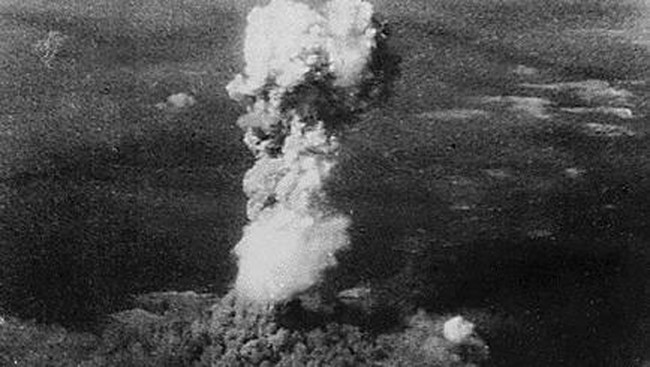
The war also recorded some of the greatest humanitarian tragedies, including the Holocaust, which killed more than six million Jews; the Nanjing Massacre by the Japanese army; and the atomic bombings of Hiroshima and Nagasaki in August 1945.
Various historical estimates put the total death toll of World War II at around 66 million people.
- The Mao Zedong Era
After the founding of the People’s Republic of China in 1949, Mao Zedong pursued economic transformation through the Great Leap Forward programme in 1958–1962. The policy of agricultural collectivisation and rapid industrialisation instead triggered a drastic decline in food production.
Production reports that did not match conditions on the ground led the central government to continue extracting harvests in large quantities. The food crisis then developed into one of the largest famines in history.
In 1966, Mao launched the Cultural Revolution. The campaign targeted officials, academics, teachers, students, and community figures deemed politically opposed.
Several studies estimate that the overall policies of the Mao era caused around 40 million deaths.
- The Joseph Stalin Era
Joseph Stalin led the Soviet Union from the late 1920s after consolidating power within the Communist Party.
The agricultural collectivisation programme forced millions of peasants to surrender their land to the state. Resistance to the policy resulted in arrests, deportations, and executions.
The greatest impact was seen in the Ukrainian famine, or Holodomor, in the early 1930s. Stalin then carried out the Great Purge in 1936 through large-scale political cleansing.
Various historical records estimate that the Stalin regime caused around 20 million deaths.
- World War I (1914–1918)
World War I was triggered by the assassination of Archduke Franz Ferdinand in Sarajevo. The system of military alliances in Europe caused the conflict to develop into a global-scale war.
The fighting took place in trench systems with the use of heavy artillery, machine guns, and poison gas. The battles of the Somme and Verdun became symbols of the enormous casualties of modern war.
The death toll of World War I is estimated at 15 million people.
- Russian Civil War (1917–1922)
The Bolshevik Revolution did not immediately end conflict in Russia. The Red Army faced the White Army, which received support from several Western countries.
Beyond the fighting, the greatest casualties came from famine, typhus, influenza, and the collapse of food distribution.
The war is estimated to have caused around 9 million deaths.
- Chinese Civil War
The long conflict between the Kuomintang and the Communist Party lasted for several decades. The fighting paused when Japan invaded China during World War II, then resumed after Japan surrendered.
The war ended with a Communist Party victory in 1949, while the Kuomintang government moved to Taiwan.
The death toll is estimated at 7 million people.
- Vietnam War
The Vietnam War became one of the main conflicts of the Cold War era. North Vietnam received support from the Soviet Union and China, while South Vietnam was supported by the United States.
The conflict was fought through guerrilla warfare.