
Tracing Palm Oil from Tesso Nilo to the Global Market
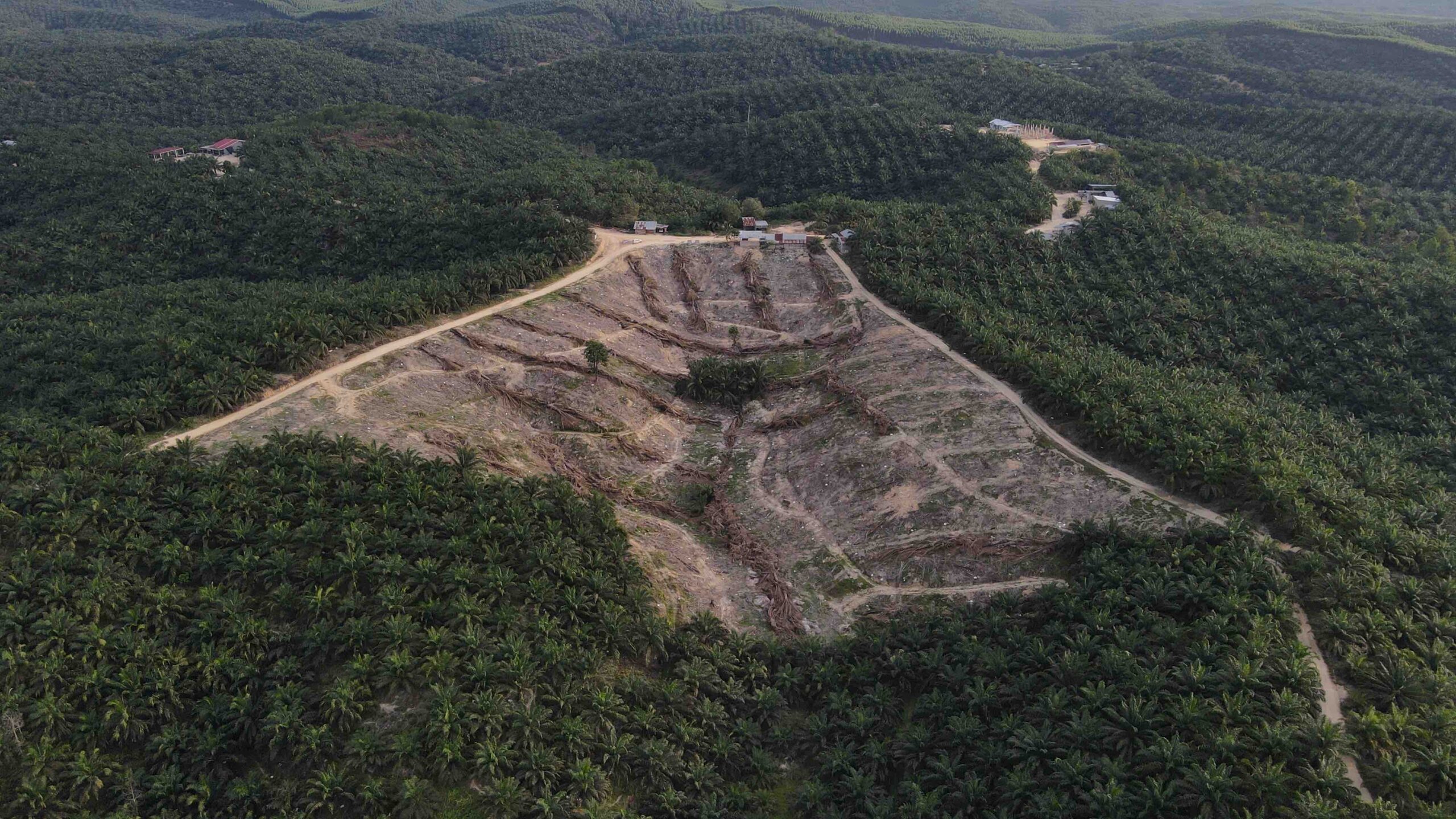
Two tanker trucks carrying crude palm oil (CPO) departed from the PT Gemilang Sawit Lestari (GSL) mill on 8 August 2025. After a journey of approximately 16 hours, the two CPO trucks entered PT Sari Dumai Sejati (SDS), located in Lubuk Gaung Village, Sungai Sembilan District, Dumai City. In a previously published investigation, Mongabay also tracked trucks carrying fresh palm fruit leaving Tesso Nilo National Park and entering GSL, one of dozens of mills surrounding the national park in Riau. GSL is a supplier of CPO to SDS. This subsidiary of the Apical Group is a palm oil processing company that manufactures various derivative products in Riau. In January 2025, Suhardiman Amby, the Regent of Kuantan Singingi, conducted a surprise inspection and found indications that the mill was receiving fruit from Tesso Nilo. At the time, he stressed that he would pursue legal channels and that the district government would revoke the mill’s permit if the allegations were proven. In mid-October, the Regent returned to the GSL mill to officially seal it and temporarily halt the processing of fresh fruit bunches (FFB). After about a month of being sealed, the GSL mill resumed operations. The sealing was a response to findings by the Integrated Monitoring Team for Plantation Businesses regarding mill activities and operations that were not in compliance with permits. Suhardiman had formed this team to audit the compliance of plantation companies and palm oil mills in Kuantan Singingi. The Integrated Team concluded that GSL committed two violations: environmental pollution and exceeding FFB processing capacity. The team did not mention the receipt of fruit from Tesso Nilo National Park, even though the regent discovered this in January 2025, and it recurred based on Mongabay’s findings on 8 August, two months before the regent sealed the mill. Mongabay sent a list of questions via two messaging applications to Suhardiman’s contact on 21 April 2026, but received no response. On WhatsApp, the message status showed two ticks. Based on findings by Eyes on the Forest, a coalition comprising WWF Indonesia’s Central Sumatra Programme, Jikalahari, and Walhi Riau, similar activity involving Tesso Nilo palm fruit entering the GSL mill was observed in 2015, documented in a report titled ‘Tak Ada yang Aman’, and again in 2017 in a report titled ‘Cukup Sudah’. Apical did not deny the findings by Eyes on the Forest or the latest findings by Mongabay. The company stated to Mongabay that it had requested clarification from GSL. The mill acknowledged that the delivery order (DO) holder had violated company policy. This risk identification was discovered through the mill’s internal monitoring and traceability mechanisms. They stated that they had terminated cooperation with the DO holder responsible for transporting the fruit to the mill, conducted socialisation, and signed a commitment letter with suppliers. ‘Apical remains committed to the principles of transparency and continues to work with suppliers to ensure responsible procurement practices throughout the supply chain,’ said an Apical spokesperson in a written response received by Mongabay on 16 February 2026. Apical is a palm oil and derivative product processing and exporting company. It is part of the Royal Golden Eagle (RGE) group, a business empire controlled by tycoon Sukanto Tanoto and his family. Delis Martoni, Head of the Kuantan Singingi Environmental Agency, and Gunawan Nurdianto, Head of Environmental Governance at the Kuantan Singingi Environmental Agency, declined to comment on the findings of Tesso Nilo palm fruit entering the GSL mill. They spoke of their authority. ‘Regarding the Tesso Nilo fruit, that is for the plantation agency. We only look at the environmental aspects of the mill. The origin and source of the fruit is not our main task and function,’ said Gunawan. Mongabay contacted Andri Yama Putra, Head of the Plantation and Livestock Agency of Kuantan Singingi, on 25 February 2026, as well as Fahdiansyah, Head of the Integrated Monitoring Team and Assistant I of the Kuantan Singingi Regional Secretariat. Neither responded. Achmad Surambo, Executive Director of Sawit Watch, said that the decision to terminate cooperation with the DO holder is only a partial solution. It does not yet constitute a long-term, integrative policy to address all palm oil supply chain issues. He urged GSL and Apical to publicly disclose the origin of fresh fruit bunches along with the source plantations. ‘If there is an NDPE commitment, they must be brave enough to announce it, transparent and accessible to the public. If they only state a commitment without transparency, it is still hard to believe.’ The oil flows far. Despite having NDPE commitments through due diligence systems, supply chain engagement, and various systems and procedures, the CPO mixed with palm fruit from Tesso Nilo from GSL flows far into various consumer goods in many countries. Mongabay analysed the palm oil supply chain map from the mill using data.
Source: jawawa.id (https://jawawa.id/newsitem/tracing-palm-oil-from-tesso-nilo-to-the-global-market-1785430229)
Originally published by mongabay.co.id (https://mongabay.co.id/2026/07/29/menyelisik-minyak-sawit-dari-tesso-nilo-sampai-ke-pasar-global/), translated from Indonesian