
Tracing Bung Karno's Footsteps in His Bengkulu Exile Home, Igniting Nationalism Through Monte Carlo
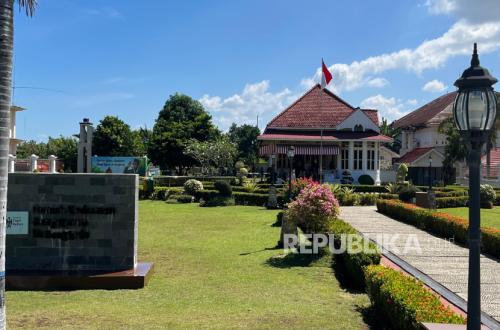
A piece of Indonesian history is preserved in Bung Karno’s Residence, an Indische-style building standing quietly on Jalan Soekarno-Hatta, Anggut Atas, Bengkulu City. The white-painted house appears modest compared to the significant role it played in the nation’s journey. It was here that Indonesia’s first president, Ir. Soekarno, lived in exile from 1938 to 1942. Yet, instead of becoming a place that silenced ideas, the house became a space for the birth of creativity, thought, and a national spirit that continued to blaze.
During a historical trail event for Bung Karno Month conducted by Commission A of the Yogyakarta Regional House of Representatives (DPRD DIY) at the Bung Karno Exile House in Bengkulu on Thursday (11/6/2026), the delegation explored how the period of exile turned out to be one of the most productive phases in the life of the proclaimer. In Bengkulu, Bung Karno did not merely survive; he flourished. The house, which originally belonged to a Chinese-Indonesian merchant named Lion Bwe Seng, was rented by the Dutch colonial government to isolate Bung Karno from his political influence. However, history records the opposite outcome.
‘His influence was enormous and extraordinary, because the people, especially the movement leaders, already knew of Bung Karno’s actions. Some were fearful, some were defensive, and this was an opportunity for the movement figures to unite with Bung Karno at that time,’ said Bengkulu historian Agus Setiyanto, who formerly served as Head of the Bengkulu Province Culture and Tourism Office from 2009 to 2011, on Thursday (11/6/2026). Agus explained that from this house, various ideas emerged that shaped the national consciousness of the local community. Through art, sports, education, and intellectual discussions, Bung Karno found new ways to convey the ideals of independence to the people. He noted that Bung Karno’s influence on the people of Bengkulu was immense.
Bung Karno successfully mobilised various groups, especially the youth, to love their homeland through approaches that were close to daily life. ‘He could invite anyone, including young leaders and the younger generation, to be trained to love their homeland, whether through art or through sports,’ he said. Beyond building political awareness, Bung Karno also established various platforms for community activities. He founded a football club named Elf Monte Carlo, set up a badminton club, and created discussion groups that served as spaces for debating national ideas. All these activities shared a single purpose. ‘Indeed, Bung Karno’s direction and ideals were to spread and ignite the spirit of nationalism and patriotism among the indigenous people,’ he revealed.
One of the most fascinating legacies of Bung Karno’s exile in Bengkulu is the birth of the Monte Carlo theatre group. For Bung Karno, art was not merely entertainment; it was a tool of struggle. When political space was restricted by the colonial government, Agus recounted that Bung Karno chose the theatre stage as a medium to instil national consciousness in the community. In Bengkulu, Bung Karno wrote scripts, directed performances, designed stage decorations, and personally trained the actors. During his four years in Bengkulu, Bung Karno produced around twelve plays. Some of these included Rainbow (Poetri Kentjana Boelan), Hantu Gunung Bungkuk, and Dokter Setan. Agus stated that Bung Karno’s artistic productivity was extraordinary. ‘During his four years in Bengkulu, Bung Karno produced around twelve plays. He wrote the scenarios, served as director, designed the stage, and trained the players directly,’ he said.
Through the Monte Carlo group, Bung Karno also involved many Bengkulu residents, including Inggit Garnasih and Fatmawati, who was then his student. These performances became community gathering spaces as well as a means to insert messages of nationalism under the tight surveillance of the Dutch colonial government. According to Agus, Bung Karno even prepared a script discussing a prophecy about Indonesia’s independence. However, the work was never staged because the Japanese entered Indonesia in 1942. Bung Karno’s artistic legacy in Bengkulu was later documented by Agus in a book titled Bung Karno: Maestro Monte Carlo.
Agus noted that Bung Karno’s period of exile was a blessing for the regions he stayed in. Instead of severing his influence, the Dutch policy inadvertently spread the ideas of nationalism to various parts of Indonesia. ‘Indeed, the indigenous people who were hungry for Bung Karno’s thoughts and had the opportunity to directly meet this national figure saw the spirit and soul of nationalism grow and develop in Bengkulu,’ he said. ‘Even though he was in exile and his movement was restricted, he continued to work and convey his ideas of struggle through various activities that were acceptable to the community at that time,’ he added. Nonetheless, surveillance of Bung Karno was extremely tight. The colonial government stationed secret police officers who constantly monitored his activities. Bung Karno was also frequently summoned to Fort Marlborough for questioning regarding his various activities. ‘And on the other hand, the colonial government did not remain silent; they constantly watched Bung Karno because there were secret service police officers monitoring him at all times,’ Agus said. Restrictions on movement were also imposed. Bung Karno was not permitted to travel more than a radius of approximately 40 kilometres from Bengkulu without colonial government permission. However, as with many other stories about Bung Karno, he often managed to face these restrictions with cleverness and diplomacy.
Bengkulu was also the place where Bung Karno met Fatmawati.
Source: jawawa.id (https://jawawa.id/newsitem/tracing-bung-karnos-footsteps-in-his-bengkulu-exile-home-igniting-nationalism-through-monte-carlo-1781596398)
Originally published by Republika (https://rejogja.republika.co.id/berita/tgpqqz291/menelusuri-jejak-bung-karno-di-rumah-pengasingan-bengkulu-nyalakan-nasionalisme-lewat-monte-carlo), translated from Indonesian