
Tracing 5 Wilmar Scandals: From Cooking Oil to Alleged Corruption
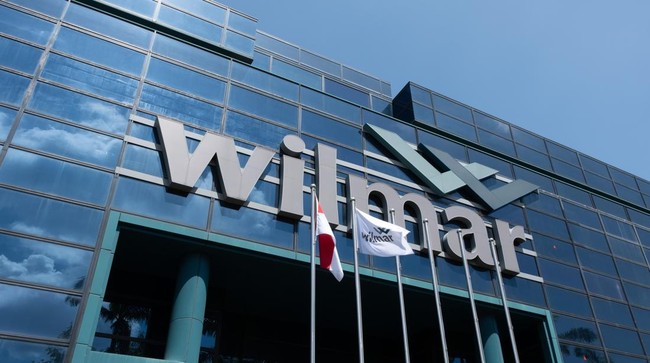
Wilmar International Limited has established its position as one of the world’s largest agribusiness entities with a solid market capitalisation on the Singapore Exchange (SGX). Managing operations in 36 countries with more than 1,000 manufacturing facilities, this corporation possesses massive control over the commodity supply chain.
Despite recording consistent growth in assets and equity, Wilmar’s extractive business model frequently clashes with territorial regulations, environmental governance, and customs instruments in producer countries. Indonesia, as Wilmar’s largest upstream production base, is the jurisdiction most impacted by the company’s various operational anomalies.
Below is an investigation into various cases and structural issues that have involved the Wilmar Group.
- The DMO Negligence Scandal and the Cooking Oil Crisis (2022)
In early 2022, Indonesia, which is effectively the world’s number one palm oil producer, experienced a severe cooking oil scarcity crisis that triggered household inflation. This crisis was proven not to have occurred naturally. When the international CPO reference price soared sharply, the leadership at Wilmar’s subsidiary ignored the fulfilment of the Domestic Market Obligation (DMO).
Instead of flooding the local market at the price set by the government (HET), the palm oil supply was prioritised to flow abroad to capture high margins using export approval facilities obtained corruptively. This act of neglect ended up in court. The Attorney General’s Office named the Commissioner of PT Wilmar Nabati Indonesia, Master Parulian Tumanggor, as a suspect. In a verdict in early 2023, the Panel of Judges for Corruption Crimes sentenced Master Parulian to 1 year and 6 months in prison and a fine of Rp 100 million.
Although his defence blamed the government’s price control regulations, the court proved his joint involvement with the Director General of Foreign Trade at the Ministry of Trade in manipulating export permits, which cumulatively resulted in an estimated state economic loss of up to Rp 18.3 trillion.
- Cash Asset Seizure of Rp 11.8 Trillion by the Attorney General’s Office (2025)
Delving into the subsequent chapter of the 2022 cooking oil crisis series, the law enforcement process against the Wilmar corporation escalated into one of the largest operational asset seizures in Indonesian judicial history. On 17 June 2025, the Attorney General’s Office of the Republic of Indonesia officially seized cash amounting to Rp 11.88 trillion from five subsidiary entities of the Wilmar Group.
The five companies include PT Multimas Nabati Asahan, PT Multi Nabati Sulawesi, PT Sinar Alam Permai, PT Wilmar Bioenergi Indonesia, and PT Wilmar Nabati Indonesia. This jumbo seizure of Rp 11.88 trillion represents the equivalence of state financial losses, illegal gains, and state economic losses resulting from corporate crime in manipulating CPO export facilities.
Responding to this seizure, Wilmar issued a statement attempting to frame the handover of these funds merely as a security deposit, arguing that the trillions of rupiah must be returned in full if the Supreme Court acquits the corporation at the cassation level. However, this narrative was firmly denied by the Attorney General’s Office. The legal authority clarified that in the terminology of handling state loss corruption crimes, the term security deposit is not recognised at all. The status of the Rp 11.88 trillion funds is absolute as seized assets (physical evidence) prepared for the execution of recovering Indonesia’s economic losses.
- Transfer Pricing and Under-Invoicing Investigation (May 2026)
In late May 2026, Wilmar once again came under the spotlight of an investigation initiated by the Ministry of Finance, the Financial and Development Supervisory Agency (BPKP), and the Attorney General’s Office regarding alleged customs manipulation through under-invoicing practices in a transfer pricing scheme. This indication is based on the massive disparity between internal production capacity and total export volume.
In 2025, Wilmar only produced 4.03 million metric tonnes of palm oil harvest from its own plantations, yet the entity exported 26.4 million metric tonnes of Tropical Oils. The company acts as a massive offtaker that absorbs raw materials from third parties in Indonesia, processes them, and exports them to an intermediary affiliate (trading arm) in Singapore.
Findings indicate that prices on export documents are significantly deflated (for example, reported at US$ 600 per tonne, below the real global market price which was around US$ 1,119 per tonne). The difference in value concealed in the invoice is transferred as margin in Singapore to take advantage of the Global Trader Programme (GTP) concession tax incentive. As a result of this tax arbitration scheme, Indonesia potentially loses Corporate Income Tax (PPh Badan) and Export Duties deposits of up to tens of trillions of rupiah per year.
This indication is strengthened by the low Net Margin of its domestic downstream subsidiary, PT Wilmar Cahaya Indonesia Tbk (CEKA), which is depressed at 2.0% due to inflated related party transaction burdens. On the other hand, Wilmar’s global consolidated Net Profit Margin (NPM) is also maintained at 1.34% to avoid the global corporate minimum tax rate (Global Minimum Tax).
- Issues of Deforestation and Peatland Agrarian Conflict
Long before the financial scandals were exposed, Wilmar had a lengthy track record related to environmental issues. As the manager of 234,334 hectares of oil palm land in Indonesia, the company frequently faces accusations from international non-governmental organisations (NGOs), such as Greenpeace and Walhi, concerning land clearing in areas of High Conservation Value (HCV) forest and peatlands.
Although Wilmar launched a No Deforestation, No Peat, No Exploitation (NDPE) policy at the end of 2013, implementation at the supply chain level of third-party suppliers is frequently found to be problematic.