
Traces of Landhuis Tjililitan: A Historic Building in East Jakarta Now Home to Residents
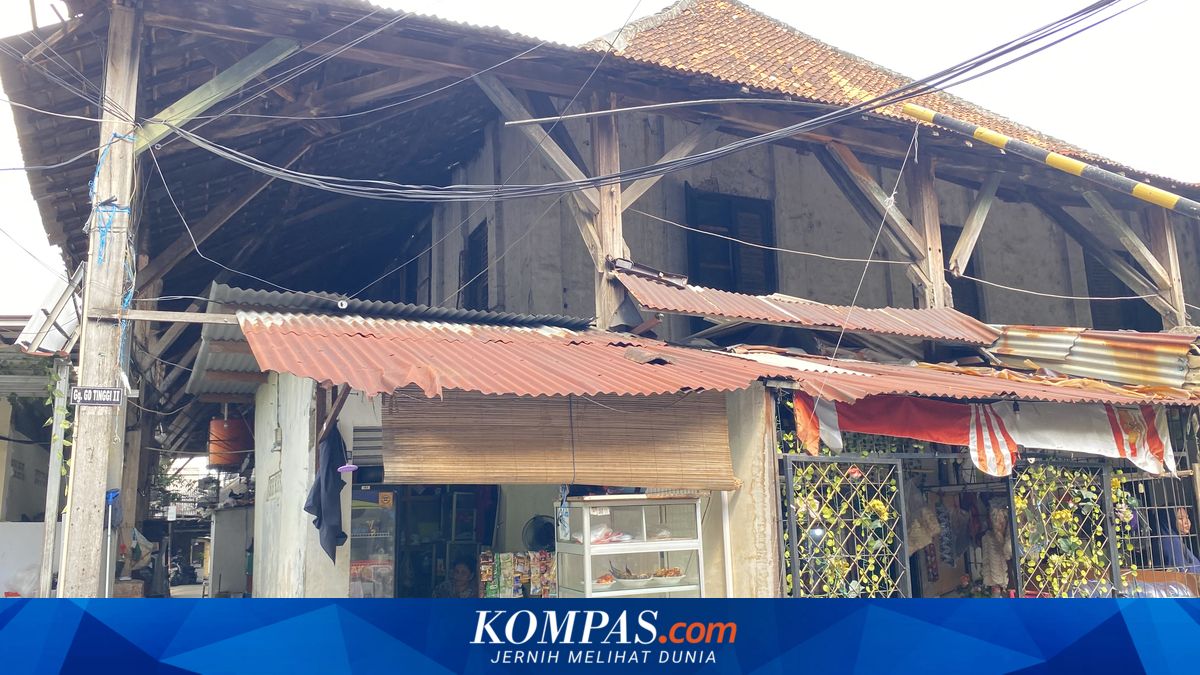
JAKARTA — The noise of children running and lively chatter from Jati Village residents immediately greets you as you step off Bogor Road. To reach the site, one enters the grounds of Dr. Soekanto Police Hospital in Kramat Jati, East Jakarta. There, amid the dense civilian housing, a massive building stands strong yet shows signs of age. Locals refer to it by various names, including Rumah Besar Cililitan, Gedong Tinggi, and its original name, Landhuis Tjililitan or Landhuis Lebak Sirih. The 500-square-metre building was once a Dutch colonial-era landlord’s residence. Rumaji, head of RT 005 in Kramat Jati, said the historic building is now home to around 18 households. ‘The elders have lived there since the 1970s. Initially mostly bachelors, but over time families formed,’ Rumaji said when interviewed at the RW 005 Kramat Jati chairman’s residence on Monday, May 25, 2026. Rumaji added that the number of residents fluctuates, but most still have family ties to the original inhabitants of Gedong Tinggi. ‘Not all outsiders; most are still family,’ he said. He explained that each room is occupied by individual families, with some rooms housing multiple households. ‘One room can accommodate two households,’ he said. Most residents, he said, are from lower-middle-class backgrounds, working as labourers, small traders, daily wage earners, or police officers and their families. Rumaji said residents have long maintained the building through self-help without government assistance. When parts of the building deteriorate, residents pool funds for repairs. ‘Recently, a pillar collapsed and was replaced with iron. The rotting roof sections are now supported by new timber,’ Rumaji said. He expressed concern over rumours of hospital expansion, which could affect the building and surrounding community. ‘If evicted, residents would struggle. Finding new housing is difficult, and livelihoods could be lost,’ Rumaji said. ‘Residents hope the building is officially recognised as a cultural heritage site by the Minister of Culture to ensure its preservation,’ he added. For many residents, Gedong Tinggi is more than a colonial-era relic; it has been a multi-generational home for decades. Susi (not her real name), 38, was born and raised there. She now lives with her husband and child in a lower-floor room. ‘I’ve lived here since childhood. My parents lived here, and now my family and I still do,’ Susi said when interviewed. She said she has grown accustomed to the long corridors, large pillars, and Dutch-style architecture standing amid dense residential areas. ‘The structure has always been like this, but it’s become more crowded. Previously, the front and sides were more open,’ she said. She recalled the area around the building was once spacious, with children free to play beneath it and move freely from one side to the other. Though aware of its historical value and frequent visits by students and history groups, Susi said residents see Gedong Tinggi as their childhood home. ‘Sometimes students, groups, or visitors come to take photos and ask about the building’s history. But for us, it’s home. We’ve lived here for generations,’ she said.