
Traces of King Paku Buwono X's Funeral Train Route in Yogyakarta Nearly Erased
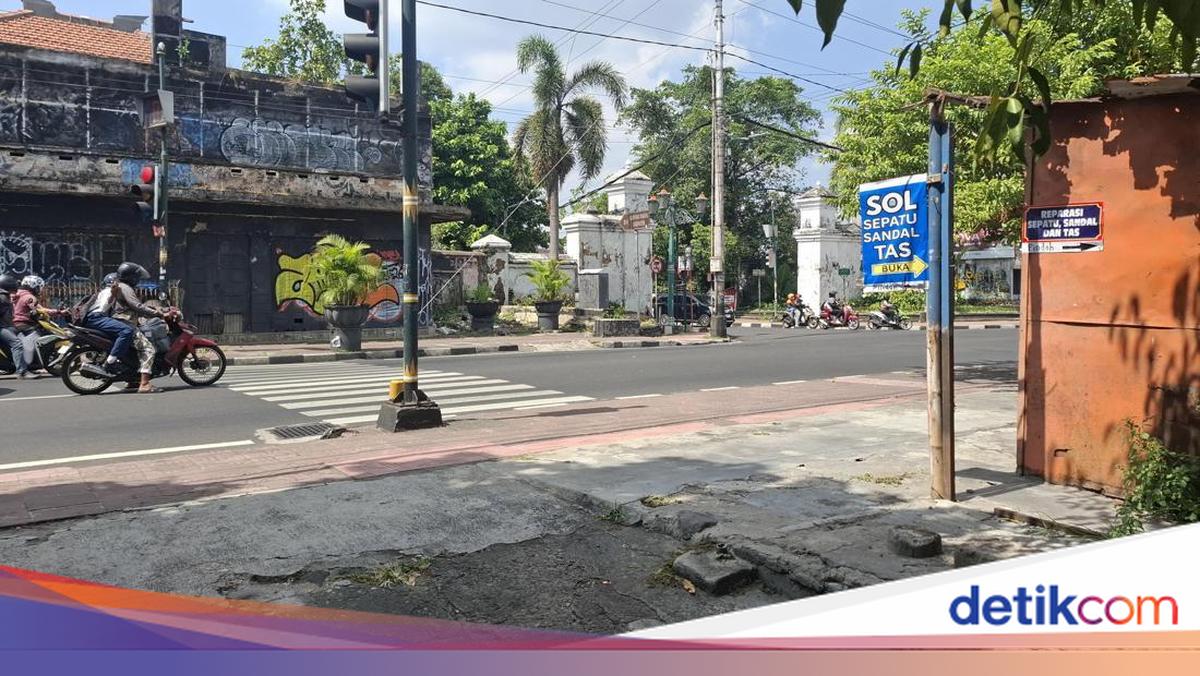
The branch railway line connecting Ngabean Station in Yogyakarta city to Pundong Station in Bantul has left barely any trace. Most of the tracks have been buried under road construction and residential areas, even though the route was once traversed by the funeral train of the King of Kasunanan Surakarta, Sunan Paku Buwono X, en route to Imogiri in 1939.
Observations at the Tamansari intersection in Mantrijeron district, Yogyakarta, on Tuesday (9/6/2026) revealed the former rail line is difficult to recognise. The tracks have been covered by concrete roads, flanked by houses and rows of shops.
Historian Baha Uddin from Gadjah Mada University (UGM) stated the Ngabean-Pundong line holds significant historical value as it formed part of Sunan Paku Buwono X’s final journey. "The farewell ceremony for Sunan PB X was thronged by thousands of Surakarta citizens who came to escort him, especially from the palace, accompanied by sacred gending melodies. From the palace, the coffin was transported using a carriage pulled by eight horses named Kyai Roto Praloyo to Balapan Station," Baha said when contacted on Wednesday (10/6).
From Balapan Station in Solo, Baha explained, the remains of PB X were then carried by a special train belonging to the Nederlandsch-Indische Spoorweg Maatschappij (NISM). "So, from the palace to Balapan Station, the coffin was then placed into a special NISM train carriage," he said.
According to Baha, the train was named the Begrafenis Trein, or funeral train, which was operated specifically to transport Paku Buwono X’s body to Imogiri. "It was a special train called the Begrafenis Trein. Begrafenis means burial and trein means train. So, a train specifically run for the burial of PB X," he clarified.
Baha recounted that the train journey began in Solo heading to Tugu Station in Yogyakarta. The journey then continued via the southern line passing through Ngabean towards Pasar Gede Station in the Imogiri area. "From Tugu Station to Ngabean. From Ngabean then southwards via the Ngabean-Pundong line. Between Ngabean and Pundong, the closest point to Imogiri is Pasar Gede," he said.
Today, most of the line that once bore witness to this history has been lost, displaced by urban development. The tracks that formerly connected Yogyakarta city and Bantul have been transformed into roads, settlements, and commercial areas.
Nevertheless, some residents still hold memories of the line’s existence. One of them, Agung, a resident of Gondomanan, Yogyakarta, recalled seeing trains pass by during the 1980s. "Back then, my grandmother used to feed me near the station, and I was often taken to see the trains. Around 1983-1984," Agung said.
Agung estimated the line ceased operations in the mid to late 1980s. Afterwards, traces of the tracks gradually disappeared until they became as unrecognisable as they are now. "I think the train carried passengers too, but its function was more for collecting sugarcane harvests all the way to Madukismo. So the rail line was multifunctional, as I remember it," he said. "The train, I recall, last ran around ’85-’86, when I was in third grade. After that, it vanished, meaning it was all covered up," he concluded.
Source: jawawa.id (https://jawawa.id/newsitem/traces-of-king-paku-buwono-xs-funeral-train-route-in-yogyakarta-nearly-erased-1781311817)
Originally published by detikJogja (https://www.detik.com/jogja/berita/d-8529903/jejak-jalur-kereta-jenazah-raja-solo-pb-x-di-jogja-nyaris-tak-tersisa), translated from Indonesian