
Traces of Illegal Trade of Endangered Species in India
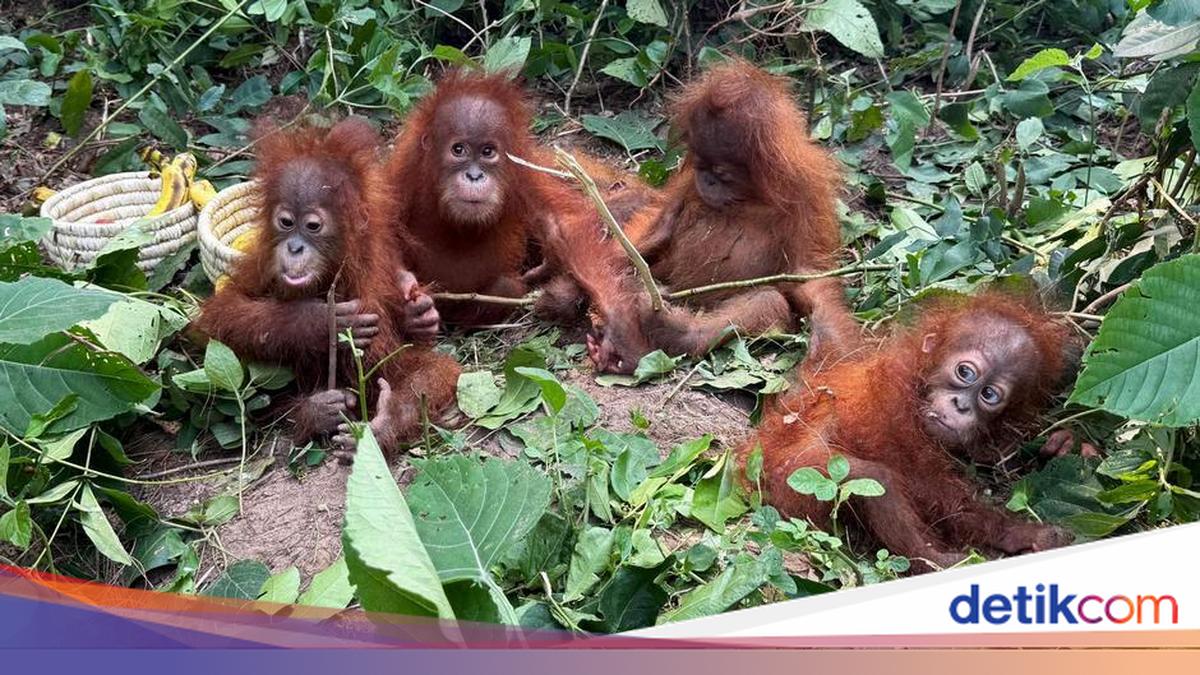
Five baby orangutages were found in a forest in the Balasore district, eastern Odisha state, India, last week. The animals, whose natural habitats are in Sumatra and Kalimantan, were discovered by forestry officers during a patrol.
The Indonesian Ministry of Forestry has requested Indian authorities to investigate the origins of these reddish-furred orangutans and to repatriate them if they are proven to originate from Indonesia.
This discovery raises a critical question: how did these exotic animals enter India? How has the country become part of the illegal wildlife trade route?
The journey of five baby orangutans
The discovery of the five baby orangutans has caused confusion. “The discovery on the eastern coast of India is quite baffling. This case is similar to an incident a few years ago, when several live kangaroos were found wandering on a highway in West Bengal,” Kanitha Krishnasamy, Director of TRAFFIC for Southeast Asia, a wildlife trade monitoring network, told DW.
“What are orangutans doing in India? Were they smuggled from their home countries, Malaysia or Indonesia, or did they come from a facility?” she asked.
The Odisha government has subsequently requested the Wildlife Crime Control Bureau to investigate how these endangered animals reached the region.
“These animals are not found in India and mostly live in the rainforests of Malaysia, Indonesia, Kalimantan, and Sumatra in Southeast Asia,” said the Odisha Minister for Forest and Environment, Ganesh Ram Singh Khuntia.
“We suspect that an international wildlife smuggling syndicate may have released them in the forests of the Balasor district.”
Indian authorities seize pythons, parrots, and giant tortoises
Orangutans are the latest animals in a series of exotic wildlife findings in India. In November 2024, authorities in Bengaluru seized 40 rare animals arriving from Kuala Lumpur, Malaysia. These included Aldabra giant tortoises, gibbons, American crocodiles, and iguanas.
Then, in June 2025, Mumbai Customs seized 284 exotic animals in four shipments from Bangkok, Thailand, including snakes and tortoises.
A month later, customs officers in Pune seized 20 exotic animals from passengers arriving from Bangkok. Officers found 14 green tree pythons, four double-eyed boa constrictors, and two Sumatran clouded leopard kittens.
Thousands of illegally traded animals found in India
TRAFFIC data records that 7,272 animals, both live and dead, were seized from passenger luggage in smuggling attempts between Thailand and India from January 2022 to May 2025. More than 80 per cent of the seizures occurred in India.
The animals found were diverse, ranging from reptiles and birds to mammals. Many are suspected of being intended for trade as exotic pets.
“We have found hundreds of species and thousands of animals being illegally traded into India via air and land routes. The situation has changed drastically since around 2020,” said researcher and conservation practitioner Uttara Mendiratta to DW.
“Both the volume of illegal trade and the number of species involved, many of which are endangered, are truly shocking.”
Wildlife smuggling increasing, is law enforcement lagging behind?
According to TRAFFIC, India and Malaysia were the two countries most identified in the illegal gibbon trade chain in 2025, with animal movement from Malaysia towards India.
Trishala Ashok, a conservation filmmaker and science communicator, said the scale of the trade is still difficult to determine.
“Our law enforcement system has not evolved as quickly as this trade,” Ashok told DW. “We are still dealing with cases one by one, rather than mapping the networks, financiers, suppliers, and buyers behind them.”
Tito Joseph from the Wildlife Protection Society of India said the situation is worsening.
“The smuggling of exotic species has always existed in India,” Joseph told DW.
However, according to Joseph, the practice has increased significantly since 2018. He noted several smuggling routes, ranging from Myanmar through India’s north-eastern region to other parts of the country, to routes from Bangladesh to India. Via air routes, Thailand and Malaysia serve as the primary sources of smuggled wildlife.
Exotic animals also enter through land borders in India’s north-eastern region, not just through airports.
“What is new is the large number of live wildlife entering. There are indications that some traders previously involved in smuggling live animals, such as star tortoises, are now also involved in the procurement of other exotic wildlife,” said Mendiratta.
When social media becomes an illegal wildlife market
An analysis by Humane World for Animals India in June 2026 stated that the demand for exotic animals is driven by an increasing interest in keeping exotic pets and the existence of unmonitored digital markets.
“Globally, social media platforms are helping to drive and facilitate the illegal wildlife trade by providing a space for people to showcase their animal collections,” said wildlife biologist and conservation scientist Ravi Chellam to DW. “These platforms also serve as online marketplaces that allow illegal trade to flourish rapidly.”
“The problem is further complicated by very large private collections, containing animals from various parts of the world, owned by wealthy and famous individuals,” said Chellam.
Tracing the origin of animals is also becoming increasingly difficult after they pass through several countries.
“Seizures should not be the end of an investigation. They should be the beginning,” said conservation filmmaker Trishala Ashok.
“Who is supplying these animals? Who is organising their movement? Who is paying for them? Who is waiting for them?” she asked. “Until we start tracing these footprints, we will continue to seize shipments without dismantling the networks behind them.”
Source: jawawa.id (https://jawawa.id/newsitem/traces-of-illegal-trade-of-endangered-species-in-india-1789725782)
Originally published by detikcom (https://news.detik.com/dw/d-8668717/jejak-perdagangan-ilegal-dari-satwa-langka-di-india), translated from Indonesian