
Traces of 651 Species in the South Solok Conservation Forest
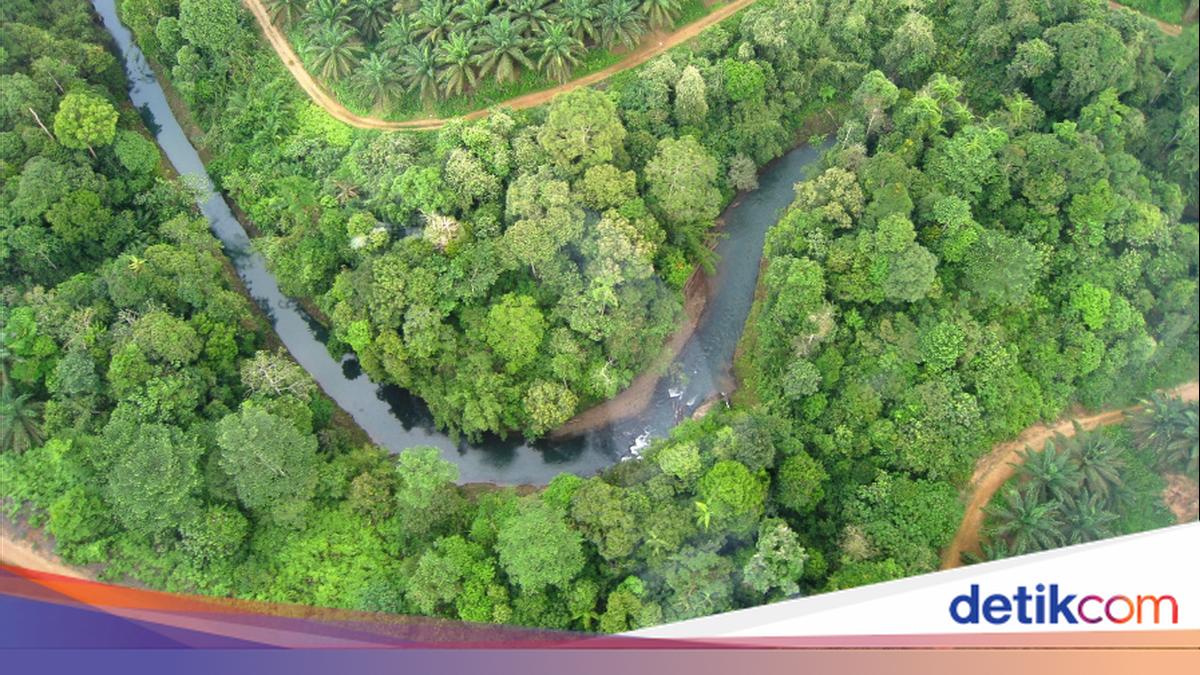
The sound of birds can be heard from behind the trees. A river flows through the green expanse, while hills form part of a landscape that has been preserved amid oil palm plantation activity.
At the PT Kencana Sawit Indonesia (KSI) estate in South Solok, West Sumatra, stretches of oil palm plantations sit alongside forest areas protected as conservation zones. It is there that various wild animals still have space to live, forage and breed.
The area is a High Conservation Value (HCV) zone covering approximately 1,760.25 hectares. It encompasses four rivers, including the Jujuhan and Ganeh rivers, as well as four hills such as Bukit Tengah Pulau and Bukit Saloh.
General Estate Manager of PT KSI, Hari Purnama, said the conservation area forms part of the company’s efforts to maintain a balance between plantation operations and the environment.
“In the plantation business, the priority is indeed palm oil production. But through this conservation work, we want to show the outside world that the company is not solely focused on business, but also genuinely cares for the environment. We maintain and protect this HCV conservation area of nearly 1,700 hectares,” Hari told reporters recently.
To assess the condition of the area, biodiversity monitoring is carried out periodically through annual surveys and rapid surveys. Monitoring results up to 2025 recorded 651 flora and fauna species within PT KSI’s conservation area, comprising 291 fauna species and 360 flora species.
This diversity is visible not only in the animals inhabiting the forest. A number of ecologically valuable plants have also been recorded, including the corpse flower (Amorphophallus), Rafflesia and Agathis alba. The presence of these plant species forms part of the ecosystem that continues to be protected within the HCV area.
The area serves as a habitat for a wide range of animals, from mammals and primates to birds. The Sumatran tiger, clouded leopard, tapir, dhole, siamang and several monkey species have all been recorded there.
One particularly prominent group of birds is the hornbill. Eight hornbill species have been found within the conservation area.
Hari said the presence of siamangs and hornbills is an indicator that the conservation area still provides living space for wildlife. Habitat protection efforts are also carried out in cooperation with other parties, including the Kalaweit Foundation.
“Siamangs and hornbills are endemic to Sumatra. Because they live in this 1,700-hectare conservation forest, we care for them and have made this area a breeding ground for them, partly through our partnership with the Kalaweit Foundation. The success of this conservation work is evident in the well-preserved environment; local people can still see these animals, fish populations in the rivers remain healthy, and the area has now become a welcoming tourist destination for residents,” Hari said.
Efforts to safeguard the area also involve the surrounding communities. PT KSI has recruited local residents to take part in monitoring the conservation zone. Community involvement is seen as helping to track conditions on the ground while protecting the area from potential disturbances.
“To protect the conservation area, we engage and invite local residents to join as monitoring members. We recruited five people each from the Sumedhuni and Talau areas as employees. With direct support and involvement from the surrounding community, problems in the field have become minimal,” Hari said.
This commitment is also oriented towards the long term. The company hopes the conservation area can continue to be protected together with local communities, so that the habitat and ecosystem functions within it endure.
“Our hope for the next five to ten years is that the company and the community can remain equally committed to protecting the conservation area at PT KSI. May this area continue to function and be cared for as long as this company exists,” Hari said.
Traces of Wildlife in the Conservation Area
A clearer picture of wildlife in the area emerges from field monitoring. West Sumatra HCV Officer Ityasman said a number of animals have been recorded through camera traps and direct surveys.
“For mammals, camera traps have captured tapirs, mouse deer, muntjacs, deer, red serow, wild dogs and sun bears. For primates, there are silvered langurs, agile gibbons, long-tailed macaques, slow lorises and pig-tailed macaques. There are also several protected bird species, including eagles, as well as the bido snake and brontok snake, among others,” Ityasman said.
The siamang is also among the animals receiving attention through a rehabilitation and release programme. Ityasman said releases have been carried out in the Bukit Tengah Pulau and Bukit Salo areas.
“Yes, within our conservation area we have released siamangs at Bukit Tengah Pulau and Bukit Saloh. We have released 25 siamangs in total,” he said.
Meanwhile, hornbill populations are monitored through surveys. Eight hornbill species have been found in PT KSI’s conservation area, including the white-bellied woodpecker-hornbill, wreathed hornbill and rhinoceros hornbill.
“We usually obtain hornbill data from surveys. We have found eight hornbill species in our conservation area, including the tengkek or white-bellied hornbill, the wreathed hornbill, and most recently last week the rhinoceros hornbill,” Ityasman said.
Hornbills are not confined to a single location. According to Ityasman, the birds can be found from the riverbanks to the forests on the hills, and their appearances vary in timing.
“Hornbills are quite dispersed, depending on where their nests are within our conservation area. They range from the riverbank areas to the hill forests. Their appearances also vary in time — sometimes in the morning, midday or afternoon,” he said.
Tracing the Jujuhan River
The Jujuhan River is one of the parts of the conservation area visited by adventurer Panji Petualang when seeing first-hand the natural condition of PT KSI’s conservation zone.
During his visit, Panji travelled along the river and encountered one of the animals living in the area: a banded krait.
“This is a banded krait, moderately venomous, different from the Weling. It is probably a predator of small animals, such as squirrels and others,” Panji said.
The encounter offered a small glimpse of the wildlife still thriving in the conservation area. Not only the forests and trees, but also the rivers, form an essential part of the living space for many species.
“What a warm welcome from the nature of Sumatra, guys,” Panji said.
Amid the expanse of oil palm plantations, the presence of this green area provides space for countless forms of life. There are forests that remain intact, rivers that keep flowing, and animals that still have a place to live.
For the 651 flora and fauna species recorded within it, the area is more than just a conservation zone. It is their home.
Source: jawawa.id (https://jawawa.id/newsitem/traces-of-651-species-in-the-south-solok-conservation-forest-1789466084)
Originally published by detikcom (https://news.detik.com/berita/d-8663918/jejak-651-spesies-di-hutan-konservasi-solok-selatan), translated from Indonesian