
TPST Kertamukti Cibitung Aims to Process 50 Tonnes of Waste Daily
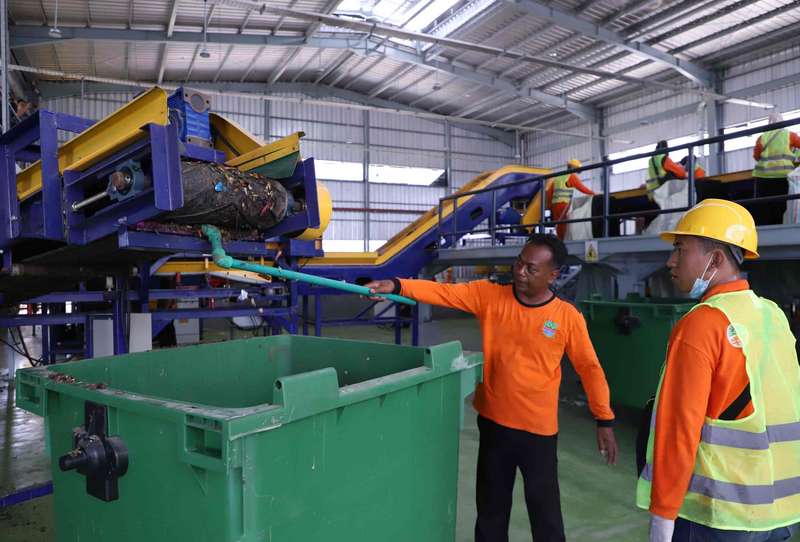
The Integrated Waste Management Facility (TPST) Kertamukti in Kampung Pisang Batu, Kertamukti Village, Cibitung District, Bekasi Regency, West Java, continues to receive attention in efforts to improve waste management. One such instance was a visit from the World Bank and the Improvement of Solid Waste Management to Support Regional and Metropolitan Cities Project (ISWMP) to TPST Kertamukti on Monday, 25 May 2026. Head of the UPTD Region III, Bekasi Regency Environmental Agency (DLH), R Sopyan Rahayu, stated that the visit was part of routine monitoring to track waste management progress and optimise existing facilities at TPST Kertamukti. “This World Bank and ISWMP monitoring is a regular activity concerning their project progress and TPST operations. Several optimisations will be carried out at TPST, including the use of the latest drying machines and RDF machine improvements,” Sopyan said in a statement on Tuesday, 26 May. He explained that TPST Kertamukti currently faces several challenges, particularly in maintenance budget and equipment optimisation. However, the DLH and Regional Government Budget Team (TAPD) have sought budget support through reallocation to ensure TPST operations continue. “Due to budget constraints, we are facing difficulties. But yesterday, the agency and TAPD have made efforts, God willing, maintenance will proceed in the future,” he said. Sopyan added that optimising Refuse Derived Fuel (RDF) machinery is a top priority, as the current RDF has high moisture content, resulting in suboptimal calorific value. Therefore, the Ministry of Public Works, together with ISWMP, is preparing RDF drying machines. “Our RDF’s calorific value is low because it’s not sufficiently dry. Hopefully, the equipment will arrive within two weeks, including the RDF drying machine,” he said. Additionally, the TPST’s processing capacity is targeted to increase. Currently, TPST Kertamukti can handle only about 20-25 tonnes of waste per day, while the ideal target is 50 tonnes per day. “We’re currently processing an average of 20 to 25 tonnes of waste daily at TPST. However, the ministry’s concept should be 50 tonnes per day. Hopefully, after machine optimisation, we can meet this target,” Sopyan explained. During the waste management process, incoming waste is sorted by staff into categories such as RDF material, plastic, household waste, and residue. Of the total waste received, approximately 25% is processed into RDF, with the remainder being residue and other materials. He also noted that TPST Kertamukti currently serves only part of Cibitung District, specifically four villages around the facility. For waste management in UPTD III’s area covering three districts, they are supported by only 38 dump trucks. “When it comes to sufficiency, it’s still far from adequate. Cibitung has become an urban area with dense population and increasing waste volume each year,” he said. Sopyan hopes TPST Kertamukti can be maintained and developed to operate optimally. He expressed gratitude that the facility was donated without using Bekasi Regency’s regional budget (APBD). “We’re grateful to have received this TPST as a donation without using Bekasi Regency’s APBD. In other regions, many TPSTs become idle due to insufficient budgets. Alhamdulillah, TPST Kertamukti remains operational despite needing further improvements,” he concluded. (AK/I-1)