
TPBIS reaches millions, changing perspectives on libraries
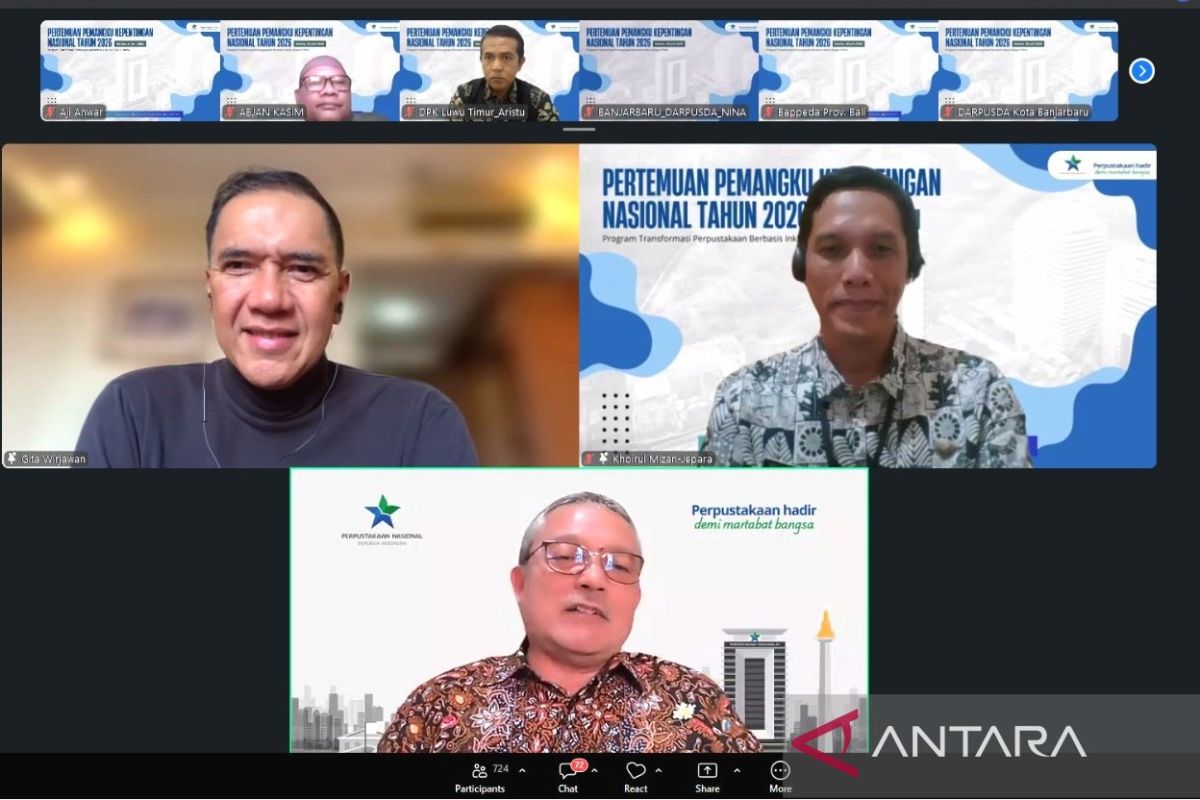
Without literacy, documentation, cognition, and the distribution of cognition, we will be unable to honour the concept of democracy.
Jakarta (ANTARA) - The 2026 Social Inclusion-Based Library Transformation Programme (TPBIS) has successfully changed perspectives on libraries and has reached millions of people.
The Head of the National Library of Indonesia (Perpusnas), E. Aminudin Aziz, stated that TPBIS emphasises cross-sector collaboration and the spirit of ‘gotong royong’ (mutual cooperation). Since its implementation in 20lar 2018, TPBIS has cumulatively reached approximately 13.9 million people.
“We are witnessing people coming to libraries with a new determination to improve their literacy skills in order to transform their welfare status for the better. Libraries are transforming into more productive and creative spaces to enhance the quality of life,” Aminudin said in an official statement in Jakarta on Sunday.
He explained that in 2026, the TPBIS programme will be implemented across 750 locations. Nevertheless, Perpusnas continues to encourage the replication of the programme in various regions through local government initiatives and support from stakeholders.
“The idea for TPBIS comes from the central government, but its implementation remains at the village level, supported by the community as the subjects of this activity, because the ultimate goal is the collective improvement of quality of life. This is the essence of collaboration, partnership, and the value of mutual cooperation,” he explained.
He also expressed hope that there would be no perception that regional libraries are taking over the duties of other regional government agencies, as libraries are actually presenting innovations that benefit the community.
“Do not view it as the duties of other departments being taken over by regional libraries; rather, libraries want to present an innovation on how the value of mutual cooperation can be realised through cross-sector partnerships with the ultimate goal of increasing community welfare,” he added.
On the same occasion, author and public figure Gita Wirjawan emphasised the importance of reading culture, documentation, and the distribution of knowledge as the foundation of civilisational progress. He assessed that Indonesia and the Southeast Asian region still face challenges in documenting the wealth of knowledge and wisdom possessed by their people.
“Without literacy, documentation, cognition, and the distribution of cognition, we will not be able to honour the concept of democracy,” he said.
Meanwhile, the Deputy for Human, Social, and Cultural Development at the Ministry of National Development Planning/Bappenas, Pungkas Bahjuri Ali, stated that strengthening literacy through libraries is a vital part of human resource development towards ‘Indonesia Emas 2045’ (Golden Indonesia 2045). The government continues to strengthen support for the development of village libraries through various regulations, including the revision of the Village Law and opportunities to utilise village funds that can be synergised with TPBIS activities.