
TP PKK Expert Yane Ardian Backs NTT Moringa as High-Value Nutritional and Economic Commodity
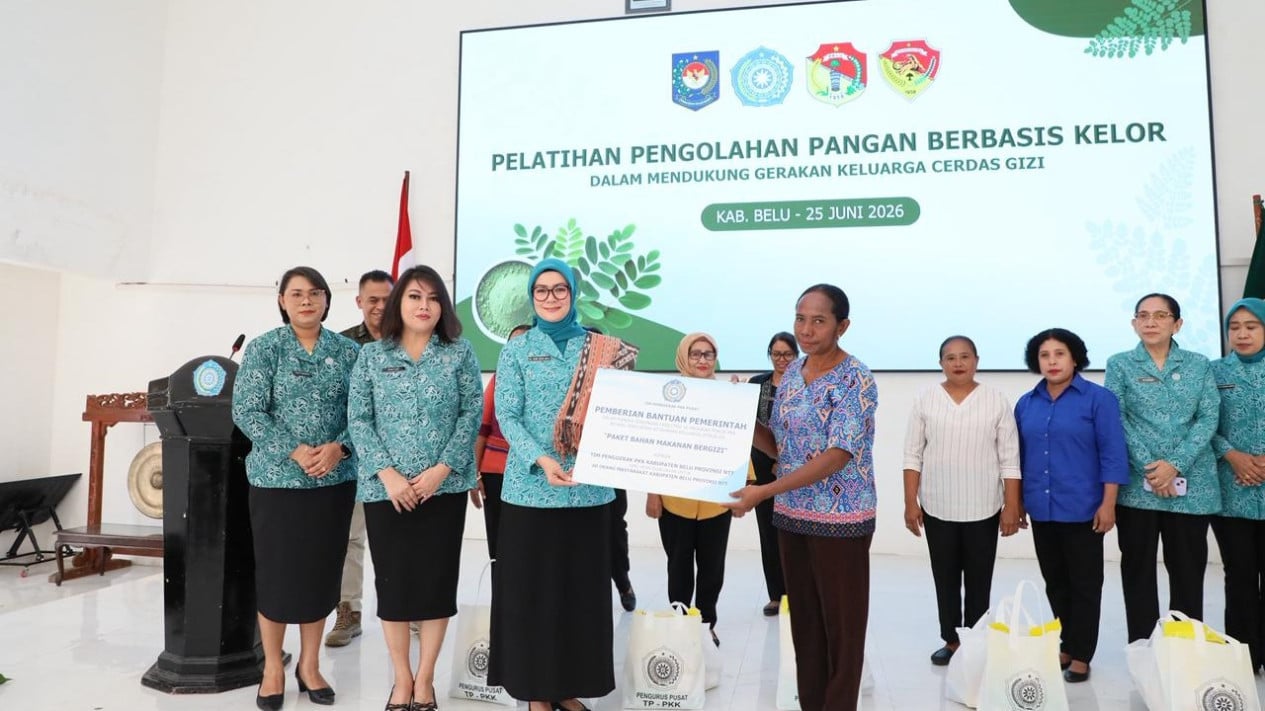
Yane Ardian Bima Arya, Staff Expert for the Family Welfare Empowerment Team (TP PKK) in the Field of Strengthening Family Food Security, has endorsed moringa from East Nusa Tenggara (NTT) as a superior commodity with high nutritional value while also being capable of improving the community’s economy. She made the statement during a speech at the Moringa-Based Food Processing Training in Support of the Nutrition-Smart Family Movement at the Betelalenok Women’s Building, Belu Regency, NTT, on Thursday (25/6/2026). “Let us make moringa one of NTT’s superior commodities. Let us keep promoting it, ladies and gentlemen! At the same time, contributing to the effort to realise healthy, strong, and stunting-free families through the consumption of diverse, nutritious, balanced, and safe food,” she said. Yane explained that NTT moringa has a denser nutritional content compared to moringa from other regions because it grows in areas with dry soil and extreme climates. For this reason, the Central TP PKK is providing training to mothers so that the utilisation of moringa can be optimised. “The best, one of the best in the world. So it would be a pity if it is not utilised very well. So, besides being easy to cultivate here, moringa contains vitamins, minerals, and antioxidants that are beneficial for health,” she continued. Nevertheless, Yane reminded that moringa is not the only source of nutrition. Its consumption still needs to be balanced with animal protein such as fish, eggs, and milk. According to her, animal protein contains essential amino acids, iron, zinc, and vitamin B12 needed to support children’s growth and development. “We are not only learning about the cultivation and processing of moringa into value-added products, but also strengthening understanding about the importance of balanced nutrition for families,” she added. Yane assessed that NTT moringa has the potential to strengthen family food security, improve the quality of public nutrition, and simultaneously become a commodity with high economic value. This potential needs to be supported through sustainable cultivation and processing into various value-added products. “Hopefully this training can run smoothly, provide great benefits for the participants, and become a concrete step in developing the potential of moringa in East Nusa Tenggara,” she hoped.