
TP PKK Deemed to Play Vital Role in Addressing Waste Issues Through Education
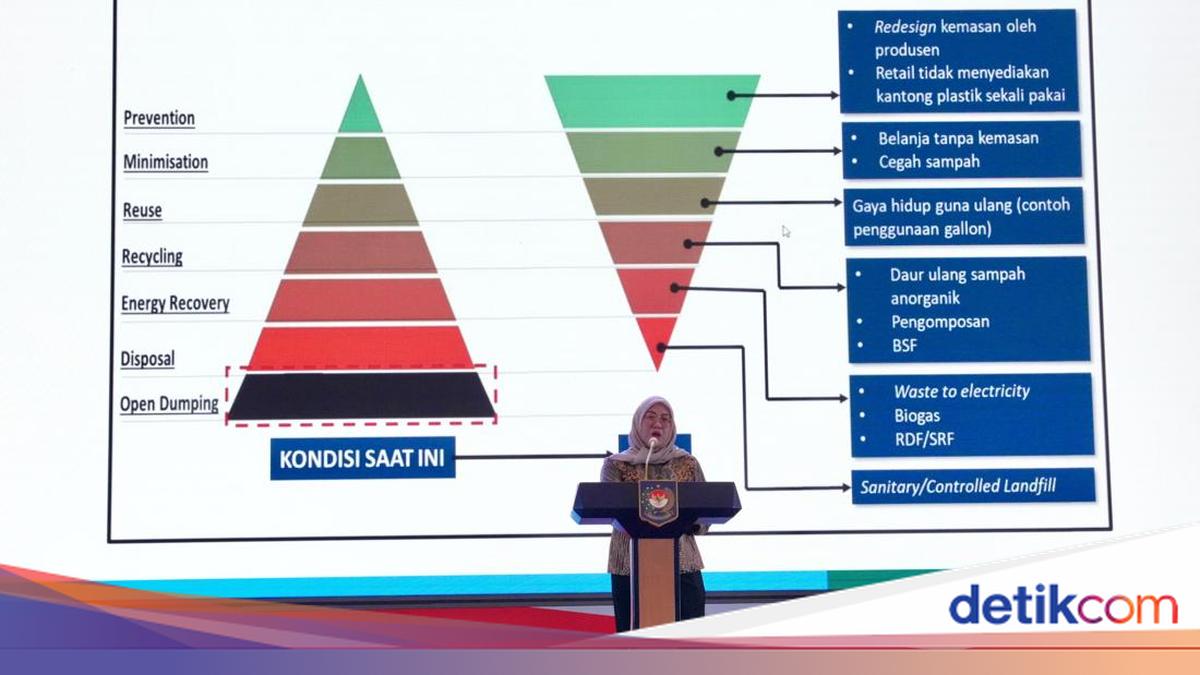
The Family Empowerment and Welfare Movement (TP PKK) is considered to have a vital role in encouraging changes in community behaviour to address waste issues. This role can begin within the household environment through education, sorting, and waste reduction at the source.
This was stated by the Expert Staff to the Minister of Environment, Hanifah Dwi Nirting, during a meeting to strengthen the governance of TP PKK, Dekranas, and the Posyandu Supervisory Team, held at the Bidakara Hotel, Jakarta, on Monday (21/09/2026). The event aimed to serve as a forum to discuss strengthening the role of community organisations in supporting environmental management.
Hanifah explained that the TP PKK network, extending down to the Dasawisma level, serves as essential capital for educating and mobilising families regarding waste management.
“Why must it be the PKK? Because the PKK plays a key role in the transformation of the waste management paradigm. The PKK exists as an organisation from the central level down to the Dasawisma level,” said Hanifah Dwi Nirting in a written statement on Tuesday (22/09/2026).
According to Hanifah, waste issues cannot be sufficiently addressed through downstream waste management facilities alone, as changes in community behaviour must begin at the source. Families can reduce waste generation by planning shopping according to needs, reducing single-use items, extending the lifespan of goods, and sorting waste from home.
Hanifah also encouraged the public to adopt habits of sorting waste and reducing the use of single-use items in daily household activities.
“This means that starting today, we will try to implement how we plan our shopping, finish our food, avoid single-use items, and then provide sorting points in each household; do not forget to sort the waste,” she said.
Hanifah emphasised that waste management in Indonesia still faces numerous challenges, as only about 25 per cent of management is currently functioning well. Hanifah noted that there are still 343 landfill sites (TPA) employing open dumping systems, prompting local governments to end this practice immediately.
“Currently, we at the Ministry of Environment are encouraging local governments to promptly end open dumping,” she said.
Hanifah stressed that collaboration between local governments and TP PKK is necessary to strengthen education, assistance, and waste management actions from the family level to the community environment. Hanifah affirmed that the Ministry of Environment is prepared to provide support through materials, technical standards, training, the strengthening of waste banks, and the facilitation of recycling networks.
The meeting also served as a momentum for the signing of a Memorandum of Understanding between TP PKK and the Ministry of Environment. Hanifah explained that her office has prepared a proposed roadmap as a follow-up to ensure the cooperation has measurable targets and clear assistance locations.
This cooperation is focused on encouraging the formation of a waste-free PKK village or neighbourhood model through assistance conducted alongside local governments. The programme is also expected to strengthen waste management at the household level while simultaneously reducing the waste management burden in the regions.