
Toyota prioritises innovation and adaptation for sustainable export performance
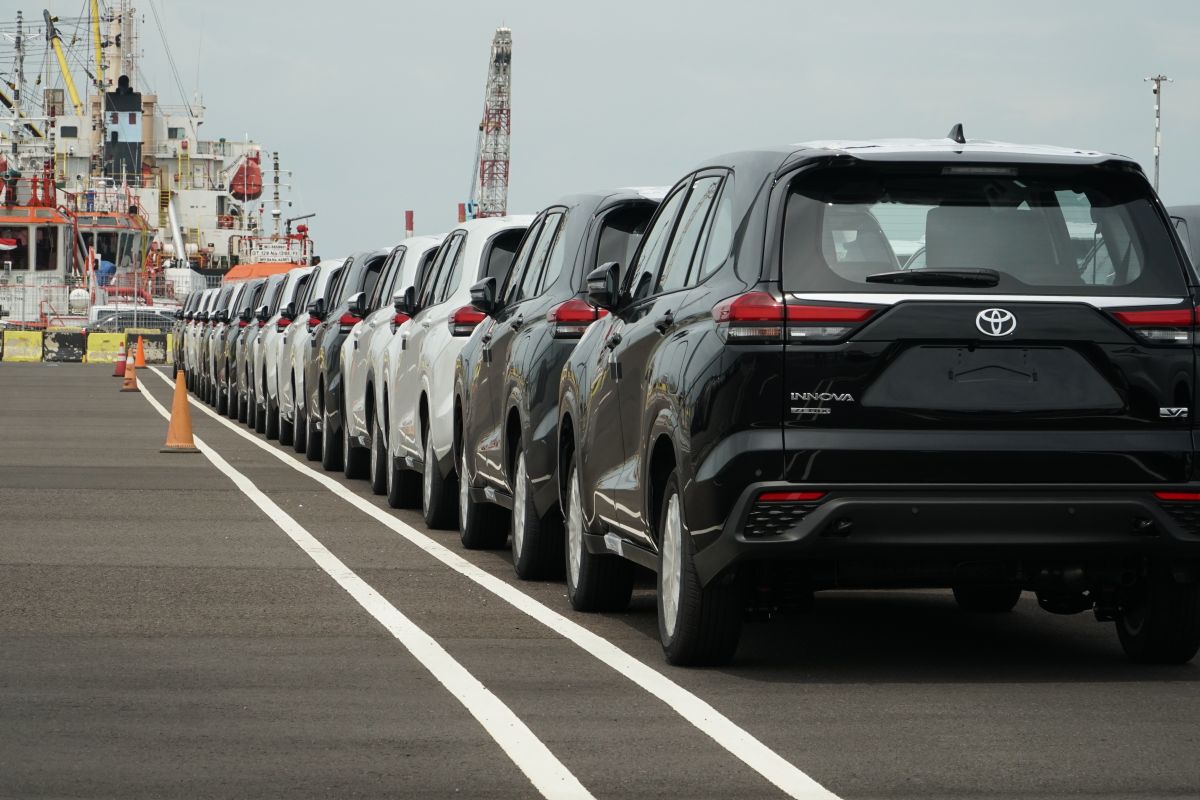
Jakarta (ANTARA) - PT Toyota Motor Manufacturing Indonesia (TMMIN) has committed to prioritising innovation and the ability to adapt quickly in order to sustain the positive performance of its export activities.
“The sustainability of export performance depends heavily on continuous innovation and the ability to adapt to changing regulations and consumer preferences across different countries,” said TMMIN Vice President Director I Nyoman Winaya Adnyana in a statement in Jakarta on Monday.
He further emphasised that a deep understanding of the needs and trends of international markets is an important foundation for the Indonesian automotive industry.
Armed with that understanding, he continued, the national automotive industry continues striving to deliver relevant and competitive products that can meet the expectations of global consumers.
The positive reception of Toyota Indonesia-manufactured vehicles in international markets is also supported by a product development process rooted in the needs of Indonesian consumers.
The Toyota Avanza and Veloz contributed 32,571 units to exports, the Raize 26,082 units, and the Yaris Cross 20,441 units between January and June 2026.
The transformation towards low-emission vehicles has also driven the company to continue developing national manufacturing capabilities through the production and export of electrified vehicles from Indonesia.
For the Kijang Innova Zenix Hybrid Electrified Vehicle (HEV) and Yaris Cross Hybrid EV, Toyota Indonesia recorded growth of 46.4 per cent to 12,693 units in January-June 2026 compared with the same period the previous year.
Cumulatively since 2023, the two models have been exported to various countries with a total volume exceeding 62,906 units.
“Going forward, we will continue to expand market penetration, raise quality standards, and strengthen our portfolio of environmentally friendly vehicle technologies,” said I Nyoman Winaya.
“The national automotive industry must be at the forefront of facing change and building an electrified vehicle ecosystem capable of meeting international market demand for low-emission products, particularly in facing the energy transition era,” he added.
In line with the public’s evolving mobility needs, Toyota Indonesia also offers a range of vehicles manufactured at its facilities in Indonesia through a multi-pathway strategy, spanning Battery Electrified Vehicles (BEV) and Hybrid Electrified Vehicles (HEV).
In addition, Toyota is supporting the development of Flexy Fuel Vehicles (FFV) that use bioethanol as an alternative fuel.
This initiative not only supports decarbonisation of the transport sector, but also opens opportunities to improve farmers’ welfare through the use of domestic bioethanol feedstock, whilst reducing dependence on imported fossil fuels.
“Through these various measures, Toyota Indonesia is optimistic it can strengthen the foundations of long-term exports whilst driving the development of a national manufacturing ecosystem that is increasingly competitive in seizing opportunities in the global automotive industry,” said I Nyoman Winaya.