
Toyota Maintains Export Performance for Indonesia's Automotive Industry in First Half of 2026
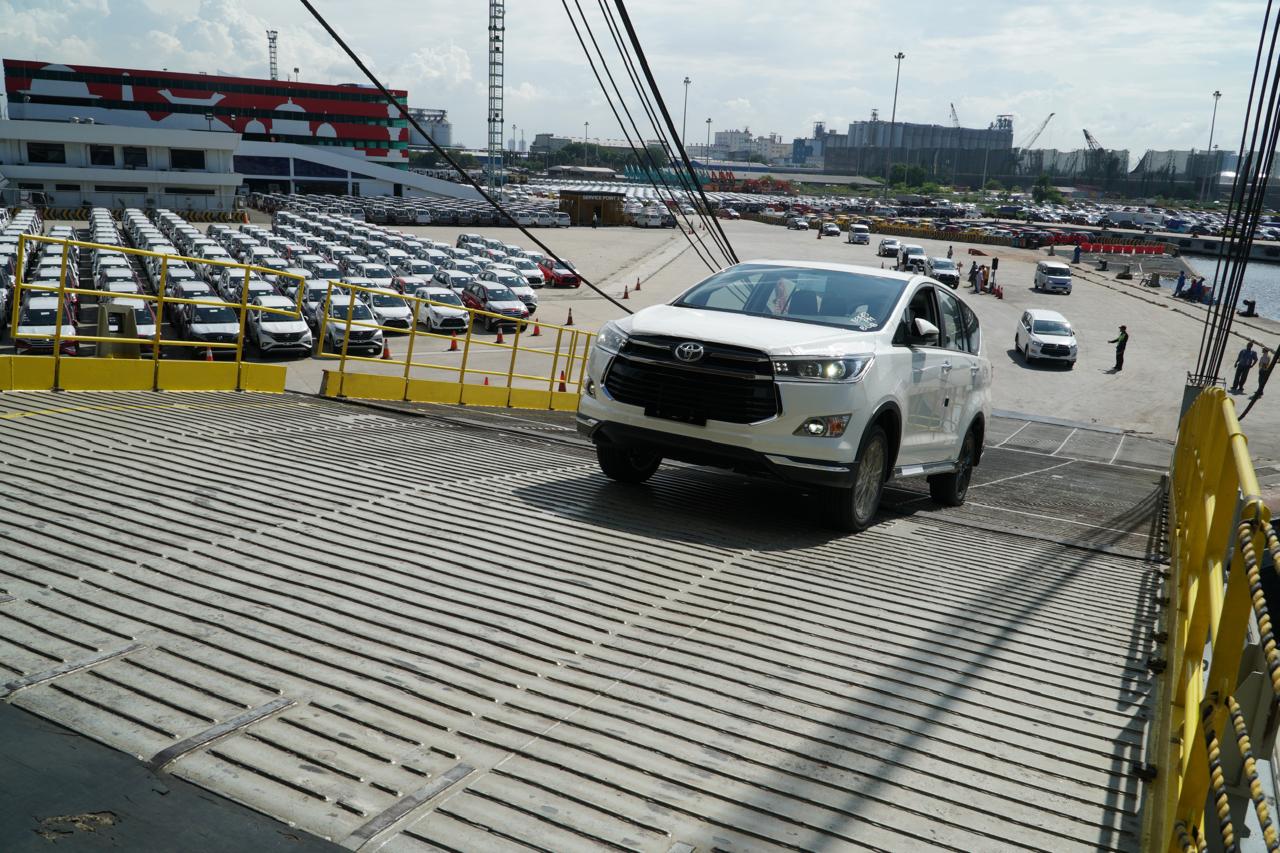
Toyota Indonesia continues to synergise with local supply chains and all stakeholders to enhance the competitiveness of the national automotive industry. Amid global geopolitical dynamics and challenges, Toyota Indonesia is striving to maintain positive export performance for completely built-up (CBU) vehicles.
According to data from the Association of Indonesian Automotive Industries (GAIKINDO), throughout January to June 2026, Toyota Indonesia shipped 145,150 Toyota-branded vehicles to global markets, an increase of 10.7% compared to the same period the previous year. This achievement contributed 57.6% to the national CBU export total of 251,705 units. Overall, Indonesia’s automotive exports grew by approximately 7.7%. Since commencing export activities in 1987 up to the first semester of 2026, Toyota Indonesia has cumulatively exported 3,296,874 vehicles produced by the nation’s workforce to more than 100 countries across Asia, South America, Africa, the Middle East, Australia, and Oceania.
“The consistency of export performance is inseparable from the hard work of the nation’s people and collaboration involving more than 760 local supply chains, including Small and Medium Industries (IKM), as well as support from the Government of Indonesia. Together, all these elements play a role in strengthening the competitiveness of the national automotive industry amidst global geopolitical dynamics. We ensure that local products can meet the increasingly competitive demands of the global market,” said President Director of PT Toyota Motor Manufacturing Indonesia (TMMIN), Nandi Julyanto.
Export growth during the first half of 2026 was driven by sustained strong demand from various destination markets. The Asian region was the largest export destination, contributing 57.8% of Toyota Indonesia’s total exports, followed by the Americas at 29.5% and the Middle East at 12.0%. This performance is also supported by strong domestic demand, increased local content, a developing industrial ecosystem, and policies that support industrial development, thereby strengthening the competitiveness of the national automotive industry and boosting export growth.
Toyota Indonesia’s export performance is also supported by the export of various components, including Completely Knocked Down (CKD) parts, vehicle components, complete engines, engine components, and production tools such as dies. Positive reception of Toyota vehicles produced in Indonesia in the international market is also supported by a product development process that originates from the needs of Indonesian consumers. Various A and B segment models produced in Indonesia continue to be the choice of customers in several countries. The Toyota Avanza and Veloz contributed 32,571 export units, the Raize 26,082 units, and the Yaris Cross 20,441 units from January to June 2026.
The transformation towards low-emission vehicles is also encouraging Toyota Indonesia to continue developing national manufacturing capabilities through the production and export of electrified vehicles from Indonesia. For models such as the Kijang Innova Zenix Hybrid Electric Vehicle (HEV) and Yaris Cross Hybrid EV, Toyota Indonesia recorded a 46.4% growth to 12,693 units in the first half of 2026 compared to the same period the previous year. Cumulatively since 2023, these two models have been exported to various countries with a total volume exceeding 62,906 units.
Vice President Director of TMMIN, I Nyoman Winaya Adnyana, emphasised that a deep understanding of international market needs and trends is a crucial foundation for the Indonesian automotive industry. Armed with this understanding, the national automotive industry continues to strive to deliver products that are relevant and competitive, while meeting the expectations of global consumers. “The sustainability of export performance is highly dependent on continuous innovation and the ability to adapt to regulatory changes and consumer preferences in various countries. Going forward, we will continue to expand market penetration, improve quality standards, and strengthen our portfolio of environmentally friendly technology vehicles. The national automotive industry must be at the forefront of facing change and building an electrified vehicle ecosystem that can meet the international market’s needs for low-emission products, especially in facing the energy transition era,” explained I Nyoman.
In line with the evolving mobility needs of society, Toyota Indonesia also offers a variety of vehicle choices produced at its facilities in Indonesia through the implementation of a multi-pathway strategy, including Battery Electrified Vehicles (BEV) and Hybrid Electrified Vehicles (HEV). In addition, Toyota is encouraging the development of Flexy Fuel Vehicles (FFV) that utilise bioethanol as an alternative fuel. This initiative not only supports the decarbonisation of the transportation sector but also opens opportunities to improve the welfare of farmers through the use of domestic bioethanol raw materials while reducing dependence on fossil fuel imports. Through these various measures, Toyota Indonesia is optimistic about strengthening the foundation for long-term exports while encouraging the development of a more competitive national manufacturing ecosystem to seize opportunities in the global automotive industry.