
Tower Demolition Ruling Could Degrade Telecommunications Service Quality in Badung
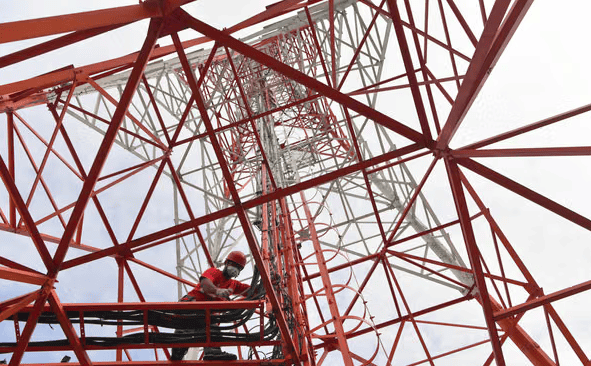
The content of one of the Bali High Court rulings ordering the demolition of telecommunications towers in Badung Regency that do not belong to PT Bali Towerindo Sentra Tbk has the potential to reduce the quality of telecommunications services, ranging from decreased internet speeds to the emergence of areas without service or blank spots.
Executive Director of the Information and Communication Technology (ICT) Institute Heru Sutadi said that a significant reduction in the number of sites could increase traffic load on towers that remain operational. This condition could potentially reduce service capacity and quality, especially in densely populated areas and locations with high communication traffic.
“Reducing the number of sites can increase the load on the remaining towers. The impact could be a decrease in capacity and speed, especially in dense areas and during peak hours,” Heru said in his statement, Jakarta, Tuesday (25/8).
The statement was made by Heru in response to appeal ruling Number 200/PDT/2026/PT DPS dated 20 August 2026 in the case between the Badung Regency Government and PT Bali Towerindo Sentra Tbk. Based on information in the Case Tracking Information System (SIPP) of the Denpasar District Court, the Bali High Court accepted the appeal requests of both parties while also amending the ruling of the Denpasar District Court Number 1372/Pdt.G/2025/PN Dps.
In its ruling, the Bali High Court declared the integrated telecommunications tower infrastructure provision cooperation agreement between the Badung Regency Government and PT Bali Towerindo Sentra Tbk valid and legally binding. The court also declared that the Badung Regency Government had committed a breach of contract and ordered the regional government to extend the agreement for 20 years until 7 May 2047.
One of the rulings also ordered the Badung Regency Government to demolish all telecommunications towers in the Badung Regency area that do not belong to PT Bali Towerindo Sentra Tbk. The Badung Regency Government is also prohibited from issuing business permits or telecommunications tower permits to other parties until the end of the agreement extension period.
Heru said the impact on service quality depends greatly on which towers are demolished and how operators rearrange their networks. According to him, the problem becomes more serious if the demolished towers are critical sites that play an important role in maintaining network coverage and capacity.
“It could happen, especially if the demolished tower is a critical site and no replacement is yet available. The impact could be blank spots, weakened signals, reduced throughput, dropped calls and data communication disruptions,” he said.
The need for site density is also increasingly important in the development of 5G networks. According to Heru, the characteristics of certain frequency usage in 5G networks make the need for network density higher compared to networks with wider coverage.
“For 5G, site density is increasingly important because the characteristics of certain frequencies require a denser network. So if towers are significantly reduced without replacement, what the public first feels is not always loss of signal, but reduced service quality and speed,” he said.
Therefore, Heru asked that service continuity aspects be taken into account in the implementation of the ruling. According to him, demolition should not be carried out before replacement infrastructure is available that can maintain network coverage and capacity.
“What needs special attention is emergency communications. Therefore, do not demolish first and then look for a network solution,” he said.
He assessed that the legal and business dispute between the Badung Regency Government and PT Bali Towerindo Sentra Tbk is a matter that must be resolved through the applicable legal mechanism. However, the implementation of the ruling still needs to take into account its impact on the public as users of telecommunications services.
“Court rulings must of course be respected. Although there is still an opportunity for cassation to the Supreme Court,” Heru said.
According to Heru, the public should not be the party bearing the impact of the infrastructure dispute. If tower demolition must indeed be carried out, a transition period and network rearrangement planning are needed so that service continuity is maintained.
“If demolition must indeed be carried out, there must be a transition period, replacement sites and a guarantee of service continuity,” he said.
From a public interest perspective, Heru said, each party has its own consequences. Mobile operators may face replanning costs and new site construction, tower owners face business consequences, while regional governments must consider governance and public service aspects.
“From a public interest perspective, the public is the party that most needs to be protected. Operators may face replanning costs and new site construction, tower owners face business consequences, while regional governments face governance and public service impacts,” he said.
He also reminded of the concentration risk if telecommunications infrastructure is too dependent on a single provider. According to Heru, the use of shared infrastructure can indeed improve efficiency and help reduce the number of towers, especially in areas with high spatial planning needs. However, this efficiency still needs to be balanced with redundancy and infrastructure alternatives.
“The potential concentration risk does need to be considered. Efficiency through a single infrastructure provider can reduce the number of towers and maintain spatial planning, but it should not eliminate redundancy and infrastructure options,” he said.
According to him, a healthy telecommunications network requires alternative sites and routes to maintain service resilience when disruptions occur.