
Towards the ChatGPT Phone: OpenAI to Develop Chips for Its Mobile Device
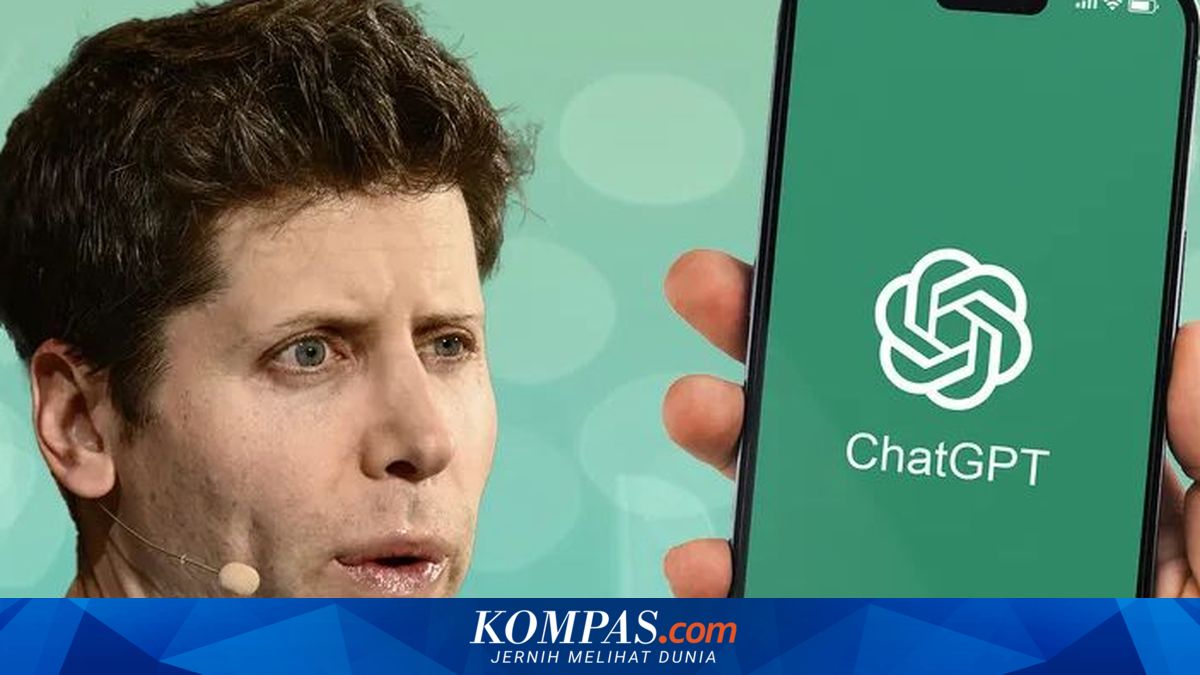
The ChatGPT phone appears to be approaching reality. The parent company of the AI chatbot ChatGPT, OpenAI, is reportedly set to develop a key component for its own phone project. That component is the chipset, which serves as the “brain” of the ChatGPT phone.
For context, discussions about creating AI-based hardware from OpenAI have been circulating since around May 2025. At that time, OpenAI acquired the Io startup owned by Jony Ive, the former iPhone designer.
The rumour that OpenAI will develop a chipset for the ChatGPT phone was revealed by renowned analyst from TF International Securities, Ming-Chi Kuo, who often provides accurate leaks about technology news.
In a post on his X account (formerly Twitter), Kuo stated that OpenAI is in the process of forging partnerships with Qualcomm and MediaTek.
This collaboration aims to develop a custom System-on-Chip (SoC) to serve as the “brain” of a smartphone focused on more optimal AI processing.
The end product is said to be an AI phone dubbed the “AI Agent Phone”. This phone is a device that can execute various tasks automatically, quickly, and efficiently, with minimal user intervention.
Unlike typical smartphone chipsets that prioritise processor (CPU) and graphics processing unit (GPU) performance, OpenAI’s chip is said to focus on accelerating AI processing.
This strategy is similar to Google’s approach with the Tensor chip in Pixel devices, which prioritises AI and machine learning (ML) capabilities.
Kuo assesses that partnering with Qualcomm and MediaTek allows OpenAI to avoid building processor architecture from scratch, which is known to be complex and expensive.
OpenAI has previously ventured into AI chip development with Broadcom. However, that chip was designed for data centres, not phones.
That chip is used to accelerate AI workloads while reducing operational costs for a data centre.
Kuo also predicts that the semiconductor product will enter mass production in 2028.
The Chinese electronics manufacturing company, Luxshare, is said to be OpenAI’s exclusive production partner.