
Towards genuine energy independence
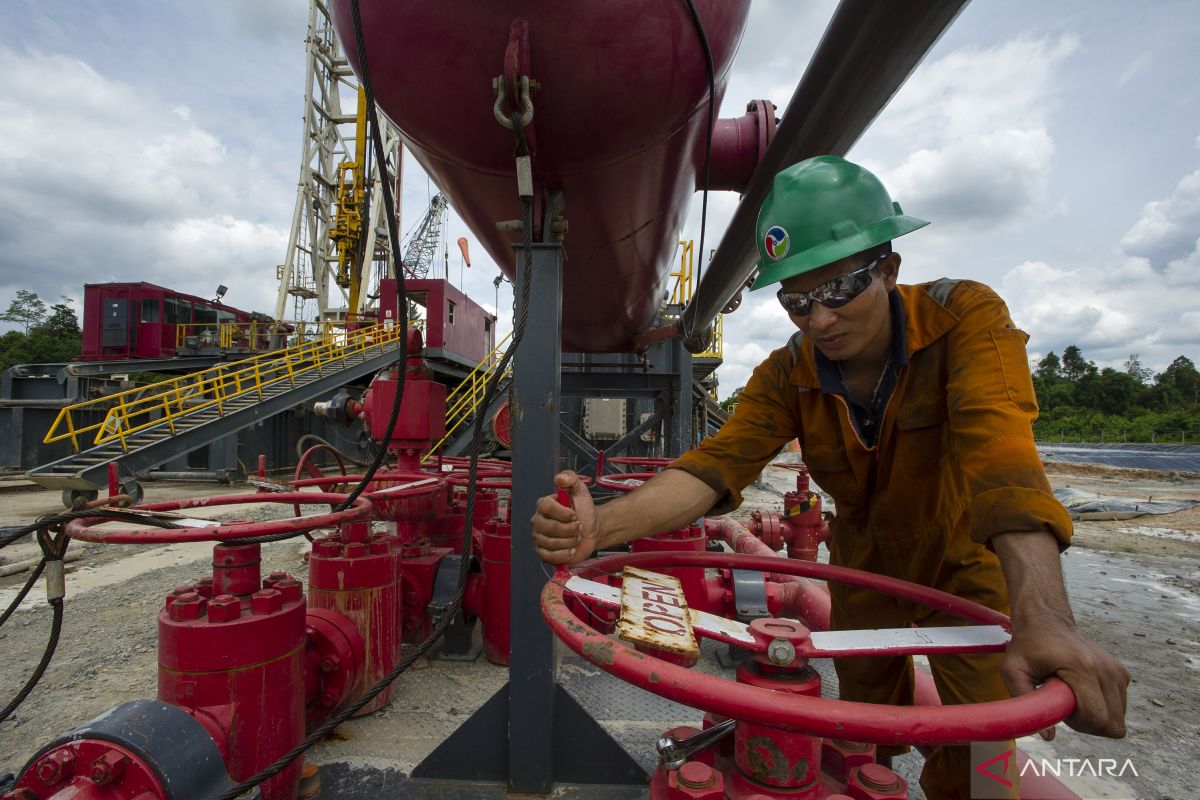
When discussing Indonesia’s future as a developed nation, public attention often focuses on infrastructure development, strengthening the manufacturing industry, or improving the quality of human resources. Yet, one foundation is often overlooked, though it determines the success of the entire development agenda: energy independence. No country can sustain economic growth, expand job opportunities, develop education, or improve public welfare without a sufficient, affordable, and sustainable energy supply. Therefore, the issue of energy security is not merely a technical matter for the oil and gas sector, but part of a nation’s grand strategy in determining its own future.
In this regard, the national oil production target of one million barrels per day and gas production of 12 billion cubic feet per day by 2030 becomes significant. This target emerges amidst considerable challenges. Many of Indonesia’s oil and gas fields have been operating for decades and are facing natural production decline. This condition is a challenge faced by almost all oil and gas producing countries with mature fields.
However, technological developments offer new hope. One approach that is gaining increasing attention is the application of Enhanced Oil Recovery (EOR), a technology that allows the remaining oil reserves in reservoirs to be produced more optimally. By utilising technologies such as steam injection and various other enhanced recovery methods, old wells previously considered to have declining productivity still have the potential to make a significant contribution.
Optimism towards achieving the one million barrel per day target is also supported by increasingly advanced exploration technology. More accurate subsurface mapping capabilities open up opportunities for discovering new resources that were previously difficult to access. In many countries, technological progress has become the factor that changes perceptions regarding the limitations of energy resources.
PT Pertamina Hulu Energi’s President Commissioner, Denny Januar Ali, known as Denny JA, stated that the production target of one million barrels per day is not an empty dream if supported by the application of EOR technology, active exploration activities, accelerated licensing, and increasingly synergistic relations among various stakeholders in the energy sector. Interestingly, Denny JA does not only emphasise production. He also affirms the importance of building a collaborative energy ecosystem. In his view, the state cannot act alone. The involvement of the private sector is necessary to bring about innovation, efficiency, and technological development. However, such participation must remain within a corridor of transparency, good oversight, and alignment with national interests.
This idea is relevant to today’s increasingly complex energy challenges. The modern energy industry requires large investments, high technology, and non-trivial risk management capabilities. Therefore, collaboration between the government, state-owned enterprises, the private sector, academia, and the community is becoming ever more critical. Denny JA also views the social dimension of energy security as no less important. According to him, the success of the energy sector should not be measured solely by the number of barrels produced. Communities and energy-producing regions must also gain tangible benefits through strengthened education, healthcare services, cultural development, and local economic growth.