
Tourism Mobility Diversifies as LRT Jabodebek Enhances Connectivity through Intermodal Integration
Jakarta (ANTARA) - Public demand for public transport continues to evolve, moving beyond routine commutes for work to include weekend recreational activities with families. This shift in mobility patterns makes connectivity between regions and ease of access to destinations a crucial element of public travel.
LRT Jabodehas become a key part of the urban transport ecosystem supporting this mobility. By providing services that connect various areas across Jakarta, Bekasi, and Depok, LRT Jabodebek serves as a viable travel option to various activity centres, including tourist areas.
With 18 stations spread across Jakarta, Depok, and Bekasi, LRT Jabodebek connects to numerous hubs of activity, including several tourist destinations that can be reached directly or via transfers to other modes of transport.
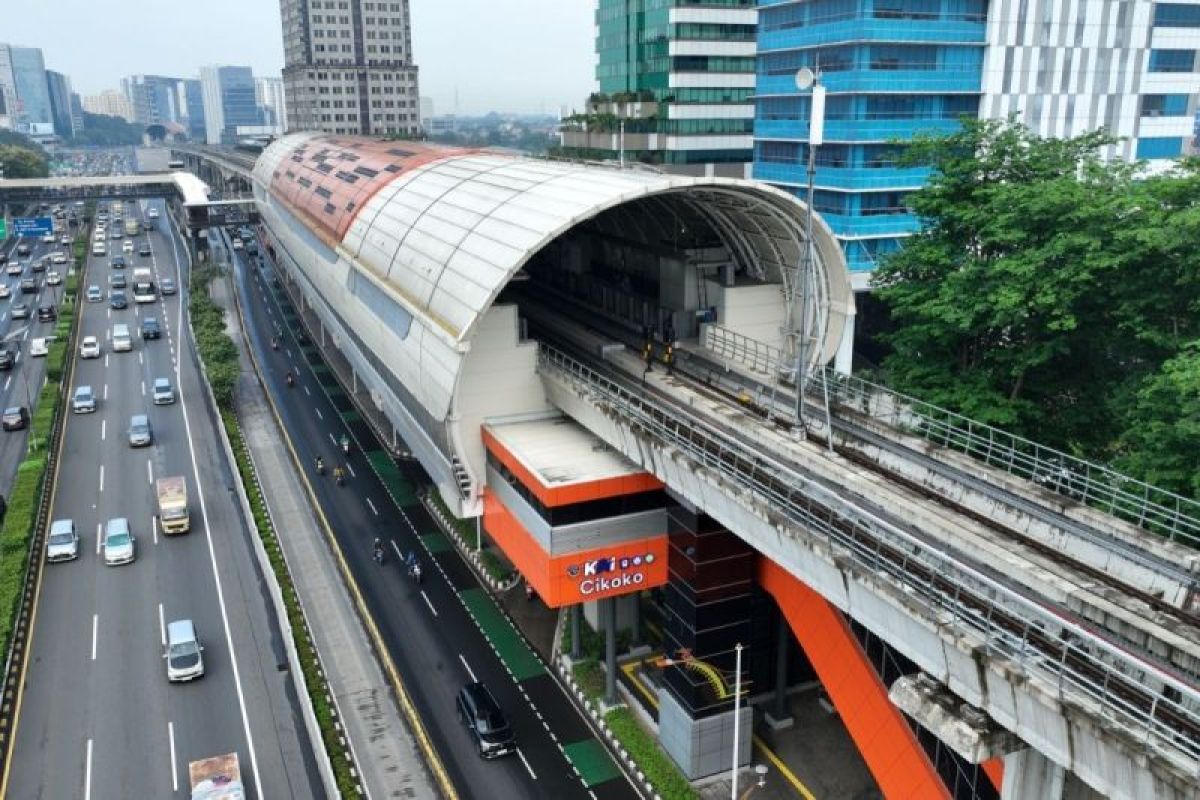
The strategic locations of LRT Jabodebek stations are currently directly integrated with the Commuterline, Airport Rail Link, MRT Jakarta, and TransJakarta at the Dukuh Atas Bank Syariah Indonesia Station, as well as TransJakarta at eight different points and KAI Commuter at Cikoko Station. Additionally, feeder shuttles, public transport, and online motorcycle taxis are available at almost all stations to assist with last-mile connectivity.
This connectivity is becoming increasingly relevant as travel needs grow across various segments. During weekends and national holidays, the average number of users rose to 46,878, a 13% increase compared to the 2025 weekend average of 41,363 users, with peak movement occurring on Saturdays and Sundays between 10:00 and 20:00 WIB. Surges are also observed during holiday periods such as school breaks and national celebrations.
Travel to tourist destinations does not end when passengers arrive at a station, as journeys often continue to the final destination. Therefore, connectivity between public transport and surrounding areas is essential for building more integrated journeys. Some examples of activity centres near LRT Jabodebek stations include:
From Dukuh Atas Bank Syarel Indonesia Station: transit via MRT for one station to Bundaran HI, then walk to Monas;
From Cikoko Station: take TransJakarta corridor 6, alight at Ragunan, and walk to the Ragunan Zoo;
From Harjamukti Station: take the LRT feeder shuttle to Taman Wisata Mekarsari Cibubur;
From TMII Station: directly connected via passenger shuttles to the TMII site;
From Kampung Rambutan Station: connected to the intercity bus terminal;
And several other stations located near various other tourist attractions.
Radhitya Mardika, Manager of Public Relations for LRT Jabodebek, stated that current public travel patterns are becoming increasingly diverse. Mobility is no longer limited to work and daily activities but includes visiting recreation centres, tourist spots, and culinary destinations, as well as travelling with families. Consequently, public transport must serve as a connected link from the point of departure to the final destination.
“Through connectivity with various transport modes and follow-up services, LRT Jabodebek provides travel options for the public to continue their journeys to various activity centres and tourist destinations. LRT Jabodebek can be a safe and comfortable travel choice that helps the public avoid traffic congestion,” he said.
Currently, the connectivity provided by LRT Jabodebek with areas surrounding its stations is also a key part of urban transport development. Stations are viewed not merely as starting and ending points, but as integral components of a transport system that connects the public with various hubs of activity.
Through this connectivity, LRT Jabodebek is expected to provide even more travel options for the public, including for family tourism needs. Strengthening the integration between public transport and destination areas is one of the steps taken to address the increasingly diverse mobility needs of the population.