
Tourism Ministry steps up efforts to build integrated public communications with other ministries and agencies
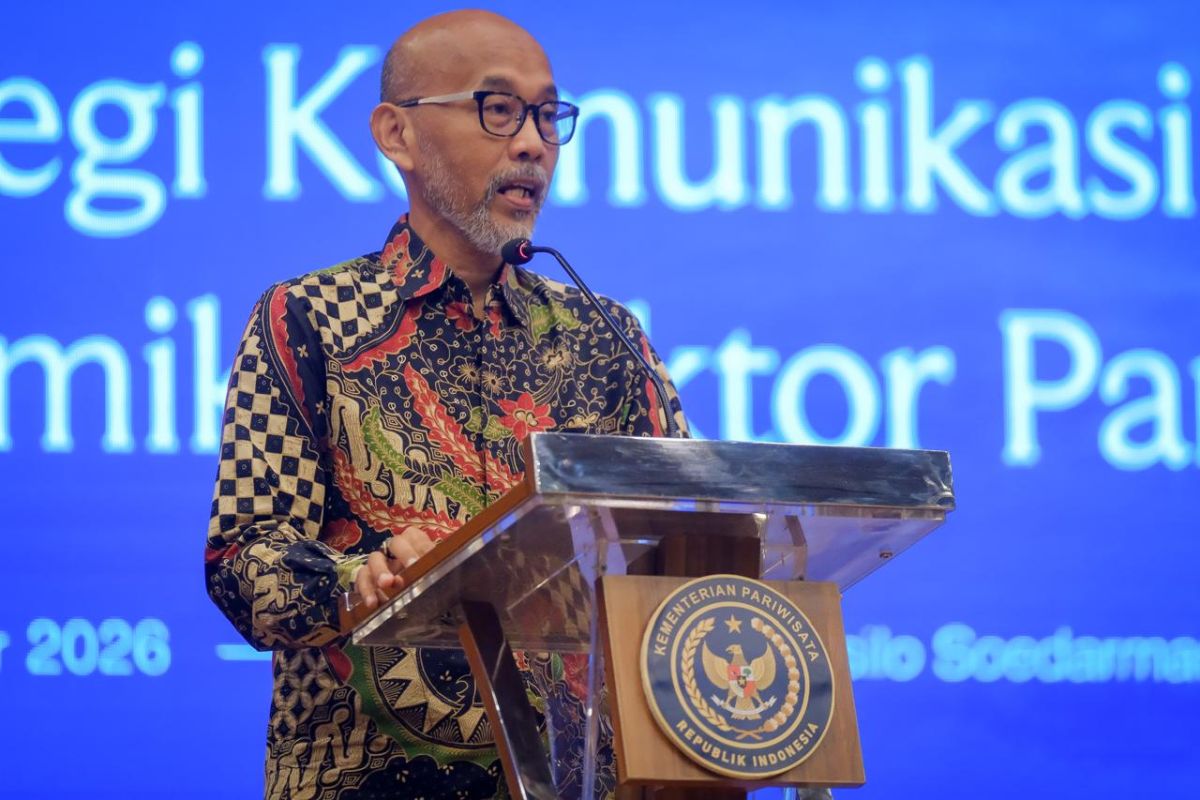
Jakarta (ANTARA) — The Ministry of Tourism is stepping up collaboration with other ministries and agencies to build integrated public communications in support of high-quality and sustainable national tourism.
“National tourism targets are no longer focused solely on quantity or visitor numbers, but on creating value that directly improves people’s welfare,” said Fadjar Hutomo, the ministry’s Expert Staff Member for Crisis Management, at the Tourism Sector Thematic Forum of the Government Public Relations Coordinating Board (Bakohumas).
In a press release confirmed in Jakarta on Wednesday, Fadjar said the national tourism development paradigm had undergone a fundamental transformation towards high-quality and sustainable tourism.
This transformation requires support across institutions to achieve a range of national tourism targets, including aligning public policy information so that it can be fully understood by the public.
One initiative undertaken by the Tourism Ministry is the release of the Indonesia Tourism Outlook 2026/2027, which sets out projections for the development of national tourism. Drawing on data analysis, trends and expert perspectives, the publication examines strategic issues expected to shape the Indonesian tourism landscape and its direction in 2027.
The publication is expected to serve as a reference and consideration for all stakeholders — from ministries and agencies, local governments, academics and the media to the public — in formulating policies and more focused collaborative actions.
Molly Prabawati, Expert Staff Member for Communications and Mass Media at the Ministry of Communication and Digital Affairs, said advances in connectivity and digitalisation had raised public expectations for easy mobility, cashless transactions and transparent access to information. This requires digital infrastructure to be ready across all tourist destinations.
At the same time, the speed of information flows in the digital sphere increases vulnerability to reputational crises. Even minor issues involving comfort, prices or environmental conservation can directly affect the image of national tourist destinations.
“This is where our collective role is crucial. Resilient tourism is built not only on natural beauty and physical facilities, but must also be sustained and strengthened by public trust and a solid narrative,” she said.
At the forum, Molly outlined three communications priorities for government public relations officials: building integrated tourism communications through Bakohumas collaboration; improving preparedness for disinformation and other issues that could damage the reputation of Indonesian tourism; and delivering more people-centred public communications by highlighting authentic stories from local communities.
According to Molly, narratives close to people’s daily lives have a stronger impact than the presentation of statistics alone.
“The challenges facing tourism in 2026–2027 require us to be adaptive, collaborative and move in step. I hope today’s Bakohumas thematic forum will generate practical ideas, strengthen inter-agency cooperation and contribute to Indonesian tourism,” Molly said.