
Tourism Ministry and Bank Indonesia Strengthen Muslim-Friendly Villages to Boost Regional Economy
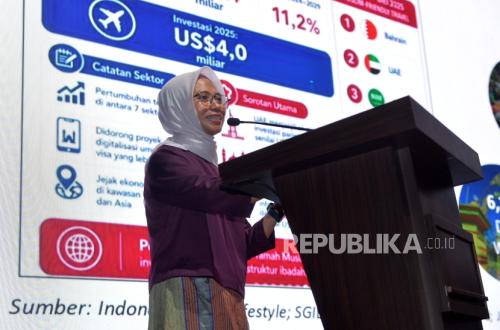
The Ministry of Tourism, together with the Sharia Economics and Finance Department (DEKS) of Bank Indonesia (BI), is strengthening the capacity of tourism village managers to improve the competitiveness of Muslim-friendly tourism in Indonesia.
The initiative was carried out through a Capacity Building Bootcamp for Leading Muslim-Friendly Tourism Villages held in Bandung, West Java, from 5 to 7 August 2026. The activity was attended by 25 representatives of leading tourism villages from five provinces.
Expert Staff to the Minister for Digital Transformation and Tourism Innovation at the Ministry of Tourism, Masruroh, said tourism villages hold a strategic position in the development of quality tourism. Tourism villages provide a space for tourists to interact directly with the culture, nature, traditions, and daily life of local communities.
“Strengthening the capacity of tourism village managers is an important investment to realise destinations that are of high quality, competitive, and able to provide sustainable benefits for the community,” Masruroh said in an official statement confirmed in Jakarta on Tuesday (11/8/2026).
According to her, the growth of the Muslim traveller market represents a strategic opportunity that needs to be reinforced through the development of Muslim-friendly tourism (PRM).
The programme is part of the 2026 Muslim-Friendly Tourism Strengthening Programme, designed to accelerate the capacity building of tourism village managers in developing products, services, and destination governance.
The 25 participating tourism villages come from Aceh, West Sumatra, West Java, Central Java, and West Nusa Tenggara. These five provinces are the regions with the best achievements in the 2025 Indonesia Muslim Travel Index (IMTI).
From 63 potential tourism villages, 25 were selected through a curation process carried out by a team of curators appointed by Bank Indonesia.
Over three days, participants received training and mentoring related to strengthening the institutional framework and governance of tourism villages, developing tourism products and experiences based on local potential, digital marketing, preparing performance indicators, and applying Muslim-friendly tourism principles.
Participants were also guided to identify the potential and challenges in their respective villages, develop tourism packages based on local potential, and design more effective and data-driven marketing strategies.
Tourism products and packages deemed to have potential were also encouraged to be listed on online travel agent (OTA) platforms or online travel agencies.
In addition to product development, participants received briefings on basic service guidelines and technical instructions for Muslim-friendly tourism destinations. These guidelines cover several aspects, including the availability of halal food and beverages, clean and easily accessible places of worship, and adequate sanitation facilities.
These aspects are applied to the elements of attractions, amenities, and accessibility (3A) as part of destination quality development.
Masruroh said Muslim-friendly tourism is not intended to change the character or identity of a destination. On the contrary, the approach is directed at providing additional services that meet the needs of Muslim travellers while maintaining local culture and wisdom.
“These values are in line with the character of Indonesian tourism, which upholds hospitality, cleanliness, comfort, and respect for diversity,” she said.