
Tourism Minister: Sports Tourism in Indonesia Holds Promising Potential
Jakarta (ANTARA) - Minister of Tourism Widiylant Putri Wardhana stated that sports tourism in Indonesia possesses promising potential for development.
“This opportunity feels increasingly attainable for Indonesia because our society’s lifestyle is moving in the same direction,” Widiyanti said in an official statement confirmed in Jakarta on Sunday.
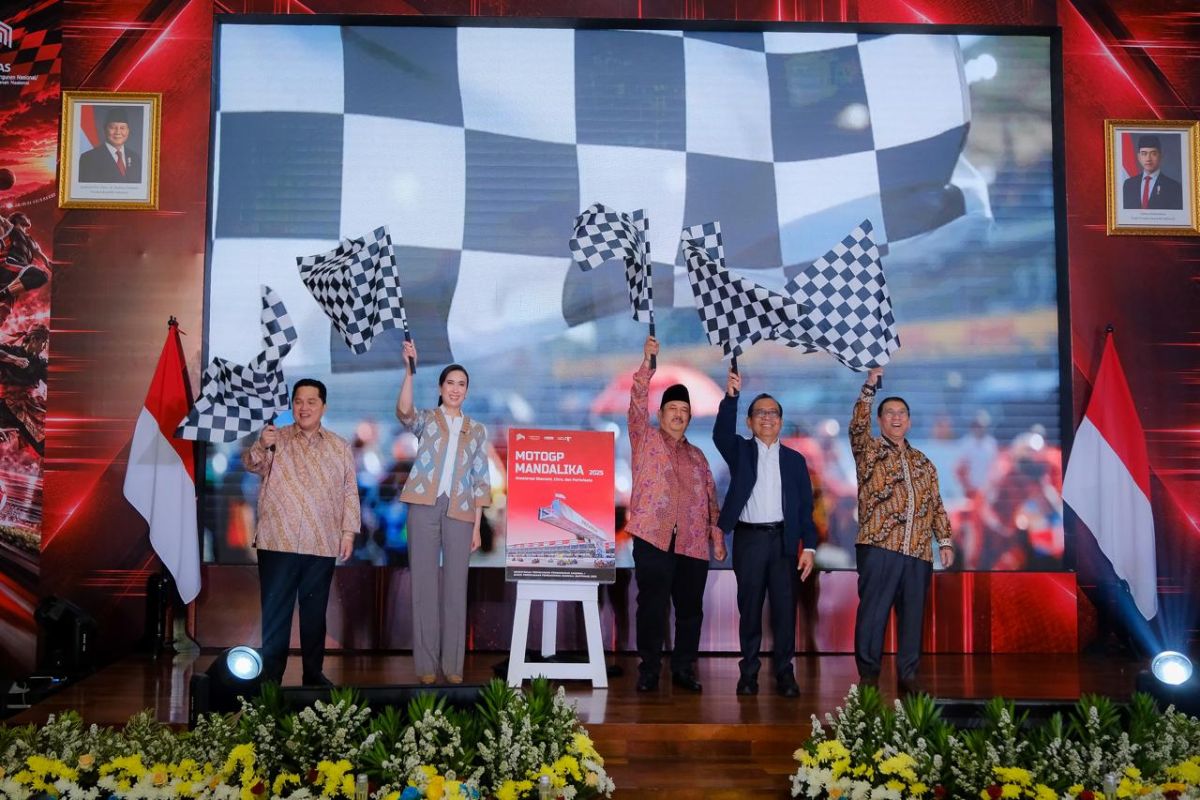
During the launch of the “MotoGP Mandalika 2025 Book: Accelerating Economy, Image, and Tourism,” alongside the commencement of the drafting for the National Sports Industry Development Grand Design at the Bappenas Building on Wednesday (30/9), Widiyanti noted that sports is one of the highly potential tourism themes to be continuously developed.
Globally, sports have proven to be a highly effective magnet for tourism. Citing an Expedia survey, Widiyanti mentioned that 44 per cent of tourists are willing to travel abroad for their desired sporting entertainment, with an average expenditure reaching 1,500 US dollars. This figure even exceeds the current average expenditure of tourists visiting Indonesia.
Widiyanti assessed that Indonesia, with its natural wealth and supporting infrastructure, possesses great potential in developing sports-based tourism. Various international-standard events have recorded successful organisation in Indonesia.
One such example is the 2025 MotoGP Mandalika, which is expected to generate an economic impact of between Rp2.7 trillion and Rp4.7 trillion. Additionally, HYROX Jakarta, scheduled for 27 to 28 June 2026, expects 11,500 participants, making it the largest Hyrox event in the Asia Pacific, with 15 per cent of participants being foreign nationals.
Indonesia also hosts many sporting events with intellectual property, such as the Jakarta International Marathon, as well as various events that serve as levers for Indonesian tourism destinations, such as the Geopark Run series.
Nevertheless, she highlighted that the development of sports tourism faces several challenges, such as equitable distribution, where sporting events must be able to spread and grow in every region, rather than being concentrated only in certain flagship destinations. She also highlighted the need for service standardisation, organiser professionalism, and good risk management as absolute prerequisites for world-class events.
The Ministry of Tourism is currently consistently encouraging local governments, ministries, agencies, the private sector, and other tourism observers to design sporting events that arise from local character and uniqueness, rather than merely replicating formats that have been tested elsewhere.
Widiyanti hopes that these challenges can be identified and become an integral part of the drafting of the Grand Design for National Sports Industry Development, which commenced today. Therefore, she encouraged strengthened collaborative steps to bolster the potential of sports tourism as one of the main strategies to increase the tourism sector’s contribution to the national economy.
“We believe that this grand design will serve as an important foundation that further strengthens the position of sports tourism as one of the engines of Indonesia’s tourism growth in the future. Therefore, we need to continue to synergise so that sports tourism in Indonesia can grow even better,” said Widiyanti.