
Tourism Minister Charts Course for Quality Investment and the Future of Bali's Tourism
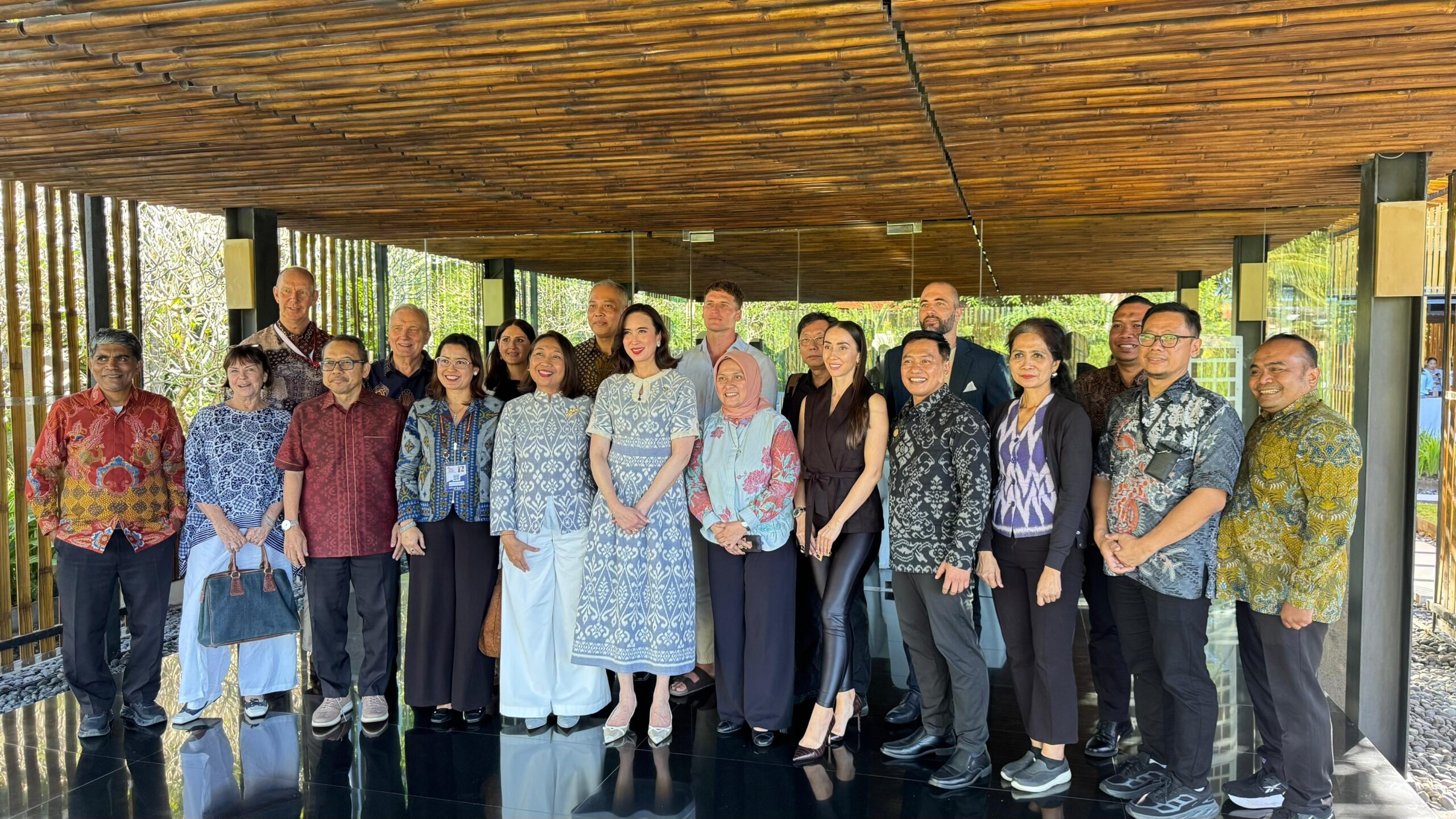
Bali’s future development must proceed with a clear, measurable direction while remaining rooted in the Island of the Gods’ core strengths: pristine nature, noble customs, and a unique, sacred culture. This spirit was the common thread in an Investor Roundtable forum that brought together government, industry players, academics, tourism associations, and national and international investors to discuss Bali’s future development and investment direction.
The strategic meeting was led directly by Indonesia’s Minister of Tourism, Widianti Wardana, who addressed various important issues related to investment trends, development challenges, and opportunities for expanding the national tourism sector, including the development of 10 priority Indonesian tourism destinations and 3 regenerative tourism destinations.
The forum was also accompanied by two Deputy Ministers of Tourism, namely Rizky Handayani Mustafa, Deputy for Industry and Investment, and Ayu Marthini, Deputy for Marketing. Various strategic stakeholders were also present, including representatives from the Bali Province Investment Coordinating Board (BKPM), the Head of the Bali Province Tourism Office, the Bali Governor’s Expert Group, international influencers, the Chair of the Bali Villa Rental and Management Association (BVRMA), the Chair of the Indonesian Hotel and Restaurant Association (PHRI) Bali, the Chair of the Bali Tourism Investment Chamber (BTIC), as well as a number of foreign investors and influencers with a significant interest in Bali’s future.
During the discussion, the BVRMA Chair conveyed that physical development and land conversion in Bali require more serious supervision, enforcement, and planning so that investment growth does not sacrifice Bali’s identity as a world cultural destination.
“Tourism for Bali, not Bali for tourism,” became the main spirit echoed in the forum—a reminder that development must provide tangible benefits for the Balinese people while maintaining the balance of nature, culture, and spiritual values inherited over generations.
Other forum participants also highlighted the importance of a clearer, integrated, and sustainable Bali development blueprint. Investors were deemed to need a definite direction regarding Bali’s future needs, appropriate development locations, priority sectors, and the required investment value so that development proceeds in a more targeted manner and does not create problems later on.
The government was also seen as having a strategic role as an accurate information bridge for investors, including for notaries and business consultant agents who have been the main reference for business actors. Education, supervision, and information standardisation were considered important to prevent misinterpretation of regulations that could potentially harm investors and the region.
The forum also discussed the dynamics of Foreign Direct Investment (PMA) regulations, particularly in the property and villa rental management sectors in Bali. For years, PMA has been given room to help develop the property and tourist accommodation industry in Bali. However, changes to the KBLI business classification in recent years have created grey areas that have caused some business actors to experience confusion in running their business models.
Previously, PMA was still permitted to operate businesses in low-risk categories such as villa rentals. However, along with changes in regulations and business classifications, some business models now face new limitations, although the government continues to provide investment space through schemes with capital above IDR 10 billion.
In a follow-up meeting with the expert staff of the Ministry of Tourism’s deputy, strategic steps to strengthen the governance of the national villa industry were also discussed. One of these is through a plan to develop a star-rated villa classification that will involve academics and industry practitioners as part of national standardisation.
Additionally, the government together with associations will compile a national guidebook containing detailed information on villa properties, villa management, villa rentals, and various data and operational standards for the villa industry that can serve as a reference throughout Indonesia.
The villa business ecosystem will also be provided with a more comprehensive guide, including standard compliance, business governance, and clear operational mechanisms so that the industry can grow healthier, more professional, and sustainable.
On the regulatory side, the KBLI is planned to be adjusted in the future to the needs of modern management business models so that business classifications become more decisive and adaptive to industry developments. One option discussed is allowing a single Business Identification Number (NIB) to have several KBLIs simultaneously, including presenting an intermediation scheme that can facilitate business actors in running their operations legally and structurally.
The Assistant Deputy of the Ministry of Tourism, Budi Suprianto, emphasised the importance of collaboration between the government and industry associations. Associations are expected to help provide data related to business models and business processes in the field, while the preparation of business standards will be directly supported by the Ministry of Tourism team.
The 2029 Investor Roundtable forum became an important step towards a higher quality, well-organised Bali tourism future with legal certainty. With strong collaboration between the government, business actors, academics, and indigenous communities, Bali is expected to become a model for world tourism development that not only grows economically but also maintains its identity, culture, and natural sustainability.
Source: jawawa.id (https://jawawa.id/newsitem/tourism-minister-charts-course-for-quality-investment-and-the-future-of-balis-tourism-1781401847)
Originally published by baliportalnews.com (https://baliportalnews.com/2026/06/menteri-pariwisata-menata-arah-investasi-dan-masa-depan-pariwisata-bali-yang-berkualitas-dan-berkelanjutan/), translated from Indonesian