
Tourism and QRIS: A New Economic Path for the Temajuk Border Region
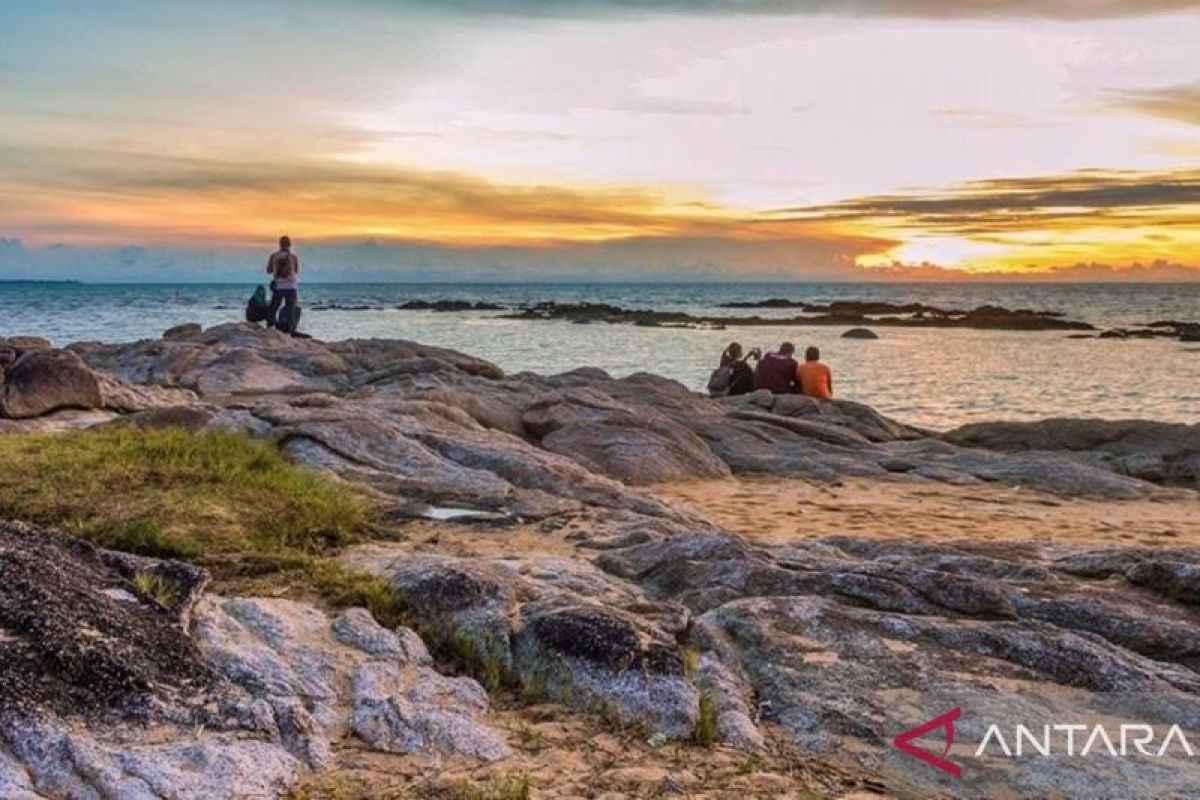
“In the past, we cleared forests and sold the timber to Malaysia. However, the tourism potential of Temajuk has changed our mindset, and now we live by relying on tourism,” said a middle-aged man commonly known as Atong.
Atong sat among a row of chairs in a canteen within the Teluk Atong Bahari tourism area, Temajuk Village, Paloh District, Sambas Regency, West Kalimantan. He occasionally sipped his coffee before placing the glass back on the table.
The man, after whom the tourist site is named, is one of the pioneers of tourism in Temajuk Village. Speaking with a blend of Indonesian and the Sambas Malay dialect, he shared how the Temajuk coastal area serves as a vital part of the lives of a community that has depended on the sea for many years.
However, the sea cannot always be relied upon as a source of livelihood. During bad weather, fishermen are unable to go to sea. In such conditions, some fishermen sought income from other jobs, including logging and sending timber to Malaysia.
“Since 2008, our thinking has opened up to the fact that the main potential of Temajuk Village, besides the sea, is tourism. Therefore, tourism has become an economic way out for us, the border residents,” said Atong.
This statement describes a major shift that is gradually occurring in the northernmost village of West Kalimantan. With the tourism potential developed by the local community, Temajuk is no longer viewed merely as a border region facing Sarawak, Malaysia. Beyond the national border line, the community has begun to see nature as economic capital that can be managed without having to leave their homeland.
For Atong and other residents of Temajuk, this change did not happen overnight. Around 2008, the idea of developing tourism began to grow when the community faced limited job options. The plantation sector had not yet reached its full potential due to accessibility issues, while community activities involving the timber sector were subsequently regulated by the government.
One year after the idea emerged, government support began to arrive through the construction of tourism huts by the Marine and Fisheries Department. Following that, the community moved forward gradually.
As time passed, lodgings began to be built. Residents’ houses slowly transformed into homestays, eateries emerged, and tourism operators learned how to host guests. They introduced destinations and promoted Temajuk using the resources available to them.
“In the beginning, the struggle was indeed difficult. We worked on our own, learning how to manage and promote tourism, before gradually receiving support from the community and the government,” said Atong.
Amidst the limited job opportunities in the border area, every visiting tourist brings a long economic chain. There are rooms to be prepared, food to be cooked, vehicles to be used, local products to be sold, and guide services required.
Consequently, the more tourists that arrive, the more opportunities residents have to reap economic benefits.
Source: jawawa.id (https://jawawa.id/newsitem/tourism-and-qris-a-new-economic-path-for-the-temajuk-border-region-1789394702)
Originally published by Antara (Indonesian) (https://www.antaranews.com/berita/5740651/wisata-dan-qris-jalan-baru-ekonomi-perbatasan-temajuk), translated from Indonesian