
Torch Parades to Village Head 'Weddings': 10 Traditions Marking 1 Muharram in Indonesia
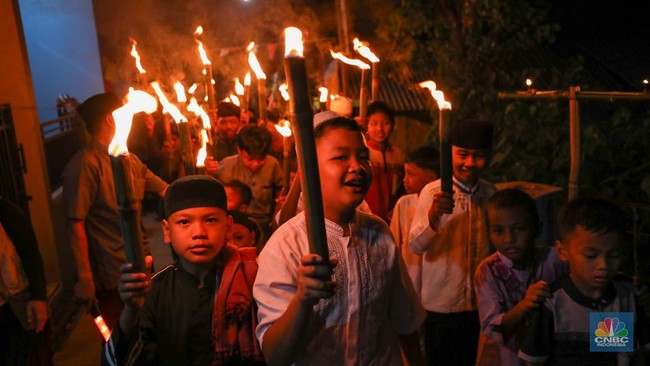
The Islamic New Year is observed every 1 Muharram in the Hijri calendar. In Indonesia, this moment is not only celebrated as the turn of the Islamic year but is also deeply intertwined with various regional cultural traditions. For Javanese communities, 1 Muharram is also known as 1 Suro. Consequently, its observance is often filled with communal prayers, pilgrimages, and cultural rituals passed down through generations. Each region has a distinct way of welcoming the Islamic New Year. Some celebrate with torch parades, prepare communal meals, conduct pilgrimages, or hold traditional processions.
Here are 10 traditions of 1 Muharram known across various regions of Indonesia:
- Torch Parade (Pawai Obor)
The torch parade is one of the most commonly encountered traditions on the eve of 1 Muharram. This tradition is typically carried out by children, teenagers, and villagers who walk around their neighbourhood carrying torches. Throughout the journey, parade participants usually chant salawat, takbir, and prayers. This activity serves as a form of Islamic propagation as well as a spirited way for the community to welcome the Hijri New Year. The burning torch flame is often interpreted as a symbol of new hope, the spirit of migration (hijrah), and a light to guide a better life.
- Suro Porridge (Bubur Suro)
Suro Porridge is commonly found in West Java and parts of Central Java. This tradition involves making porridge which is then distributed to neighbours or eaten communally. Suro Porridge usually consists of white and red porridge. These colours are often interpreted as symbols of human life, which contains both joy and sorrow. This tradition also serves as a means of giving alms and strengthening relations between residents. Through eating together, the community hopes the new year brings blessings, safety, and harmony.
- Ngadulag or Bedug Beating Competition
In the Sundanese region, particularly Sukabumi, the Islamic New Year observance is often enlivened by the Ngadulag tradition. This tradition involves the lively beating of bedug drums. In its development, Ngadulag is often turned into a competition between residents or groups. The sound of the beaten bedug marks the arrival of the Islamic new year. Besides being public entertainment, this tradition also holds religious meaning. The bedug serves as a symbol of the call to remember God and to strengthen the spirit of worship.
- Tapa Bisu (Silent Meditation Walk)
Tapa Bisu is a well-known tradition on the eve of 1 Suro in Yogyakarta. This tradition is performed by walking around the Yogyakarta Palace Fortress area without speaking. Participants usually consist of royal servants (abdi dalem) and the general public. They walk in silence as a form of self-control, contemplation, and prayer. Tapa Bisu is not merely a night walk. This tradition is interpreted as a moment to calm oneself, remember the Creator, and evaluate life’s journey before entering the new year.
- Sekaten in Yogyakarta and Surakarta
Sekaten is better known as a tradition to commemorate the birth of Prophet Muhammad SAW. However, this tradition is also often associated with the strong blend of Islamic teachings and Javanese culture. Sekaten is usually held in the grounds of the Yogyakarta and Surakarta Palaces. During this tradition, the public can witness heirloom gamelan performances, a night market, and the peak event known as Grebeg Maulud. At the peak event, a mountain-shaped offering (gunungan) containing agricultural produce is paraded and then scrambled for by the community. This tradition is an example of how Islamic propagation was conducted through cultural approaches since the era of the Walisongo.
- Mount Merapi Alms (Sedekah Gunung Merapi)
Communities around Mount Merapi, especially in Lencoh Village, Boyolali, have a tradition called Sedekah Gunung Merapi. This tradition is performed as an expression of gratitude as well as a plea for safety. During the tradition, residents carry offerings such as a buffalo head and agricultural produce. These offerings are then taken to the mountain area as part of the customary ritual. For the local community, this tradition is not merely a ceremony but also a symbol of the relationship between humans and nature. They hope to live in harmony with nature and be protected from disasters.
- Mount Tidar Pilgrimage
In Magelang, Central Java, some communities welcome the Islamic New Year by making a pilgrimage to Mount Tidar. This mountain is known to hold historical and spiritual value for the local community. They usually visit the graves of spiritual figures such as Syekh Subakir, Kiai Sepanjang, and Kiai Semar. The pilgrimage is conducted to pray for these figures while also seeking blessings. This tradition also serves as a reminder of the history of Islam’s spread in Java. Therefore, the Mount Tidar pilgrimage holds not only spiritual value but also historical significance.
- Suran Manten of Traji Village
Traji Village in Parakan District, Temanggung, Central Java, has a unique tradition called Suran Manten. This tradition is held during the month of Suro, coinciding with the Islamic New Year in Javanese tradition. In this tradition, the village head and his wife are dressed up like a bridal couple. They are then paraded around the village towards several water springs considered to have sacred value. This ritual symbolises a plea for safety and blessings for all villagers. Moreover, this tradition demonstrates the community’s respect for nature, especially water sources which are an important part of daily life.
- Tabuik or Tabut Tradition
The Tabuik tradition is known in Pariaman, West Sumatra, while Tabut is known in Bengkulu. This tradition is held to commemorate the Karbala tragedy, the death of Imam Husain, grandson of Prophet Muhammad SAW. This observance usually begins on 1 Muharram and reaches its peak on 10 Muharram, or the day of Ashura. During the tradition, the community constructs large coffin-like structures from bamboo and rattan. The Tabuik or Tabut is then paraded amidst crowds before finally being cast out to sea. This tradition symbolises respect, sacrifice, and resistance against tyranny.
Source: jawawa.id (https://jawawa.id/newsitem/torch-parades-to-village-head-weddings-10-traditions-marking-1-muharram-in-indonesia-1781578244)
Originally published by CNBC Indonesia (https://www.cnbcindonesia.com/research/20260615184438-128-743050/pawai-obor-manten-lurah-begini-10-tradisi-merayakan-1-muharram-di-ri), translated from Indonesian