
Top 10 Rice-Producing Regions in Indonesia: Java Holds the Key
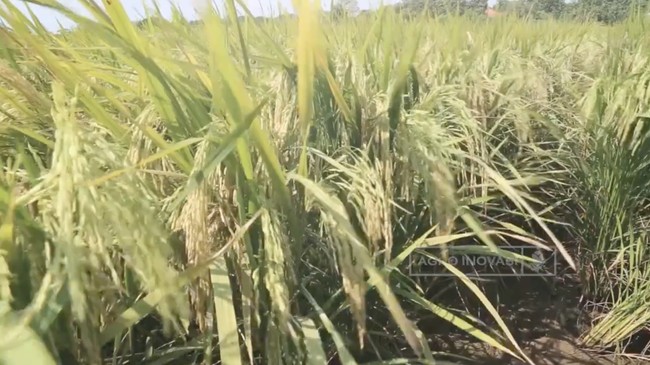
Jakarta, CNBC Indonesia - National rice production in early 2026 remains concentrated on Java island. Provisional data indicate that up to the period from January to April 2026, provinces in Java dominate the list of Indonesia’s largest rice producers.
Based on monthly rice production data accumulated up to April 2026, the Central Statistics Agency (BPS) records East Java as the largest producer, followed by Central Java and West Java.
Rice production from January to April 2026 reached 24.33 million tons, a decrease of 0.18% compared to the same period last year.
East Java, Central Java, and West Java Dominate Production
Java island remains the key region for national rice production. In addition to relatively more advanced agricultural infrastructure, the availability of productive paddy fields is also crucial to this region’s dominance.
East Java leads with production reaching 5.03 million tons, followed by Central Java at 4.16 million tons and West Java at 3.50 million tons. These three provinces have consistently been the national rice granaries in recent years.
Regions Outside Java Show Strategic Role
Although Java dominates, several provinces outside Java are beginning to show significant contributions. South Sulawesi and South Sumatra each recorded production above 1.5 million tons, indicating the important role of these areas in maintaining national food security.
Other provinces such as Lampung, North Sumatra, and West Nusa Tenggara also enter the top 10, demonstrating an increasingly even distribution of production.
Meanwhile, the last three positions are occupied by Papua Pegunungan, DKI Jakarta, and Riau Islands, with production of 311.96 tons, 309.2 tons, and 152.72 tons respectively.
It should be noted that the rice production data for this period is still provisional and uses the Dry Milled Grain (GKG) unit. Production calculations are based on harvested area and productivity (yield per hectare) collected by BPS.