
Tolerance Does Not Depend on an Office Building
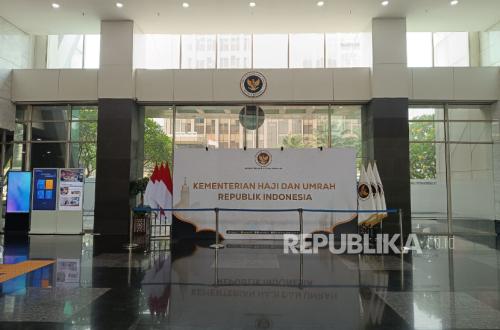
The transfer of management of the building at Jalan MH Thamrin No. 6 in Jakarta to the Ministry of Hajj and Umrah (Kemenhaj) has recently become a topic of discussion again. Some view the change not merely as an administrative matter involving state assets, but as an issue affecting the continuity of a historic symbol of interfaith harmony. That concern deserves respect: a building can hold collective memories, institutional history and values of national significance.
However, one point needs to be put in proportion. Respect for history should not create the impression that interfaith harmony depends on the existence of a single building. Nor should the change in management of a state asset be interpreted as a threat to relations between religious communities, as if the presence of the Ministry of Hajj and Umrah were at odds with the Ministry of Religious Affairs’ role in fostering tolerance.
This is where the issue needs to be viewed more clearly. We must distinguish between symbol and substance, and between asset management and the state’s constitutional responsibilities. These are separate matters and should not be set against one another.
Reconsidering the Budget Issue
One aspect often overlooked in debate about Kemenhaj is its source of funding. Some still assume that the ministry carries out its duties using hajj funds collected from pilgrims. Yet, under the state’s financial governance framework, pilgrims’ deposits are clearly separated from the budget for government operations.
First, there are pilgrims’ funds. Law No. 34 of 2014 on Hajj Financial Management classifies payments towards the cost of performing the hajj as pilgrims’ funds, which must be managed according to the principles of prudence, transparency and accountability. They are managed by the Hajj Financial Management Agency (BPKH), rather than serving as a source of funding for the ministry’s operations.
For the 2027 hajj, the government and the House of Representatives set the average cost of organising the pilgrimage at Rp98.47 million per pilgrim. Of this amount, pilgrims pay Rp54.65 million directly, while the remaining Rp43.82 million comes from returns on hajj fund management.
Second, there is the ministry’s budget. Kemenhaj performs its government functions through the State Budget (APBN), like other ministries and state institutions. In the 2027 draft State Budget, its allocation stands at Rp2.95 trillion, with budget adjustments being discussed with Commission VIII of the House of Representatives.
This separation is not merely a technical matter of financial administration. It is an important governance principle, preventing the commingling of pilgrims’ entrusted funds with the state’s operating budget. Minister of Hajj and Umrah Mochamad Irfan Yusuf has also stressed the need for a clear division of responsibilities between the State Budget and the cost of organising the hajj, to prevent double funding.
Accordingly, Kemenhaj should not be understood as an institution operating with funds belonging to a particular group in society. It is part of the government and is funded through the state’s public finance system.
This is where the public policy perspective becomes relevant. The State Budget pools resources from the whole public, including citizens of different religious backgrounds. Catholic teachers in Ende, Muslim traders in Bukittinggi, Hindus in Bali and Buddhist communities across the country are all part of the economic life that supports state revenues.
Therefore, a ministry funded through the State Budget cannot be treated as an institution belonging exclusively to one group. Although Kemenhaj has a specific mandate to organise the hajj and umrah for Muslims, it remains a state institution that must uphold the principle of equal citizenship.
That principle is consistent with Article 28D(3) of the 1945 Constitution, which guarantees every citizen equal opportunities to participate in government.