
Toilet Maker Toto Pours Rp 8.8 Trillion Investment into Chip Business
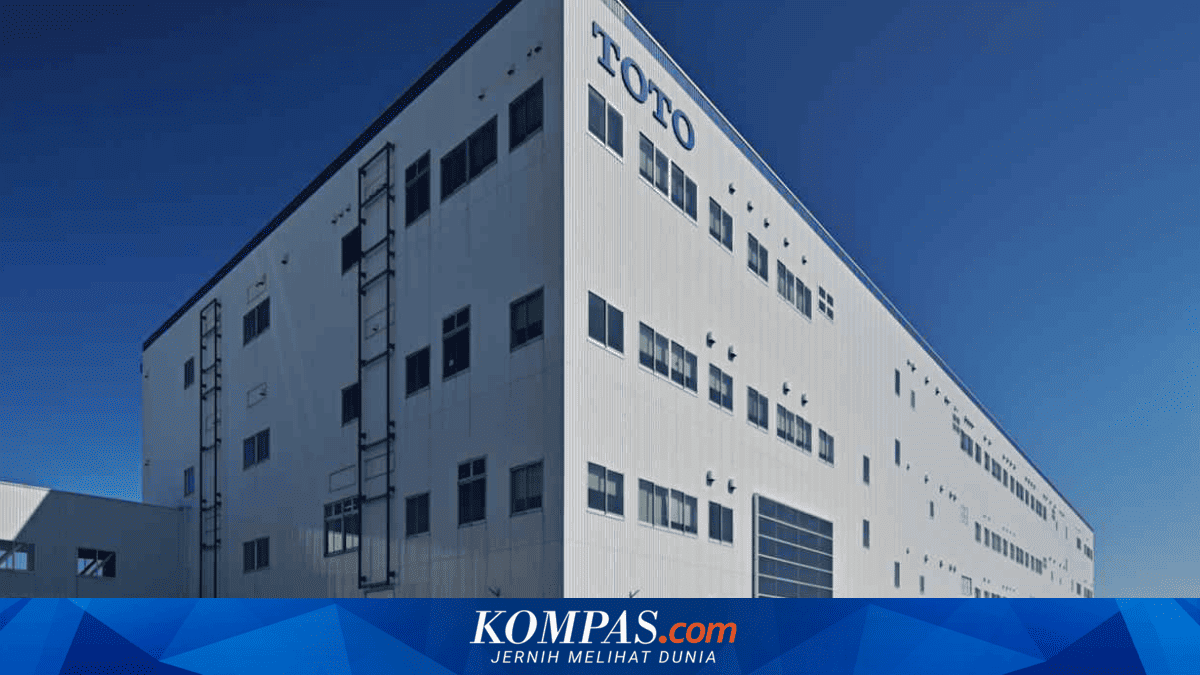
Japanese bathroom fixture manufacturer, Toto, plans to invest 80 billion yen (approximately Rp 8.8 trillion) to expand its semiconductor material, or chipset, business. This investment will be deployed over the next five years to support the development of next-generation chip manufacturing technologies, including semiconductors with a 1 nanometer (nm) size.
Although better known as a maker of toilets and sanitary products, Toto’s semiconductor business operations are now cited as one of the company’s largest sources of profit. According to a report by Nikkei Asia, of the total planned investment, Toto has already approved an allocation of 39 billion yen (approximately Rp 4.3 trillion). The remaining 41 billion yen (approximately Rp 4.51 trillion) will be realised gradually, following developments in the semiconductor market.
The funds are intended to increase production capacity at its facilities located in Oita and Fukuoka Prefectures, Japan. Both plants are currently reported to be operating at full capacity to meet market demand for semiconductor materials. If market demand remains unmet after the investment is realised, Toto will consider constructing new factories.
In addition to expanding production capacity, Toto is also developing materials aimed at supporting the production of next-generation logic chips. For comparison, the world’s largest chip manufacturer, TSMC, is currently producing logic chips using 2nm process technology.
Toto’s semiconductor materials business previously recorded losses for several years. However, the situation changed around 2020 when the demand for AI chips surged sharply. For the fiscal year ending March 2025, Toto’s New Domain Business division, which oversees the semiconductor materials business, recorded sales of 67.4 billion yen (approximately Rp 7.43 trillion), a 34 per cent increase compared to the previous period. The division’s operating profit also rose by 42 per cent to 28.9 billion yen (approximately Rp 3.18 trillion).
Although it only contributes about 10 per cent of the company’s total revenue, Toto’s chip business is considered to generate higher profits than its core household and sanitaryware business units. In fact, more than half of the company’s profit now originates from the semiconductor materials business, demonstrating the significant impact of the AI industry’s growth on Japanese manufacturing companies.
While its name is rarely mentioned in discussions regarding the semiconductor industry, Toto has long been a participant. The British activist investment firm, Palliser Capital, revealed that Toto’s ceramics division produces components known as electrostatic chucks (ESC). These are high-precision ceramic components that function to hold silicon wafers in place during the memory chip manufacturing process in factories.
As the demand for memory chips explodes due to AI trends, the price of these components has also skyrocketed. This ceramics division, which was once merely a ‘side business’, has now become a money-making engine for Toto. Furthermore, Toto’s ceramics are highly specialised; their ESC components are designed to remain stable at extremely low temperatures. This extreme stability is essential for the cryogenic etching process, an ultra-deep channel carving process for 3D NAND memory chips, which are now stacked in more than 200 layers. As memory architecture becomes increasingly complex, the demand for Toto’s durable ceramic components is expected to continue rising.
Source: jawawa.id (https://jawawa.id/newsitem/toilet-maker-toto-pours-rp-8-8-trillion-investment-into-chip-business-1782150616)
Originally published by tekno.kompas.com (https://tekno.kompas.com/read/2026/06/22/15070007/produsen-toilet-toto-gelontorkan-investasi-rp-8-8-triliun-untuk-bisnis-chip-?page=all), translated from Indonesian