
Today’s Youth: Mother, To Whom Do We Pledge Our Oaths?
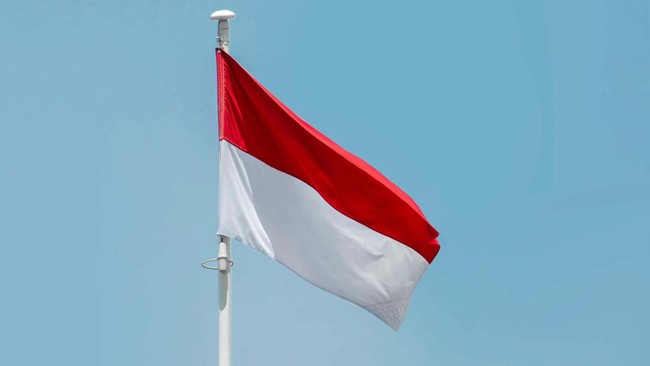
“Mother, to whom do we pledge our oaths?”
That line echoed in a musical drama performed by Muhammad Ade Putra, a participant in the inauguration event for the 2026 Wirasena Youth Camp, organised by the Ministry of Youth and Sports.
The simple sentence raises profound questions about national identity, loyalty and the responsibility of young people towards their homeland. The programme, attended by 157 young people from across Indonesia, provided a space for leadership development, the exchange of ideas and the strengthening of patriotic character, perseverance, empathy and collaboration across regions.
As I attended and took part in the event, I kept thinking about that question. The form of address, “Mother”, instinctively brings to mind the person who gave birth to us, cared for us and raised us.
In the context of the drama, however, the question carries a wider meaning: to whom do we truly pledge our oaths, and where should our loyalty lie? The “Mother” in question is not merely someone we love within our family, but also Ibu Pertiwi—Motherland—the country where we stand, live and place our hopes for the future.
The question feels relevant to Indonesian young people today. Amid global openness, the rapid flow of globalisation and growing opportunities to work across borders, different views have emerged about the direction of young people’s lives, including the phenomenon known as #KaburAjaDulu (“just leave for now”).
The phenomenon can be understood as reflecting some young people’s aspirations for better education, employment and life opportunities. At the same time, it offers an opportunity for collective reflection on how Indonesia can continue to build an environment in which young people can grow, develop their potential and contribute to the country’s progress.
Questions about young people cannot ultimately be separated from Indonesia’s long journey to build an identity and strengthen unity. Long before independence was proclaimed, young people from diverse backgrounds had recognised that the struggle against colonialism could not be waged on the basis of regional loyalties alone.
A broader awareness was needed to unite differences in pursuit of a shared national ideal. One important milestone in that awareness came at the Second Youth Congress, held on 27–28 October 1928.
The congress was a historic moment when various youth organisations affirmed their commitment to move beyond regional, ethnic and linguistic divisions. Its high point came when Indonesia Raya, composed by Wage Rudolf Soepratman, was played on the violin. The congress’s resolution was then read out by its chair, Sugondo Djojopuspito. The wording of the pledge was drafted by Mohammad Yamin and later became known as the Youth Pledge.
It declared: “We, the sons and daughters of Indonesia, acknowledge one homeland, Indonesia. We, the sons and daughters of Indonesia, acknowledge one nation, the Indonesian nation. We, the sons and daughters of Indonesia, uphold the language of unity, Indonesian.”
The Youth Pledge is not merely a series of words passed down from one generation to another, nor simply a subject for reflection taught by teachers to their pupils. It affirms that unity does not arise because all differences have disappeared, but because people are willing to place shared aspirations above interests that divide them.
The young people of 1928 did not wait for Indonesia to become independent before recognising themselves as one nation. Instead, they made unity the foundation of their struggle for independence. This is where the Youth Pledge remains relevant to today’s generation. Nearly a century after it was made, the challenges are certainly different.
Young people today no longer face colonialism in the same form as in the past. They face global competition, technological disruption, unequal opportunities, social polarisation and a crisis of trust in institutions. In digital spaces, differences of opinion can quickly turn into hostility, while sentiments based on ethnicity, religion, race and social groups can widen divisions between communities.
Nationalism cannot therefore be measured simply by how loudly someone recites a national pledge, how often they fly the flag or how enthusiastically they attend national-day ceremonies.
Nationalism should be reflected in concrete actions: respecting differences, keeping public spaces free of hatred, rejecting corruption, pursuing justice and using knowledge to solve society’s problems. Love of country should not stop at a feeling; it must become a concrete responsibility shared by the nation’s citizens.
Today’s Youth
This year marks the 98th anniversary of Youth Pledge Day. Nearly a century is no short journey. There are many national achievements for which we should be grateful, but many problems still demand attention and improvement.
Being grateful for progress does not mean turning a blind eye to shortcomings. A willingness to acknowledge them is part of maturity as a nation: Indonesia’s journey should not only be celebrated, but continually reflected upon, corrected and improved.
For this year’s commemoration, the Ministry of Youth and Sports has set the theme for the 98th Youth Pledge Day: “Patriotic, Persevering, Empathetic: Youth for Indonesia”. The theme is more than a string of words decorating banners and commemorative ceremonies.
It is an invitation to reassess our attitudes and actions as young people. Is patriotism reflected in concern for others? Is perseverance expressed through practical work, rather than merely personal ambition? Does empathy make us alert to injustice and to the suffering that some members of society continue to experience?
The most fundamental question is: have we truly contributed to the country we love? Love for Indonesia is measured not simply by pride in calling ourselves citizens, but also by our willingness to take part in solving the nation’s problems.
Patriotism loses its meaning if it remains a slogan; perseverance is hollow if it is directed solely towards personal interests; and empathy loses its substance if we choose to remain silent when injustice is taking place before our eyes.
Young people must therefore understand that loving Indonesia does not mean turning a blind eye to its shortcomings. Criticism of public policy, injustice, corruption and poor public services is part of caring about the country’s future.
The courage to challenge mistakes should not automatically be seen as contrary to nationalism. On the contrary, mature nationalism makes room for responsible criticism, constructive ideas and the courage to propose change.
Loving one’s homeland means not surrendering to the circumstances, but being willing to strive for an Indonesia that is fairer, more dignified and offers opportunities to every citizen.
This challenge is all the more important given the size of Indonesia’s young population. Under Law No. 40/2009 on Youth, a young person is an Indonesian citizen aged 16 to 30. The 2024 Indonesian Youth Statistics, published by Statistics Indonesia (BPS), put the number of young people at about 64.22 million, or approximately 22.99 per cent of the country’s total population.
This large proportion is a strategic demographic asset as the country moves towards Golden Indonesia 2045. But a large population does not guarantee progress on its own. Demographic potential will become a strength only when supported by quality education, decent employment, strong character and open opportunities for participation.
Youth and Ibu Pertiwi
Today’s young people are the future leaders, policymakers, scientists, educators, entrepreneurs and community organisers. They will inherit part of the responsibility for continuing development, tackling structural poverty, reducing inequality and strengthening Indonesia’s competitiveness. But leadership renewal should not be understood merely as replacing older people with younger ones.
True renewal means changing ways of thinking, refreshing work ethics and having the courage to leave behind practices that hold back progress. The country needs not only younger leaders, but a generation with greater integrity, openness to change and commitment to the public interest.
In this context, I am reminded of a reflective saying attributed to Mohammad Hatta: “Indonesia will not become great because of the torch in Jakarta, but will shine because of the candles in the villages.” The message reminds us that national progress is determined not only by the bustle of centres of power or major cities.
Indonesia grows through the contributions of many people, including those working quietly in remote parts of the country. Young people’s potential is found not only in academic settings, business centres, on stages of public prominence or in government circles, but also in villages, coastal areas, farming regions and places where access remains limited.
Every young person has a different sphere of service, but all can contribute to the national aspiration. Some serve through government and policymaking; others create jobs through entrepreneurship, strengthen food security, protect the environment or teach children in areas with limited facilities. A contribution need not appear large to be meaningful.
Sometimes change begins with simple actions taken consistently: the courage to improve one’s immediate surroundings, or the perseverance to build something whose benefits may only be felt years later.
The spirit of the Youth Pledge must therefore be translated into equal opportunities for all young people, regardless of their region of origin or social background. Young people in villages must not lose opportunities simply because they lack access to education, technology, financing and networks.
Likewise, young people in cities need to recognise that the progress they enjoy cannot be separated from the lives of people in other regions. Indonesian unity cannot be maintained through a shared pledge alone; it also requires policies that open up opportunities fairly and development whose benefits can be felt by all.
Nearly a century after the pledge was made, our challenges have changed, but our national responsibility is never complete. Indonesia needs a generation that is not only proud of the past, but also brave enough to face today’s problems and work for the future.
History records the courage of the young people of 1928, who bound differences together in unity. Today, the question echoes once more: “Mother, to whom do we pledge our oaths?” The answer is Ibu Pertiwi, the homeland that must be protected, not merely praised; fought for, not merely celebrated.
The Youth Pledge may be nearly a century old, and its words may remain unchanged, but its responsibility never expires. Love for Indonesia is not tested by the volume of our pledge, but by the courage to act and the commitment to serve.
Source: jawawa.id (https://jawawa.id/newsitem/todays-youth-mother-to-whom-do-we-pledge-our-oaths-1793173947)
Originally published by CNBC Indonesia (https://www.cnbcindonesia.com/opini/20261028125814-14-780160/pemuda-kini-bu-kepada-siapa-kami-bersumpah), translated from Indonesian