
Today! Revised DHE-BI Incentive Rules Take Effect, Inflation in Focus
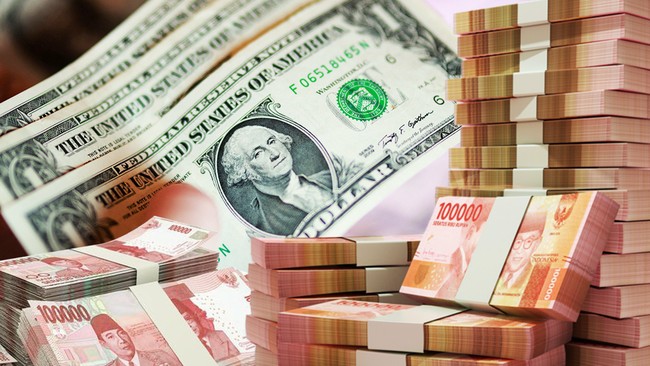
Indonesia’s financial markets are expected to close in positive territory today. The Jakarta Composite Index (JCI) managed to reverse course and close Monday’s trading (31/8/2026) in the green, with modest gains amid still-high market volatility and investor portfolio adjustments ahead of the effective MSCI rebalancing.
Based on trading data, the JCI closed up 7.36 points, or 0.11%, at 6,525.48. During the session, the index had fallen to 6,476.18 before rebounding to touch a high of 6,528.10.
The JCI’s gains were mainly supported by large-capitalisation stocks, particularly in the financial sector. PT Bank Rakyat Indonesia (BBRI) was the largest contributor, adding 9.32 points to the index.
Other stocks supporting the JCI included PT Alamtri Resources Indonesia Tbk (ADRO) with 3.24 points, PT Merdeka Gold Resources Tbk (BRMS) with 2.97 points, PT Bank Negara Indonesia (Persero) Tbk (BBNI) with 2.81 points, and PT Adaro Andalan Indonesia Tbk (AADI) with 2.20 points.
By sector, gains were led by the industrial sector, which rose 0.50%, followed by non-primary consumer goods at 0.42% and primary consumer goods at 0.22%.
However, several sectors remained under pressure. The healthcare sector suffered the deepest correction at 2.35%, followed by utilities at 0.88%, technology at 0.67%, energy at 0.27%, and property at 0.20%.
Among the stocks weighing on the index, PT Bayan Resources Tbk (BYAN) was the largest drag with a negative contribution of 8.67 points. It was followed by PT Amman Mineral Internasional Tbk (AMMN) at 3.59 points, PT Sejahteraraya Anugrahjaya Tbk (SRAJ) at 3.52 points, and PT DCI Indonesia Tbk (DCII) at 3.41 points.
Trading activity was also busy. Total transaction volume reached 51.3 billion shares, with a transaction value of Rp25 trillion and a trading frequency of 2.39 million times.
A total of 392 stocks advanced, while 233 declined and 166 were unchanged.
The rupiah began the week under pressure against the US dollar, but the weakening of the Garuda currency began to ease towards the close. During trading, the rupiah had been pressured to Rp17,755/US$, but by the close it managed to trim the decline by 45 points.
Nevertheless, the closing position was still 25 points weaker than Friday’s trading (28/8/2026), when the rupiah stood at Rp17,685/US$.
In the bond market, the yield on 10-year government bonds (SBN) rose to 6.99% on Monday, from 6.96% the previous Friday. Rising yields indicate that SBN prices are falling as investors sell.
US stock markets closed lower on Monday, or early Tuesday morning Indonesian time. The markets fell after the US and Iran engaged in mutual attacks for the first time in a month. Despite this, all three major Wall Street indices still recorded gains for August.
The S&P 500 fell 0.33% to 7,686.14. The Nasdaq Composite weakened 0.12% to 26,370.89. The Dow Jones Industrial Average corrected 374.09 points, or 0.7%, to 53,185.90.
The Dow was pressured by declines in Goldman Sachs and Alphabet shares.
Tensions rose again after US Central Command (CENTCOM) confirmed that the US military on Sunday struck two rocket launchers on Larak Island, Iran.
The strike was the first publicly confirmed US attack on Iranian positions since late July. Iranian state media also reported that Tehran attacked a US military base in Jordan in retaliation.
Oil prices surged more than 2% on Monday as the renewed US-Iran military action shook energy markets. West Texas Intermediate (WTI) crude closed up 2.83% at US$85.76 per barrel, while Brent crude rose 2.71% to US$90.49 per barrel.
The rise in oil prices also pushed up long-term US Treasury yields, adding pressure to equity markets.
Tom Hainlin, National Investment Strategist at U.S. Bank Asset Management, assessed that oil prices are already relatively high but not yet enough to deal a major blow to the US economy.
“The world economy still has enough oil for its needs, and prices of US$80-US$90 are not restrictive enough to cause the economy to collapse,” he told CNBC International.
According to him, oil prices are currently at the upper end of that range and have not yet changed the outlook for consumer spending, business, artificial intelligence (AI), manufacturing returning to the US, or the electrification of the economy.
However, the situation could be different if oil prices breach US$100 per barrel. According to Hainlin, that level could begin to become a significant burden on the economy.
Despite end-of-month trading being marked by turmoil from rising Middle East tensions, Wall Street still managed to post broad gains for August, with the technology sector as the main driver.
The Dow Jones rose more than 1% in August, marking its fifth consecutive monthly gain and the 15th positive month in the last 16.
Meanwhile, the S&P 500 jumped 2.6% and the Nasdaq Composite surged 3.9% in August, both recording their first monthly gains since May.
The S&P 500 and Dow Jones even hit all-time highs during August.
Indonesia’s financial markets today will be overshadowed by a number of important data announcements, from inflation and manufacturing to the trade balance.
From abroad, the re-escalation of the Iran-US conflict and the fall on Wall Street could be negative sentiment.
US President Donald Trump threatened to strike Iran again after the two countries engaged in direct exchanges of fire for the first time in about a month.
Iran launched missiles at two US bases in Jordan in retaliation for the US attack on Larak Island. Washington said the strike targeted Iranian launchers suspected of preparing to lay mines in the Strait of Hormuz.
“We will hit them hard. There will be a response,” Trump said, as quoted by Reuters.
However, Trump said the latest attack did not yet mean a return to full-scale war. He even said Iran had been “completely defeated militarily”.
In addition to military strikes, Washington continues to pressure Tehran through secondary sanctions against countries and companies that buy Iranian oil.
US Treasury Secretary Scott Bessent said Iran began launching attacks because economic pressure from sanctions is growing heavier. The US even plans to announce new sanctions every week, with the banking sector as the initial target.
Meanwhile, Iranian President Masoud Pezeshkian stressed that Tehran still wants a negotiated settlement.
The latest escalation poses a threat to the Strait of Hormuz, a route through which about one-fifth of the world’s crude oil and gas trade normally passes. Disruption in the region could again push up global energy prices.
Following the escalation, oil prices again touched the US$90 per barrel level.
The yield on 10-year US Treasury notes rose again on Monday (31/8/2026), marking a fourth consecutive session of increases. This rise in yields is bad news for Indonesia because it could trigger an increase in SBN yields, adding to the government’s debt burden.
The 10-year Treasury yield rose to 4.76%, its highest level since January 2025. The increase came after oil prices surged following the renewed outbreak of clashes between the US and Iran for the first time in about a month.
The surge in oil prices triggered fresh concerns about US inflation, while also prompting market participants to increase bets on the possibility of the Federal Reserve raising interest rates in September.
These expectations strengthened further after Fed Chair Kevin Warsh made remarks at the Jackson Hole symposium last Friday.
Warsh said the Fed still “has work to do” if policymakers have not yet gained confidence that inflation is moving towards the 2% target.
Warsh has consistently emphasised the importance of bringing down inflation. However, the Fed held rates steady at its June and July meetings, leaving the timing of the next policy change uncertain.
Markets currently price in a roughly 64% probability that the Fed will raise rates by 25 basis points in September.
If realised, a rate hike would tighten financial conditions and potentially add pressure to risk assets, including equities.
On the other hand, the combination of rising Treasury yields and oil prices is something markets need to watch, as it could reinforce inflationary pressures while limiting the Fed’s room to ease monetary policy.
Indonesia’s August manufacturing PMI data will be released today, Tuesday (1/9/2026). The Purchasing Managers’ Index (PMI) showed Indonesia’s PMI stood at 50.2 in July 2026, an improvement after the PMI recorded a contraction in June 2026 (46.9).
Investors and businesses are awaiting this data to gauge the ability of Indonesia’s manufacturing industry heading into the fourth quarter of 2026.
Consensus expects the index to edge up to 50.5, from 50.2 in July. If it remains above the 50 level, Indonesia’s manufacturing sector is still in expansion territory.
In July 2026, production activity increased for the first time since February, amid stabilising new orders and improving customer confidence.
The rise in PMI was supported by increased production volumes after four consecutive months of decline.
Although growth remains limited, businesses reported improving demand and rising customer confidence.
However, the surge in raw material prices remains an obstacle to a stronger recovery. In line with this, new orders remained stable after a sharp contraction in June 2026.
Statistics Indonesia (BPS) will announce two important data sets today, Tuesday (1/9/2026): August 2026 inflation and the July 2026 trade balance. These data are important for measuring which food and non-food commodities have experienced price spikes and their impact on Indonesia.
Indonesia’s Consumer Price Index (CPI) is expected to rise, or experience inflation, in August 2026. The increase in CPI is mainly driven by rising prices of several food items, gold, and education costs.
However, lower airfares and non-subsidised fuel prices are expected to contain inflationary pressure.
Market consensus compiled by CNBC Indonesia from 13 institutions estimates that CPI on a month-to-month basis will rise, or experience inflation of 0.17%.
Meanwhile, CPI on a year-on-year basis is expected to rise, or experience inflation of 3.11%.
For reference, in the previous inflation release for July 2026, deflation of 0.14% (mtm) was recorded, while annual inflation stood at 2.88% (yoy).
Thus, CPI is expected to turn positive on a monthly basis after declining in July. Annual inflation is also projected to increase by 0.25 percentage points compared to the previous month.
The Office of Chief Economist team at Bank Mandiri expects the rise in inflation to be mainly driven by a reversal in volatile food prices. That group is expected to rise again after falling quite sharply in July.
The increase is mainly in chicken meat and bird’s eye chilli prices. Food price pressures also risk persisting due to production disruptions triggered by El Nino and the dry season.
“Food price pressures may continue amid production disruptions due to El Nino and the dry season, although lower garlic and shallot prices provide some offset,” wrote the Bank Mandiri Office of Chief Economist team.
BPS will also release July 2026 trade balance data. For reference, Indonesia’s trade balance recorded a deficit of US$450 million in June 2026.
This was due to exports worth US$25.46 billion, while imports were recorded at US$25.91 billion.
The public is now waiting to see whether Indonesia will record a deficit for three consecutive months in July 2026 or manage to turn the position back into a surplus.
The government began implementing relaxed rules on export proceeds (DHE) from natural resources in the mining sector on 1 September 2026. The policy has been socialised to domestic and foreign businesses.
The relaxation also agreed on 15 foreign exchange banks as placement accounts for DHE from natural resources.
The 15 banks comprise five state-owned banks (Himbara), namely Bank Mandiri, Bank Rakyat Indonesia (BRI), Bank Negara Indonesia (BNI), Bank Tabungan Negara (BTN), and Bank Syariah Indonesia (BSI).
The remaining 10 are non-state-owned banks such as Standard Chartered Bank, Deutsche Bank AG, MUFG Bank Ltd., JP Morgan Chase Bank N.A., Citibank N.A., Bank of China, PT Bank ICBC Indonesia, PT Bank China Construction Bank Indonesia Tbk, PT Bank SMBC Indonesia Tbk, and PT Bank HSBC Indonesia.
The crucial Article 18A is one of the highlighted provisions.
Article 18A of Government Regulation 21/2026 sets out special provisions for the implementation of bilateral agreements on trade or other trade-related understandings/agreements.
For DHE from natural resources originating from the mining sector, the provisions include: the obligation to place at least 30% for a minimum period of 3 months from placement in a Special DHE Account; placement may be made at banks conducting business in foreign currency; and conversion to rupiah may be made at banks conducting business in foreign currency.
The decision to implement Article 18A was made through a Ministerial-Level Coordination Meeting on 23 July 2026.
The government designated five countries that meet the criteria of Article 18A: the United States, China, Hong Kong, Australia, and Canada.
These five countries are the largest investors in Indonesia’s mining sector and also have bilateral agreements on trade or other trade-related understandings/agreements with Indonesia as required by Article 18A.
The use of the five largest source countries of mining investment as the basis for selection is intended to ensure that the Article 18A facility is targeted at the investment sources that contribute most to national mining activities.
The main points of the new rules are as follows:
Mandatory placement of 30% for a minimum of 3 months for mining exporters utilising the Article 18A facility.
Funds may be placed at designated state-owned or non-state-owned foreign exchange banks.
The facility is optional for qualifying exporters.
If the facility is not used, exporters remain subject to the old rules, namely 100% placement for a minimum of 12 months for non-oil and gas mining.
The Article 18A facility applies to mining companies in the form of limited liability companies (PT) with shareholders from partner countries holding at least 10% ownership.
The government has designated five partner countries: the United States, China, Hong Kong, Australia, and Canada.
Of 537 identified companies, 64 exporters, or about 12%, meet the facility criteria.
A total of 15 foreign exchange banks have been designated as DHE placement venues, comprising 5 state-owned banks and 10 private banks.
The policy takes effect from 1 September 2026.