
Tobacco Industry Overregulated, AMTI Warns of Shift to Illicit Products
Jakarta, CNBC Indonesia – The Indonesian Tobacco Society Alliance (AMTI) has called on the government to review a number of derivative regulations of Government Regulation (PP) Number 28 of 2024 on Health. Rather than imposing new limits on tar and nicotine content, AMTI has suggested the government continue applying the standards already in force through the Indonesian National Standard (SNI).
AMTI Chairman Edy Sutopo said the tobacco products industry has long made a significant contribution to the national economy. According to him, the tobacco ecosystem absorbs around 6 million workers, generates more than Rp710 trillion in economic activity, contributes roughly US$2 billion in foreign exchange, and provides state revenue of up to around Rp300 trillion from excise and taxes.
Nevertheless, Edy acknowledged that the tobacco products industry still needs to be regulated given its negative health impacts. However, he believes the regulations imposed must remain rational and take into account the sector’s sustainability.
“So we are aware that in many countries, because tobacco has negative externalities, it is regulated. But we hope this regulation is rational, fair, and proportional,” Edy said at a press conference at the Apindo headquarters in Jakarta on Thursday (23/7/2026).
He warned that overly strict regulation could in fact shift activity from the legal industry into the illegal sector, causing the state to lose both economic benefits and revenue.
“Because if this is not done properly, the positive impacts we mentioned earlier could disappear. So if the policy is excessive, its positive impacts will vanish, and rather than disappearing, this legal economic activity will shift into illegal economic activity, from which the state will get nothing at all,” he said.
Edy cited the planned restriction of maximum nicotine content to 1 milligram per stick and maximum tar content to 10 milligrams per stick. According to him, these provisions do not match the characteristics of local tobacco and cloves.
“Therefore, we really hope the government can be wise and prudent. For example, regarding the tar and nicotine restriction policy. If 1 milligram per stick for nicotine and 10 milligrams per stick for tar is forced through, that is simply impossible. It cannot possibly be met with local tobacco and local cloves. We have the data in detail,” he explained.
“So it would be more rational to use the existing SNI policy,” Edy continued.
In addition, AMTI has also highlighted the plan to ban a number of additives in tobacco products. Edy judged the regulation would be difficult to implement because several of the banned substances are in fact commonly used in the production process and already meet food safety standards.
“The most rational thing to stipulate is that they be food grade. And in fact the food-grade standard is already in force,” he said.
AMTI has also asked the government not to implement a plain packaging policy for cigarette products. According to Edy, Article 437 of PP 28/2024 only mandates regulations concerning health warnings and information, not the standardisation of packaging.
“Therefore, we hope the government returns to the mandate contained in PP 28/2024, which is only to regulate health warnings and information, whether in the form of images or text, nothing more,” he said.
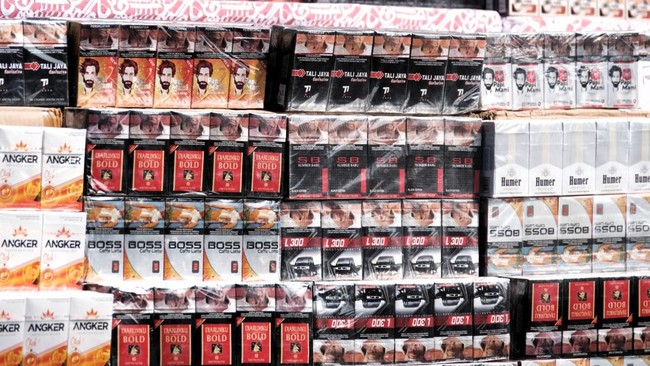
He believes implementing plain packaging could in fact enlarge the circulation of illegal cigarettes, which is said to have already reached 13.9 per cent.
“Because if this is regulated excessively, with the tendency towards plain packaging, it will add to the growth of illegal cigarettes. It will make it even harder for the government to control illegal cigarettes,” Edy said.
AMTI has proposed that the government retain the existing standards, namely the SNI provisions for tar and nicotine content, additives meeting food-grade standards, and no regulation on standardising cigarette packaging.
“If possible, use our suggestions: tar and nicotine in line with the SNI, then additives that are food grade, and regarding health warnings, do not regulate plain packaging,” he said.
Source: jawawa.id (https://jawawa.id/newsitem/tobacco-industry-overregulated-amti-warns-of-shift-to-illicit-products-1784800395)
Originally published by CNBC Indonesia (https://www.cnbcindonesia.com/news/20260723151854-4-753293/industri-rokok-banyak-aturan-amti-ingatkan-migrasi-produk-ke-ilegal), translated from Indonesian