
Tobacco Farmers in West Java Unite to Reject Stringent New Regulations
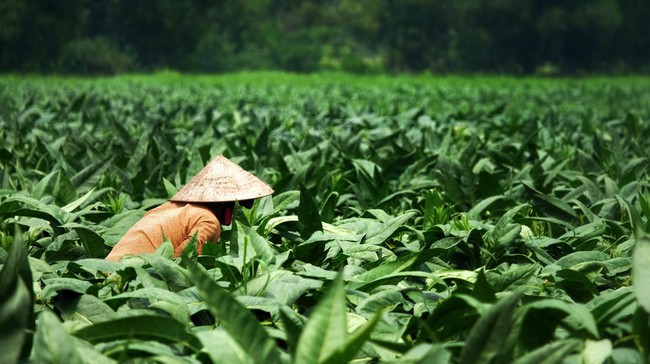
Representatives of tobacco farmers from all corners of the Sundanese lands gathered and collectively declared their rejection of various regulations being drafted by the Ministry of Health. Following a public consultation on 25 May 2026 held by the Ministry of Health (Kemenkes) to discuss a draft Minister of Health Regulation (RPMK), a wave of opposition from affected communities continues to mount, including from Sundanese farmers who earn their income from tobacco cultivation.
The Ministry of Health is insisting on including an article mandating standardised packaging for tobacco products and electronic cigarettes, which would make all products look identical (plain packaging). In addition to the RPMK, Sundanese farmers are also solid in rejecting the maximum nicotine and tar content limits proposed by the study drafting team at the Coordinating Ministry for Human Development and Culture, as well as a ban on additives which they view as a de facto ban on production.
In reality, to date, all of the tobacco farmers’ harvest is absorbed by the tobacco products industry. Tobacco is also an off-season commodity with high economic value because it can grow well during the dry season. Unfortunately, all these draft regulations threaten the farmers’ source of livelihood.
Tobacco farmers from several tobacco-producing centres, including Garut, Sumedang, Bandung Regency, Kuningan, Pangandaran, Tasikmalaya, Majalengka, and Cirebon, agreed to sign a declaration rejecting the various draft regulations and requested protection from President Prabowo, while urging the Government to keep farmers prosperous through its various priority programmes.
‘What we are doing is a form of farmers’ movement, fighting for our livelihoods. We are being oppressed. Why are there draft regulations like nicotine content restrictions and plain packaging, which intend to wipe out and kill off tobacco, when clearly this is the farmers’ economic source?’ said Sambas, Chairman of the Regional Executive Board of the Indonesian Tobacco Farmers Association (DPD APTI), quoted on Thursday (11/6/2026) after a farmers’ forum entitled ‘Saung Sawala: Safeguarding Sundanese Land’s Tobacco Sovereignty: Farmers Reject Restrictions on Nicotine and Tar Content and Plain Packaging’, in Sumedang.
Sambas and the group of tobacco farmers across West Java are disappointed with efforts to immediately pass regulations that could devastate the natural wealth which has been the community’s mainstay.
‘West Java tobacco is proof of nature’s gift, with a unique character and distinctive traits. That includes its varying nicotine levels. West Java has 14 superior local tobacco varieties that have been released by the Ministry of Agriculture. What’s more, West Java has mole, a superior commodity from Sumedang Regency, which has been registered as a Geographical Indication (GI) certified commodity at the Ministry of Law and Human Rights. So, these restrictions designed by the Ministry of Health are deeply contradictory, nonsensical, and unfair to farmers,’ Sambas explained.
Currently, an estimated 20,000 to 25,000 families depend on the tobacco farming sector in West Java. Therefore, the initiation by the Ministry of Health and the Coordinating Ministry for Human Development and Culture to impose maximum limits on nicotine and tar is seen as oppressing farmers in the tobacco sector, especially through various irresponsible restrictions and bans.
As expressed by Otong Supendi, Chairman of the APTI Sumedang Branch Executive Board, Sumedang is now a region that makes a significant contribution to the national tobacco products industry (IHT).
‘In almost every sub-district in Sumedang, the soil and climate conditions are suitable for growing tobacco. There are 25 sub-districts where people live from tobacco farming activities. Farmers in Sumedang have long developed cultivation techniques passed down through generations to produce high-quality tobacco. These nonsensical draft regulations, such as nicotine and tar content limits, plain packaging, and other bans, directly impact the people of Sumedang. Where is the 21,000 tonnes of annual Sumedang tobacco leaf production supposed to go?’ Otong stressed.
Tobacco farmers in West Java agree that these very stringent draft regulations pose a serious threat that will negatively affect the socio-economic conditions of communities in the regions.
‘Why is the Ministry of Health pushing for regulations that completely ignore the real conditions on the ground, in the tobacco fields? Why create regulations that disregard the existence of farmers and oppress them? What is the agenda here?’ Otong concluded.