
Tobacco Farmers Fear Standardised Packaging Plan Will Harm Industry
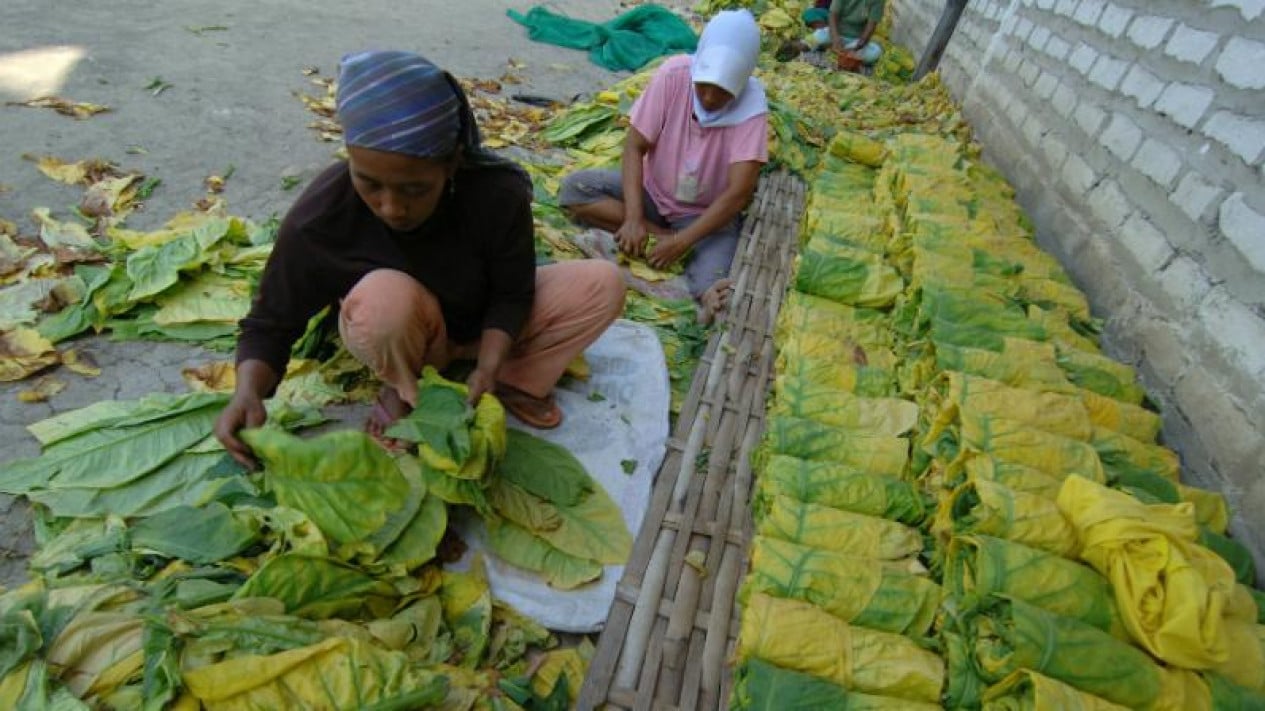
Tobacco farmers in West Java are worried that the push for standardised cigarette packaging will kill the industry’s prospects. The regulation is contained in a draft Minister of Health Regulation concerning the inclusion of health warnings and information on tobacco products and electronic cigarettes.
Enjan, a tobacco farmer from Tasikmalaya, said the discourse on standardised cigarette packaging would actually kill the potential of tobacco in Tasikmalaya, which is currently developing. “What farmers need right now is empowerment and protection. This includes increasing human resource capacity, assistance with production facilities and infrastructure. Not being burdened with additional draft regulations that further suppress us,” Enjan told reporters on Thursday, 9 July 2026. Enjan is a member of the Indonesian Tobacco Farmers Association (APTI) Tasikmalaya branch.
He and other farmers are also concerned that illegal cigarettes will become increasingly rampant if the standardised packaging regulation is implemented. The concern stems from the requirement for uniform lettering, shape, and colour using Pantone 448C so that the packaging is not covered by excise tape. “How will people be able to easily distinguish the cigarettes they want to buy if the packaging is uniform? Instead, they will be surrounded by many illegal cigarettes. Illegal cigarette producers will have a field day because their cigarettes will be easy to imitate and distribute. We cannot remain silent on this draft regulation,” he said.
In a separate interview, the Head of the Working Team for Institutional Industrial Relations at the Indonesian Ministry of Manpower, Meynar Kusumo, said that the relentless regulatory pressure on the tobacco products industry (IHT), both fiscal and non-fiscal regulations, creates vulnerability for the workforce. “We recommend not regulating strictly, including standardised packaging. And it is important to develop an economic mitigation strategy,” Meynar said.
Meynar ultimately stressed that the IHT, with its ecosystem from upstream to downstream, absorbs 6 million workers and its existence is very important in supporting efforts to pursue the 8 percent economic growth target. “This IHT is a big deal. The IHT contributes around 10 percent of state revenue to the state budget through excise. The most important task right now is how we can pursue 8 percent economic growth, with synergy from all parties, starting from the industry, the workforce, and the regulations,” Meynar concluded.