
Tobacco Farmers Fear Impact of Nicotine and Tar Content Cap Policy
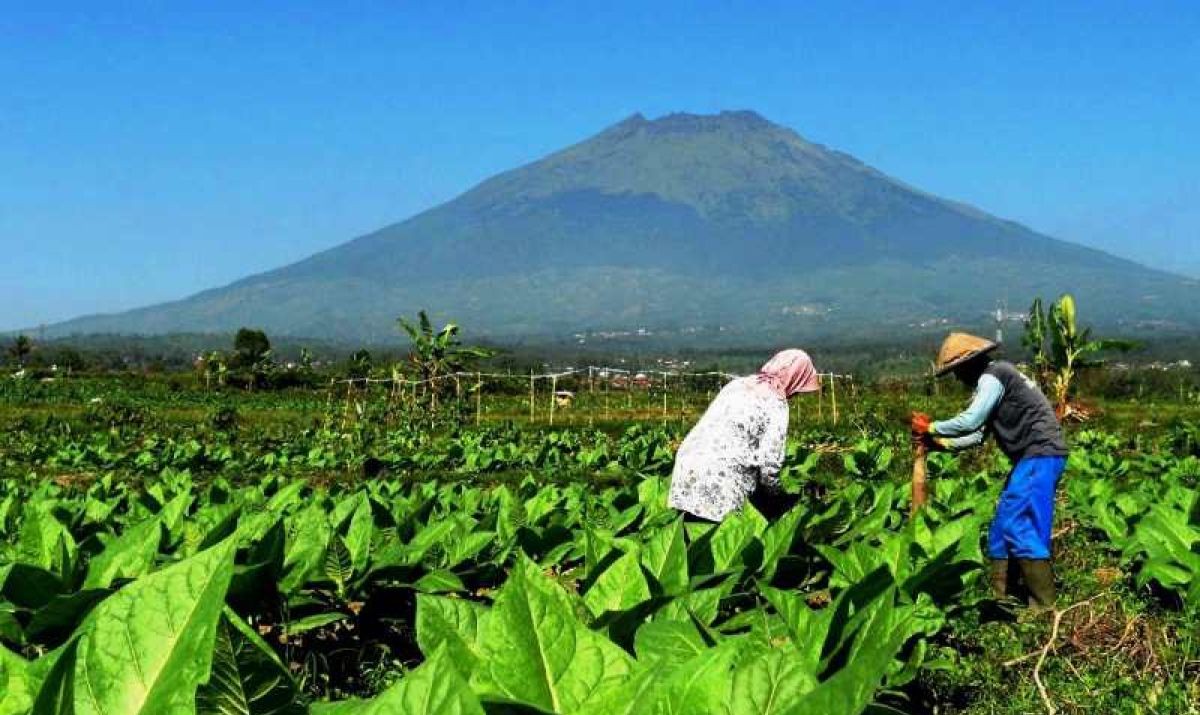
Jakarta — Sarmidi Husna, Director of the Association for the Development of Pesantren and Society (P3M), emphasises the need for careful, comprehensive thinking in drafting limits on the maximum nicotine and tar content, a mandate of Government Regulation (PP) No. 28 of 2024. This arises from concerns that such limits could affect employment absorption in the tobacco sector, potentially wiping out livelihoods at scale.
Sarmidi argues that the policy initiative from the Ministry of Health (Kemenkes) and the Coordinating Ministry for Human Development and Culture (Kemenko PMK) risks undermining the sustainability of the national tobacco ecosystem from upstream to downstream. If nicotine and tar limits are imposed to meet very low international standards, tobacco varieties with naturally higher nicotine levels would no longer be absorbed by producers.
This scenario is predicted to cripple the industry, particularly kretek, as producers could not meet the new thresholds. The economic impact would be sizeable, since Indonesia’s kretek cigarettes—made with locally sourced raw materials—could no longer be absorbed.
“This is something that needs to be discussed, deliberated; we must not create rules that cannot be implemented or sustained,” Sarmidi said.
Sarmidi also lamented the coordination process at the Kemenko PMK over forming a cross-ministerial drafting team, which he says ignored the roles of ministries intimately linked to the tobacco sector, such as the Ministry of Manpower (Kemnaker) and the Ministry of Agriculture (Kementan). Both have authority and deep understanding of the real conditions faced by farmers and the protection of workers in cigarette factories. He argued that Kemenko PMK should listen to the agriculture and industry sectors so that the resulting regulations remain in the national interest, particularly for tobacco farmers, many of whom are Nahdliyin.
P3M urged the government to be faithful to its mandate and robust in protecting national interests. Rather than crafting new rules that burden producers, the government should consistently apply the Indonesian National Standard (SNI), which already governs tar and nicotine limits, as the policy reference.
He hopes the government will prioritise solutions that safeguard the livelihoods of millions dependent on the tobacco industry. “Policy must deliver a solution. If there is no solution, we should question the policy itself,” Sarmidi asserted. (E-3)
BARONG Grup (Nusantara Global Group) tobacco company owner Khalilur R Abdullah Sahlawiy, known as Gus Lilur, has spoken out amid crackdowns on illicit cigarette operations and the debate over duty stamps.
Farmers have urged the government to prioritise protection of local commodities and national economic sovereignty in policy formulation.
Finance Minister Purbaya Yudhi Sadewa’s decision not to raise the excise rate on tobacco products or the retail price in 2026 has been welcomed.
Tobacco farmers oppose the Ministry of Health’s packaging regulations. Opposition to PP No. 28 of 2024 and its derivatives has been voiced since August 2024.
Farmers and workers in the tobacco industry ask the government to involve them more in drafting the Ministry of Health’s Regulation (RPMK).
The government is pursuing nicotine and tar content limits on tobacco products to tackle Indonesia’s high smoking prevalence.
Layered pressures from global geopolitics to domestic regulation are increasingly constraining tobacco industry players (IHT).
BSN and the Indonesian National Standard (SNI) have in fact set rules on tar and nicotine content in tobacco products.
The policy-formulation process remains short on transparency and public participation, hence the need for a comprehensive regulatory impact assessment (RIA).
Stricter regulations could reshape the competitive landscape in the tobacco industry.
Source: jawawa.id (https://jawawa.id/newsitem/tobacco-farmers-fear-impact-of-nicotine-and-tar-content-cap-policy-1779546106)
Originally published by Media Indonesia (https://mediaindonesia.com/ekonomi/891803/petani-tembakau-khawatir-terimbas-kebijakan-pembatasan-kadar-nikotin), translated from Indonesian