
Tobacco Excise Revenue Sharing Becomes Pillar of Welfare for Surabaya Residents
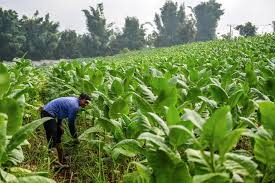
The tobacco products industry is considered to have a positive impact on the economy of Surabaya residents through mass employment and the tangible contribution of the Tobacco Excise Revenue Sharing Fund. This sector has proven to be a pillar of livelihood for citizens with the distribution of direct cash assistance programmes by the Surabaya city government.
Surabaya Mayor Eri Cahyadi stated that the direct cash assistance from the DBHCHT can help with daily living and supplement the income of aid recipients. The acceleration of social assistance distribution from the DBHCHT is a strategic decision so that fresh funds can immediately circulate within the community. The city government prioritises early disbursement to ease the burden of daily household expenses. Following adjustments to the DBHCHT allocation from the central government in 2026, the nominal amount has been adjusted from the previous range of Rp250,000 to Rp300,000, to Rp200,000.
Mayor Eri Cahyadi acknowledged that the benefits of the tobacco industry can also be felt by vulnerable residents, both within and outside the sector. “This is part of the government’s effort from cigarette excise tax given to vulnerable residents, or to workers directly involved, such as those who hand-roll cigarettes or security guards who need and are entitled to receive it. These are people in the first and second deciles of poverty,” he said.
The existence of jobs in the tobacco industry is also concrete proof of its role in supporting family livelihoods. He stated that the tobacco sector in urban areas has proven capable of creating family economic resilience, especially for groups of female workers who have dedicated decades to the tobacco sector. “A mother who used to just stay at home, today it is proven that with her prayers, strength, and hard work, a mother can change her family’s fate,” Eri explained.
Head of the Surabaya City Social Agency, Antiek Sugiharti, explained that the social safety net programme sourced from the DBHCHT targets a wide range of aid recipients. These range from workers in the factory ecosystem, both those directly involved in the production process and other support staff, to poor and vulnerable residents who have not yet received social assistance in the 2026 fiscal year. “This direct cash assistance programme is sourced from the 2026 DBHCHT, with a total of 3,850 recipients. The breakdown is 3,505 factory employees and 345 from the poor and vulnerable communities, making a total of 3,850,” she said, emphasising the significant contribution of the tobacco products industry to community aid.
It is hoped that this assistance from the DBHCHT can continue to be distributed annually despite increasingly stringent regulatory pressures on the tobacco industry following the enactment of Government Regulation Number 28 of 2024. The operations of the tobacco products industry are also increasingly worrying with the emergence of plans for standardised plain packaging and discourse on limiting nicotine and tar levels in tobacco products, which are feared to threaten the sustainability of this strategic sector, particularly the labour-intensive hand-rolled kretek cigarette segment. Surabaya is one of the national tobacco production centres because it has labour-intensive production facilities.