
Tobacco Excise Contributes Rp226T, Indonesia Ranks as World's 6th Largest Tobacco Exporter
The Ministry of Industry (Kemenperin) has asked the government to thoroughly consider the economic impact when formulating derivative rules for Government Regulation No. 28 of 2024 on the safeguarding of tobacco products. Beyond being a source of foreign exchange, the tobacco products industry (IHT) still plays a major role in state revenue through excise.
Amid discussions on the regulation, Kemenperin believes the policies adopted must maintain a balance between health aspects and the industry’s sustainability. The tobacco products sector has a long business chain, from farmers and processing industries to export markets, which underpins national economic activity.
‘Indonesia’s current position is the world’s sixth-largest exporter of tobacco products. So our tobacco products are not only consumed domestically but are also a foreign exchange earner,’ said Merrijantij Punguan Pintaria, Director of Beverage, Tobacco Products and Refreshing Ingredients at Kemenperin, during a tobacco industry discussion on Friday (26/6/2026).
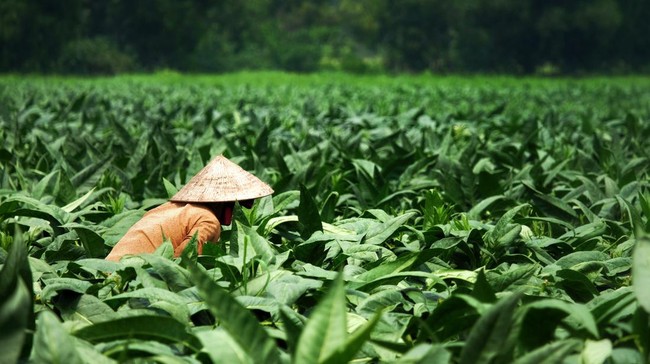
Kemenperin notes there are currently around 1,700 tobacco product industries in Indonesia, with approximately 87 percent being small and medium-sized enterprises (SMEs). The sector also absorbs nearly 550,000 direct workers, provides a market for more than 500,000 tobacco farmers, and is able to meet all industrial clove requirements from domestic production.
‘Indonesia’s tobacco ecosystem cannot be compared apple to apple with other countries. Some countries have the industry but no tobacco fields, others have the fields but no industry. Indonesia has everything, from upstream to downstream,’ Merri said.
Beyond its export contribution, Kemenperin reminded that the tobacco products industry remains one of the main pillars of state revenue. The ministry therefore hopes that any new policy will also take into account its implications for the government’s excise targets.
‘This year’s tobacco excise target is Rp226 trillion. Whether that target can be achieved or not depends on the policies taken. Whether our policies give the industry room to grow or instead further squeeze it,’ she stated.
Merrijantij added that the tobacco products industry essentially produces to meet market demand. As long as demand remains high, she argued, the national industry’s presence must be maintained so that the domestic market is not increasingly filled by imported products, while continuing to contribute to state revenue.
‘If there were no demand, this industry would certainly close on its own. As long as demand remains high, it is better for that need to be met by domestic industry rather than supplied by imported products,’ Merri concluded.
Source: jawawa.id (https://jawawa.id/newsitem/tobacco-excise-contributes-rp226t-indonesia-ranks-as-worlds-6th-largest-tobacco-exporter-1782481892)
Originally published by CNBC Indonesia (https://www.cnbcindonesia.com/news/20260626183405-4-746106/cukai-rokok-sumbang-rp226t-ri-eksportir-tembakau-terbesar-ke-6-dunia), translated from Indonesian