
Tobacco Excise Between State Revenue and the Pursuit of Fairness
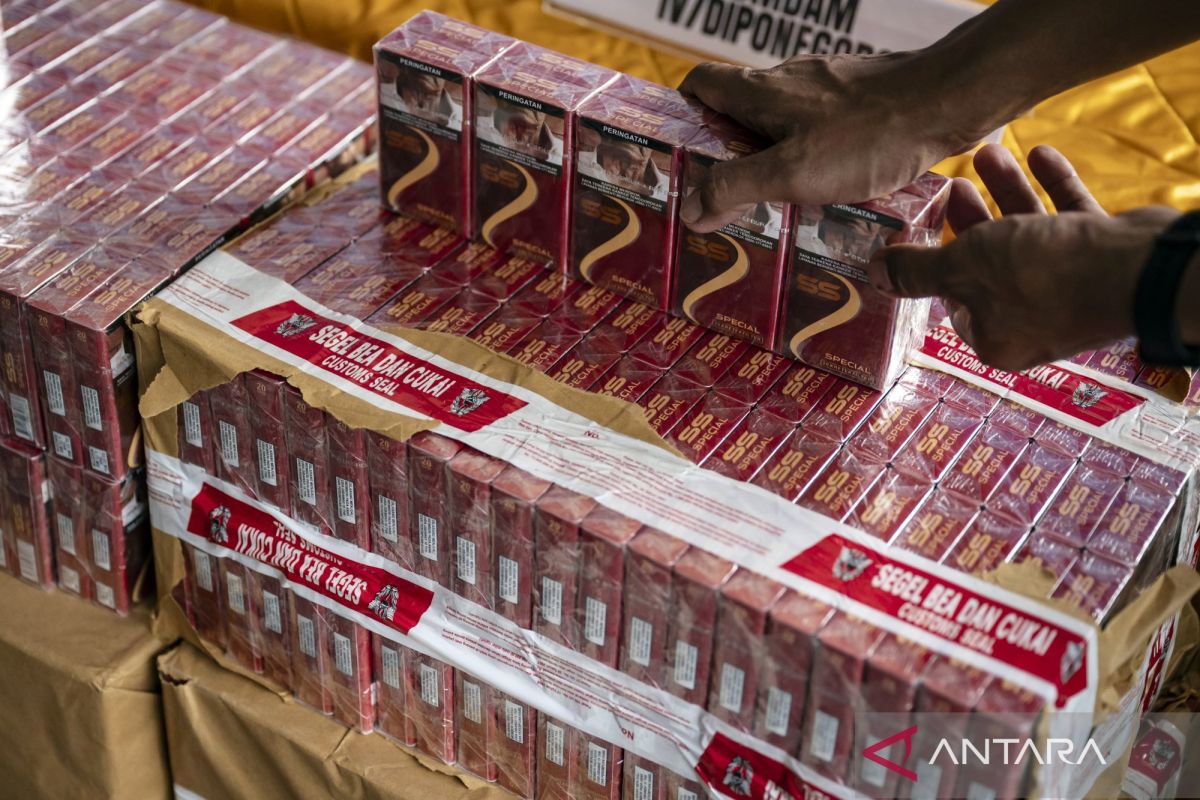
Jakarta (ANTARA) – When the government sets cigarette excise rates, the impact is not limited to state revenue figures.
Factory workers depend on the income, tobacco farmers await the proceeds of their harvest, small traders seek to keep their businesses going, and families hope to keep food on the table.
This is why tobacco products excise (CHT) policy needs to be viewed comprehensively. Excise is not merely a fiscal instrument for filling state coffers; it is also a tool for controlling consumption, with consequences for public health, employment and the continuity of economic activity.
Indonesia faces the challenge of balancing these various interests. The state needs revenue to finance development, the public needs health protection, and workers need secure livelihoods.
The problem is that higher excise rates do not always produce the additional revenue expected. When cigarette prices rise, some consumers may cut back or stop smoking. Others, however, may switch to cheaper products and could even turn to illicit cigarettes.
This shows that consumer behaviour does not always follow policy assumptions. Purchasing decisions are shaped by factors including purchasing power, habits, product access and household economic circumstances.
Muhammad Sri Wahyudi Suliswanto, an economist at the Faculty of Economics and Business at the University of Muhammadiyah Malang, has stressed the importance of policy certainty for the tobacco products industry.
A moratorium on CHT rate increases could give companies room to maintain production while safeguarding employment.
This view reflects the nature of the tobacco products industry, which employs many people, particularly in production activities that still rely on manual skills.
When production costs rise and demand weakens, companies face difficult choices. Efficiency measures may be needed to keep businesses afloat, but cutting jobs can have significant social consequences.
A worker who loses their income is not merely a statistic in employment data. Behind them may be a child who needs school fees, a parent requiring care and a family relying on monthly earnings.
The question of fairness
Some parties hope the moratorium on CHT increases can be extended by about two years if economic conditions have not improved sufficiently. They say certainty is important to give companies time to plan their business strategies and adapt to market changes.
At the same time, a moratorium should be considered as part of a broader policy framework. Delaying a rate increase will not automatically resolve all the industry’s problems, just as raising rates is not the sole answer to the state’s revenue needs.
Sustainable policy requires a broader set of measures of success. Alongside excise revenue, the government should consider consumption trends, public health, employment, the circulation of illicit products and the industry’s ability to adapt.
One significant issue is downtrading: consumers switching to lower-priced products. People on limited incomes tend to choose cheaper cigarettes when facing price pressures.
This shift can change the structure of market demand. If consumers move from legal to illicit products, state revenue could fall because transactions take place without the required excise being paid.
This situation raises questions of fairness. Companies that pay excise, comply with production requirements and meet their administrative obligations must compete with illegal operators who evade compliance costs.
Such competition harms not only the state but may also threaten the viability of law-abiding businesses. Law enforcement therefore plays a decisive role.
Suparji Ahmad, a professor of law at Al Azhar Indonesia University, emphasised that sound regulation must be accompanied by consistent monitoring and enforcement. The three cannot be separated if the government wants policy to be effective and fair.
Suparji also warned that regulatory loopholes could be exploited to reduce excise liabilities, including through administrative manipulation that runs counter to the policy’s aims.
This warning matters because revenue leakage does not always occur through visibly physical illicit trade. Administrative irregularities can also undermine fiscal fairness if they go undetected and are not addressed in accordance with the rules.
Regular evaluation
Oversight should therefore combine field inspections, data use, distribution traceability and inter-agency co-operation. Technology can help identify unusual transaction patterns, while officials ensure that every finding is followed up on the basis of evidence.
At the same time, protecting public health must remain the primary aim of controlling tobacco consumption. The burden of smoking-related disease has economic consequences, including medical costs, lost productivity and pressure on family welfare.
The success of excise policy should not, therefore, be judged solely by the amount of revenue collected. Reduced risky consumption, protection for vulnerable groups and a decline in illicit trade are also valuable outcomes.
The government could consider measured rate adjustments, accompanied by regular evaluations based on economic conditions and consumption trends. A clear policy direction would help businesses plan without neglecting public health interests.
For workers, the transition period should be used to improve skills, broaden employment opportunities and prepare alternative livelihoods. Social protection and training tailored to labour-market needs can reduce vulnerability as the industry changes.
In principle, good economic policy does not advance one interest at the expense of all others. It brings together the needs of the state, public health, legal certainty and workers’ dignity.
Tobacco excise shows that revenue figures carry greater significance when considered alongside people’s lives.
A successful state is not merely one that can collect revenue, but one that ensures every fiscal decision helps create a healthier, more productive, fairer and more prosperous society.
Source: jawawa.id (https://jawawa.id/newsitem/tobacco-excise-between-state-revenue-and-the-pursuit-of-fairness-1793411453)
Originally published by Antara (Indonesian) (https://www.antaranews.com/berita/5823059/cukai-tembakau-di-antara-penerimaan-negara-dan-pemenuhan-rasa-adil), translated from Indonesian