
To Tackle Jakarta's Air Pollution, Environment Minister Pushes for Industrial Zone Relocation
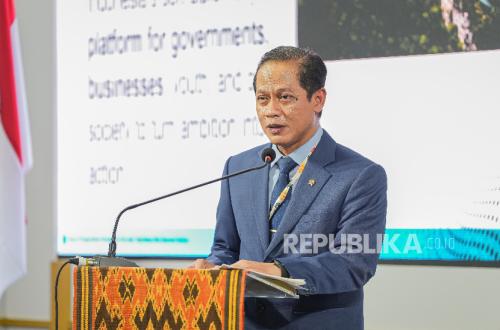
Environment Minister Hanif Faisol Nurofiq has revealed that the government is preparing several large-scale strategic measures to address air pollution issues in Jakarta and its surrounding areas (Jabodetabek). These steps include relocating industrial zones, transitioning to clean energy, and regulating open burning of land.
According to Hanif, managing the capital’s air quality requires comprehensive operational actions. Based on the latest study from the World Bank, the industrial sector contributes a significant portion to the deterioration of air quality in Jakarta.
“We have 48 industrial zones in Jakarta. This contributes almost 30 percent (to pollution) according to the latest World Bank study. All burning in the form of boilers and power plants contributes 30 to 35 percent to Jakarta’s air quality,” said Hanif on Friday (10/4/2026).
As a long-term solution, Hanif stated that industrial zones need to be moved outside the Jabodetabek area with a compensation scheme from the government in the future. For a medium-term solution, the government will strictly enforce the use of high-emission fuels within the city.
“No coal should enter the city. If possible, use environmentally friendly energy, preferably renewable,” he emphasised.
He also encouraged the optimisation of rooftop solar panels, although acknowledging the need for harmonisation of permits with the Ministry of Energy and Mineral Resources (ESDM) and the state electricity company PLN. As an emergency measure, Hanif proposed banning industries that still use smokestacks from operating in Jabodetabek to reduce dirty air pressure.
In addition to industry, the transportation sector remains a primary cause of air pollution. Hanif highlighted the high population of motorised vehicles in Jabodetabek, exceeding 33 million units, coupled with the unavailability of fully environmentally friendly fuels.
“The sulphur content in our fuel is still above 50 parts per million (ppm), and our subsidised fuel averages in the thousands (ppm),” he explained.
As a follow-up to President Prabowo Subianto’s programme, the Environment Ministry is pushing for the implementation of 50 percent Biodiesel (B50), focused on use in Jakarta to massively reduce sulphur content. At the same time, the government will accelerate the ecosystem for Battery-Based Electric Motor Vehicles (KBLBB) for mass and personal transportation.
The third contributing factor to pollution is open land burning, which contributes around 17 percent to pollution in Jabodetabek. Smoke from household waste burning to rice harvest biomass residues is trapped in Jabodetabek’s sky due to wind convergence.
These strategic steps, according to Hanif, are also a government follow-up to the Supreme Court (MA) decision in 2024 regarding a citizen lawsuit on Jakarta’s air pollution, which has gained legal force (inkrah).
“The President has asked and ordered me to take handling steps and convey to the public what measures the government has taken to improve Jakarta’s air quality in order to fulfil the court’s directive,” Hanif concluded.