
To Support National Connectivity, Government Urged to Strengthen Shipping Safety Systems
National shipping safety has once again come under scrutiny following the accident involving KM Virgo Transport 8 in waters near Surabaya. The incident should serve as a moment to strengthen oversight of cargo capacity, ship stability, crew competence and the wider shipping safety system so that similar accidents do not recur.
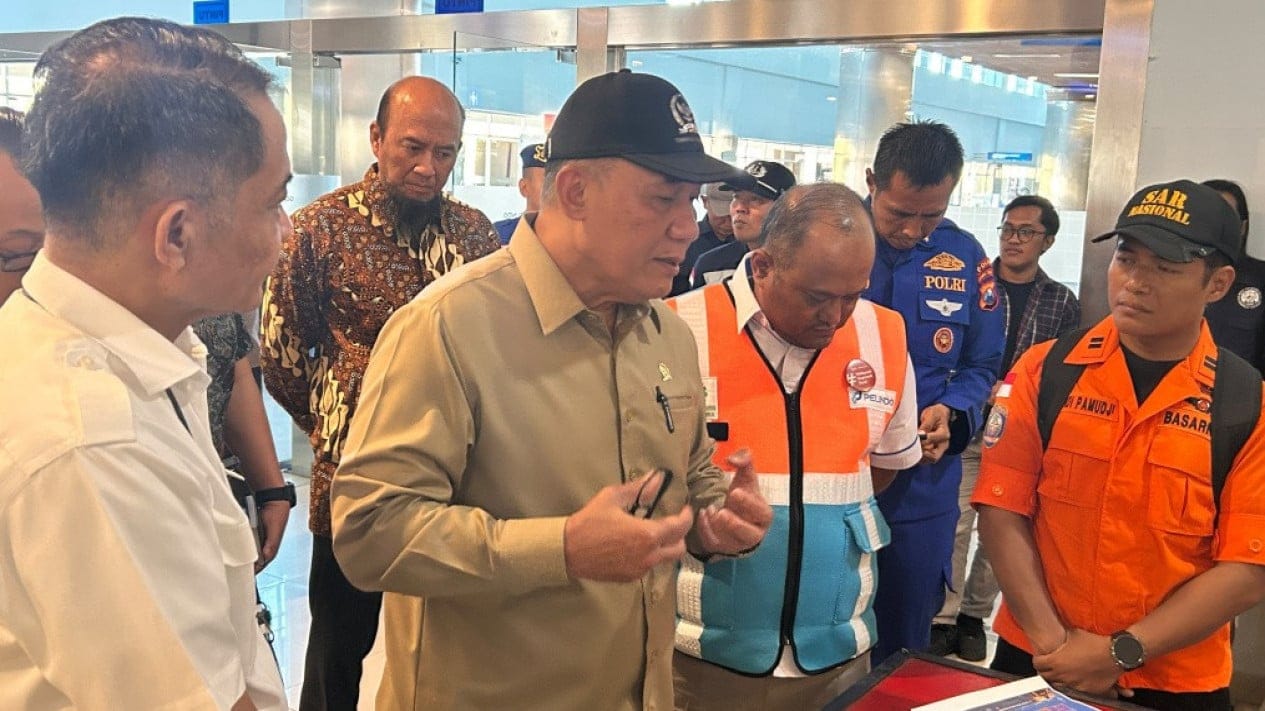
Member of the Indonesian House of Representatives (DPR RI) Bambang Haryo Soekartono (BHS) said the investigation into the KM Virgo Transport 8 accident must be carried out comprehensively and must not hastily conclude that the vessel’s age was the main cause. He made the remarks during a visit to the integrated post for the KM Virgo Transport 8 accident at Tanjung Perak Port, Surabaya, on Monday (14/9).
According to BHS, a ship’s age is not the sole indicator of seaworthiness. In a number of countries, vessels that are decades old, or even more than 100 years old, remain in operation because they undergo regular maintenance, class renewals, dry-docking and component replacement.
He cited the M/S Enköping in Sweden, built in 1868, and the S/S Hjejlen in Denmark, built in 1861. Both demonstrate that age alone cannot determine a ship’s seaworthiness.
“KM Virgo Transport 8 is still relatively young at 39 years. Moreover, former Japanese vessels are built with high technology. The plates used on Japanese ships are high-tensile steel with very strong bending, compression and tensile strength,” said BHS.
He added that ship certification in Indonesia is carried out in layers through the Bureau of Classification Indonesia and the Directorate of Sea Transport under the Ministry of Transport, covering construction, machinery, safety equipment and crew.
Therefore, the main focus of the investigation, according to BHS, should be directed at cargo capacity and distribution. The vessel’s listing condition must be analysed, particularly when it encountered bad weather and large waves.
He asked the National Transportation Safety Committee (KNKT) together with civil servant investigators to examine the cargo carried to ensure it matched the ship’s capabilities.
On the passenger side, BHS noted that the figure of 243 people was still far below the vessel’s maximum capacity of 570 people. However, the situation becomes different when the ship carries heavy logistics vehicles, especially if cargo is placed on the upper vehicle deck.
In his view, excess cargo can affect the ship’s buoyancy and stability. In high-wave conditions, placing heavy cargo in certain positions could even lead to negative stability, accelerating the risk of capsizing.
BHS also highlighted the importance of oversight of weighbridges in port areas. He asked regulators, operators and port managers to ensure that logistics vehicles boarding ships comply with weight requirements and manifests.
Strengthening safety must also include implementation of the ISPS Code, terminal sterilisation, inspection of passengers and vehicles, and the use of technology such as X-rays to detect dangerous goods. Oversight is needed to prevent discrepancies between the manifest and the actual conditions on board.
Beyond prevention, national rescue capabilities also need to be reinforced. BHS called for increased capacity for Basarnas and the Coast Guard, including the application of measurable response times so that victims of maritime accidents can be evacuated promptly.
He also expressed appreciation for the merchant vessels, barges, tugboats, mini tankers and fishermen who assisted in the rescue of KM Virgo Transport 8. According to him, the contribution of all these parties demonstrates the importance of collaboration in facing emergencies at sea.
BHS further requested that PT Jasa Raharja promptly provide compensation to victims who died, survivors, and those still missing but recorded in the manifest. He also urged that search and evacuation efforts be carried out to the fullest, including the possibility of victims still trapped inside the vessel.
A National Police helicopter was dispatched from Syamsudin Noor Airport in Banjarmasin to the location, approximately 80 nautical miles from Banjarmasin.
Such an audit is considered important to ascertain the actual condition of the national shipping fleet and to identify ships and operators with high levels of risk.
Source: jawawa.id (https://jawawa.id/newsitem/to-support-national-connectivity-government-urged-to-strengthen-shipping-safety-systems-1789494638)
Originally published by Media Indonesia (https://mediaindonesia.com/nusantara/933826/dukung-konektivitas-nasional-pemerintah-didorong-perkuat-sistem-keselamatan-pelayaran), translated from Indonesian