
To Support E20 Bioethanol Fuel, Zulhas to Expand Sugarcane Plantations
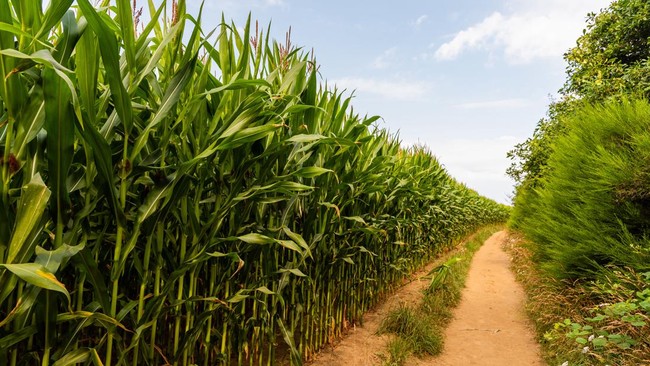
Jakarta, CNBC Indonesia - The Coordinating Minister for Food, Zulkifli Hasan, stated that the government will establish new plantations for domestic ethanol production. These plantations will include sugarcane and cassava, which serve as raw materials for blending into petrol-type fuels.
Zulhas revealed that this plan aligns with the government’s programme to achieve a 20% bioethanol-gasoline blend (E20) by 2028. The expansion of land area is intended to ensure that the use of biofuels does not interfere with the national sugar supply.
“E20 can be derived from sugarcane, cassava, or other sources. Currently, there is a shortage. Therefore, if we want to use sugarcane, we must open new plantations,” said Zulhas during the Indonesia International Sustainability Forum (IISF) 2026 in Jakarta on Tuesday (6/10/2026).
In addition to bioethanol, the government has already implemented the use of B50 biofuel and is encouraging a transition towards the renewable electricity industry.
“We are already at B50, and within five years, we will move towards E20, while also transitioning towards a renewable electricity industry,” Zulhas stated in his presentation.
Preparing 2 Million Hectares of Land
Previously, President Prabowo Subianto held a limited cabinet meeting on Wednesday night (16/9/202<0xA0>26) with several ministers regarding the implementation of the 20% bioethanol fuel blend programme, known as E20. The programme is targeted for implementation by 2028.
“The limited meeting was led directly by the President to discuss how we can produce at least E20 within the next two years,” said Prabowo following the meeting.
According to Zulhas, during the meeting, the President requested that the Minister of Agriculture, Andi Amran, prepare a plan for providing the land required for bioethanol raw material production. Meanwhile, the Danantara Investment Management Agency has been tasked with preparing the processing industry.
“For Danantara, the focus will be on the industry—converting ethanol. The most feasible source appears to be sugarcane. We will prepare approximately 2 million hectares of land, spanning areas outside Java, within Java, and in Sumatra,” said Zulhas.
“In the next two years, we must work hard. Given current global developments, we must be capable of producing E20. That is the core objective,” he added.
During the event, Zulhas did not deny that providing land for ethanol raw materials is often a bottleneck. However, following the meeting, it was decided that land allocations of approximately 2 million hectares could be provided in Kalimantan, Sumatra, Papua, and Java for sugarcane cultivation.
“For the first stage, it is 2 million hectares. The bottleneck is the land. But after mapping it out and assigning tasks to State-Owned Enterprises and the Minister of Agriculture, we believe we can achieve that 2 million hectare target,” he noted.
Furthermore, he stated that this policy will not stop at E20; the ethanol blend in petrol will eventually be increased to a 50% composition (E50).
“E20 will be entirely domestic. Gradually, we will move towards E50, similar to B50, but the immediate priority is E20. In the long term, we are heading towards E50,” he concluded.