
To Secure Electricity Supply, Government Must Provide Certainty for Mining Production
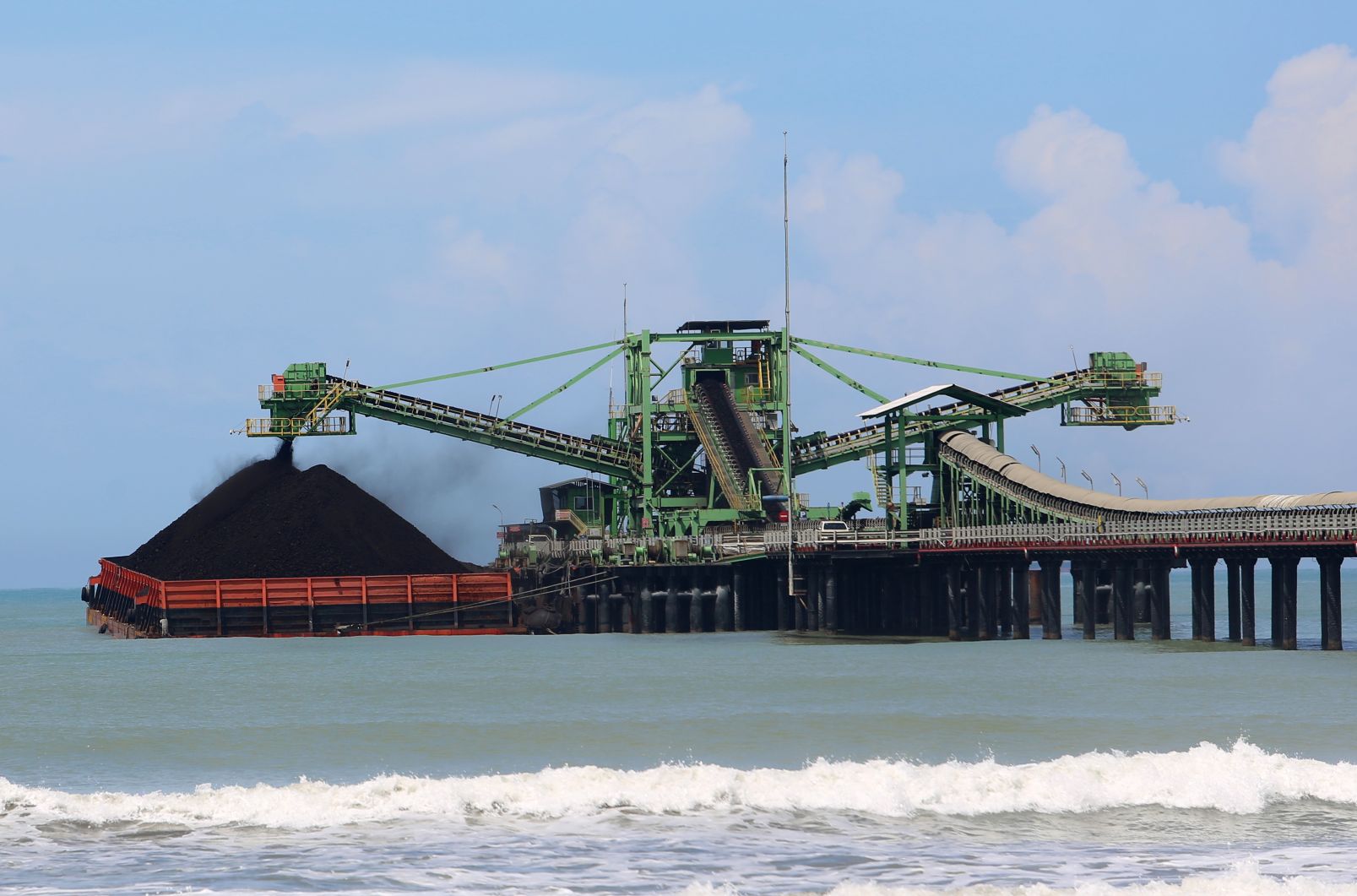
The government needs to provide earlier certainty to mining companies regarding production plans and supply assignments for domestic needs. This step is crucial to maintaining the continuity of energy supplies, particularly coal for power plants in 2027.
Head of Research at Evident Institute, Antonius Ivan Sudibyo, emphasised that this certainty must begin with the issuance of the 2027 Work Plan and Budget (RKAB) well before the turn of the year. According to him, the 2027 RKAB should ideally be finalised by mid-November 2026 at the latest.
“The 2027 RKAB should be issued by mid-November at the latest. This would allow mining companies to properly organise their 2027 production plans, including maintaining domestic requirements,” Antonius stated on Thursday.
He explained that production certainty is vital because domestic energy needs, especially for power plants, are continuous. Therefore, the government must ensure the availability of supply sources before entering the current year.
In addition to the RKAB, the government is deemed to need the establishment of assignments for mining sources to meet power plant requirements and other Domestic Market Obligation (DMO) duties well in advance of the year’s end.
“Government assignments to mining sources to supply electricity and other domestic DMO needs need to be established long before the end of the year. Electricity runs 24 hours a day, seven days a week, without holidays,” he said.
He further suggested that the assignment pattern should be directed towards long-term mandates rather than just annual ones. Such certainty would provide space for mining companies to plan production while helping energy users secure their supply.
“Assignments should be long-term, not annual. This way, both suppliers and users can plan more effectively,” he added.
Supervision Mechanism
On the other hand, the certainty of assignments must be accompanied by clear supervision and compliance mechanisms. The government needs to ensure that companies receiving assignments fulfil their supply obligations according to established regulations.
The expert noted that regulations must also strictly enforce sanctions if suppliers fail to carry out their assignments. Clear sanctions are necessary so that government assignments do not merely become administrative targets but truly guarantee the availability of supplies for domestic needs.
“There must be certainty regarding supplier compliance with assignments, including regulations and sanctions. If an assignment is given but not fulfilled, the consequences must be clear,” he said.
With earlier production planning, long-term assignments, and clear compliance mechanisms, the government is believed to be able to strengthen domestic energy supply certainty and reduce the risk of supply disruptions for power plants.
Guaranteeing Production Quotas
The Minister of Energy and Mineral Resources (ESDM), Bahlil Lahadalia, has guaranteed that the coal production quota, regulated through the approval of each company’s Work Plan and Budget (RKAB), is sufficient to meet national electricity needs.
“There are no more issues regarding coal RKAB in relation to PLN (State Electricity Company). This is to ensure that ‘blackouts’ are no longer blamed on the RKAB,” Bahlil stated during a Working Meeting with Commission XII of the Indonesian House of Representatives (DPR RI) in the Parliament Complex, Jakarta, on Wednesday.
He reminded that the approval of the RKAB, which impacts coal production quotas, considers the balance between supply and demand to maintain coal prices.
“We cannot aggressively increase the RKAB only to have prices crash. That is impossible. Our national stock for coal is sufficient, taking supply and demand into account,” he said.
Bahlil stated that the government ensures the adequacy of coal supply for PLN through the Directorate General of Mineral and Coal within the Ministry of Energy and Mineral Resources.
Consequently, Bahlail emphasised that the rolling blackouts occurring in Kalimantan and Sulawesi were not caused by a shortage of coal supply, but were rather the impact of El Niño.
“The blackouts in Kalimantan and Sulawesi have nothing to do with the RKAB. Those areas rely on hydropower (PLTA), and due to El Niño, water levels are low. The contribution from 400 megawatts (MW) has dropped to 200–250 MW, resulting in a deficit there,” Bahlil concluded.