
To Restore Fuel Supply, IESR Recommends These 4 Steps
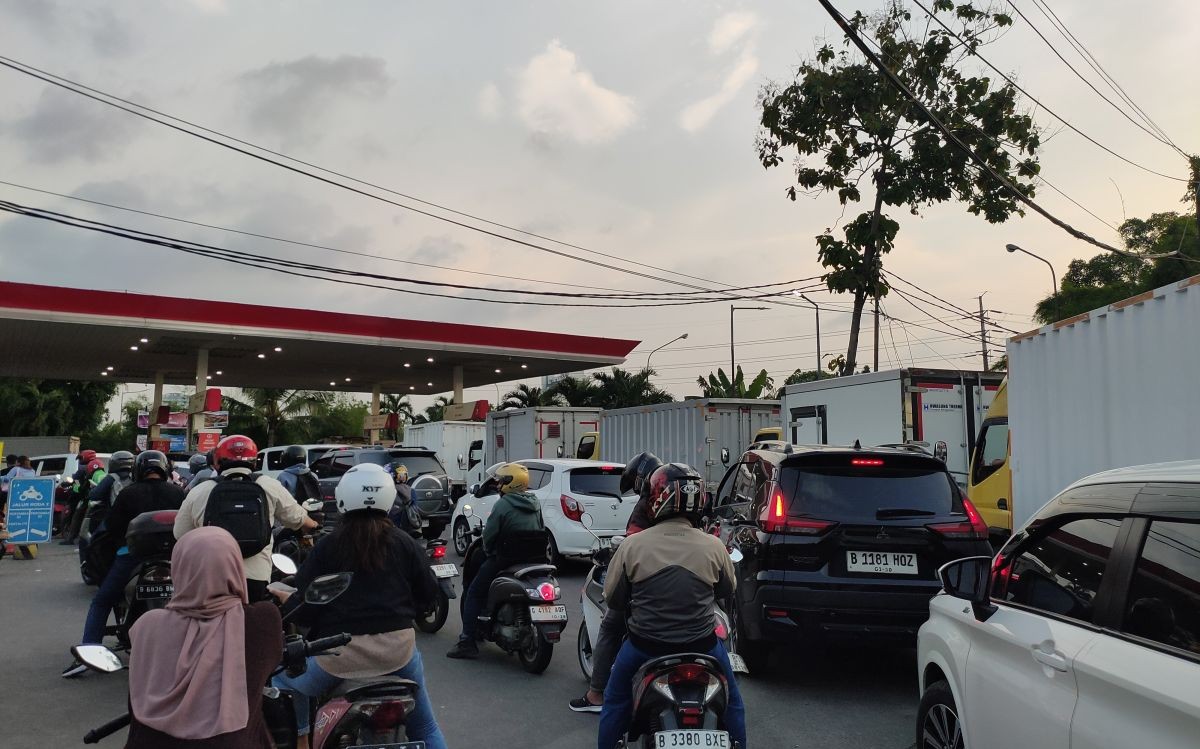
The Institute for Essential Services Reform (IESR) is urging the government to restore fuel supplies across all crisis-affected regions within the next seven to ten days. As reported, fuel shortages have occurred simultaneously over the past two weeks in South Sulawesi, Java, and Sumatra. To address this, IESR recommends four primary steps.
First, temporarily increase volumes in verified shortage areas and perform daily redistribution between terminals.
Second, protect fuel requirements for critical public services and vulnerable community groups. “Provide dedicated queues or service times for public transport, ambulances, food logistics, fishermen, farmers, and other public services,” said IESR CEO Fabby Tumiwa in a statement on Monday (14/9).
Third, build public trust through data transparency. Regularly publish terminal stocks, delivery schedules, petrol station availability, queue times, and daily quotas to prevent panic-driven hoarding.
Fourth, take firm action against violations. Use transaction data to detect repeated purchases and modified tanks without hindering legitimate consumers, and prosecute parties exploiting the crisis to hoard fuel.
“It must be remembered that increasing quotas without improving subsidy targeting will only repeat the problem. In the medium term, the government must shift from commodity-based subsidies to beneficiary-based assistance,” said Fabby.
According to him, reforms must be carried out gradually with updated socio-economic data, easy grievance mechanisms, and compensation before any price adjustments. Public transport, fishermen, farmers, and micro-businesses that truly depend on fuel also need measured protection.
“Fuel subsidy reform must not be continually delayed for short-term popularity. The President needs to immediately communicate the plan, stages, and clear social protections. Subsidy savings should be directed towards strengthening public transport, vehicle electrification, regional fuel reserves, and renewable energy,” said Fabby.
“The public should not continue to pay for energy governance failures through long queues, loss of income, and rising living costs. Supply recovery must be carried out immediately, but afterwards, the government must overhaul the subsidy system and energy governance comprehensively,” he concluded.
According to reports, fuel stocks in most regions remain above normal levels, with supply resilience estimated to last approximately 11 days before the next delivery arrives.
Pertamina explained that long queues in North Sumatra were triggered by fraud involving tanker drivers. Distribution is now beginning to normalise with assistance from the Indonesian National Armed Forces (TNI).
Pertamina has blocked 11,000 subsidized diesel barcodes in Jambi to address long queues. Joint inspection teams found the misuse of vehicle registration numbers at petrol stations.
The North Sumatra Regional Police are also involved in managing the ongoing fuel crisis within their jurisdiction, particularly in Medan and surrounding areas.
The Director General of Oil and Gas at the Ministry of Energy and Mineral Resources (ESDM) has added more fuel tanker fleets to address shortages in North Sumatra. Pertamina is optimising 24-hour distribution at the Medan Fuel Terminal.
The Head of the Downstream Oil and Gas Regulatory Agency (BPH Migas), Wahyudi Anas, noted that Pertalite stocks at Pertamina fuel terminals are estimated to last only 8-14 days amidst long queues at petrol stations.
BPH Migas has ensured that fuel availability and distribution on Flores Island, NTT, remains secure following recent disasters by strengthening stocks across 95 official distributors.
PT Pertamina Patra Niaga Regional Sulawesi has ensured that energy distribution operations in Central Sulawesi continue to run normally following an earthquake.
PT Pertamina Patra Niaga Regional Sulawesi guarantees that the stock and distribution of fuel and LPG in Central Sulawesi remain smooth and safe following a magnitude 6.7 earthquake.
The Ministry of Energy and Mineral Resources guarantees that the prices of subsidised fuels, such as Pertalite and Biosolar, will not increase until the end of 2026, despite the weakening of the Rupiah.