
To Reduce Poverty, Central Java Provincial Government Expands 'One Regional Agency, One Village' Programme
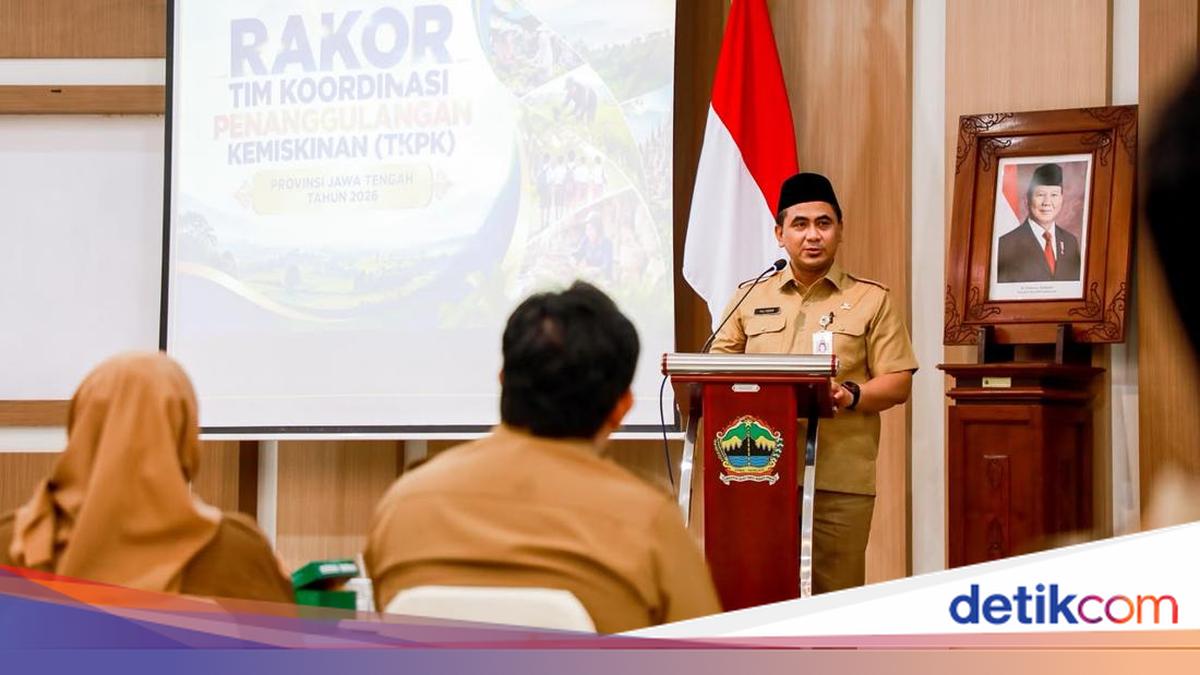
This was stated by the Vice Governor of Central Java, Taj Yasin Maemoen, during the Coordination Meeting of the Poverty Reduction Coordination Team (TKPK) for Central Java Province 2026 at the Regional Development Planning Agency (Bappeda) Office, Tuesday (29/09).
According to Taj Yasin, although poverty rates in Central Java have declined, this achievement must be continuously strengthened through data refinement and more targeted interventions.
“In our sub-districts, which ones are the poorest? We will further narrow it down to which villages within those sub-districts. There, we will assign our Regional Government Agencies (OPD),” he said in a written statement on Tuesday (29/09/2026).
Taj Yasin believes that this assistance must be carried out cross-sectorally. The assigned OPD does not have to solve poverty issues alone, but rather act as a coordinator to connect village needs with the programmes of other agencies.
“They act as coordinators, ensuring that all programmes can run effectively within those villages,” he added.
Taj Yasin emphasised the importance of regular updates to poverty data so that changes in the community’s condition can be recorded immediately. The data verification process can begin at the village, neighbourhood (RT), and community unit (RW) levels, as village officials and community leaders are deemed to have the best knowledge of the residents’ conditions in their respective areas.
Taj Yasin noted that verification and data improvement are key to ensuring that government assistance truly reaches the people in need.
In addition to data refinement, Taj Yasin requested that poverty reduction programmes do not stop at consumptive aid. Assistance should be directed towards empowerment, particularly for the productive-age population, to enable them to increase their income and escape poverty sustainably.
Taj Yasin cited examples of productive aid, such as goats, chickens, and poultry, which must be accompanied by mentoring and sustainability monitoring. The government must ensure that such assistance does not simply end, but develops and provides economic benefits to the recipients.
The Head of the Central Java Provincial Social Affairs Office, Imam Maskur, stated that poverty reduction efforts are ongoing alongside Central Java’s economic growth, which reached 5.31%.
According to Imam, economic growth must be accompanied by job creation so that the community can earn an income and improve their welfare.
As of March 2026, Imam reported that the percentage of the poor population in Central Java was recorded at 9.21%, or approximately 3.29 million people.
Imam noted that poverty remains relatively high in rural areas, a condition influenced by the fact that Central Java is largely agrarian, with relatively limited alternative sources of income.
However, extreme poverty is showing positive progress. Imam mentioned that the extreme poverty rate in Central Java dropped from approximately 0.62% in 2024 to 0.3% in 2025, representing a decrease of more than 50%.
Imam cited Surakarta and Salatiga as cities that experienced a significant reduction in extreme poverty. He noted that the experience of these two regions could serve as a lesson for other regencies and cities.
“This can serve as a best practice reference for other regencies and cities, especially in reducing extreme poverty rates,” he concluded.