
To Realise Clean Governance, Ahmad Luthfi Reaffirms Integrity
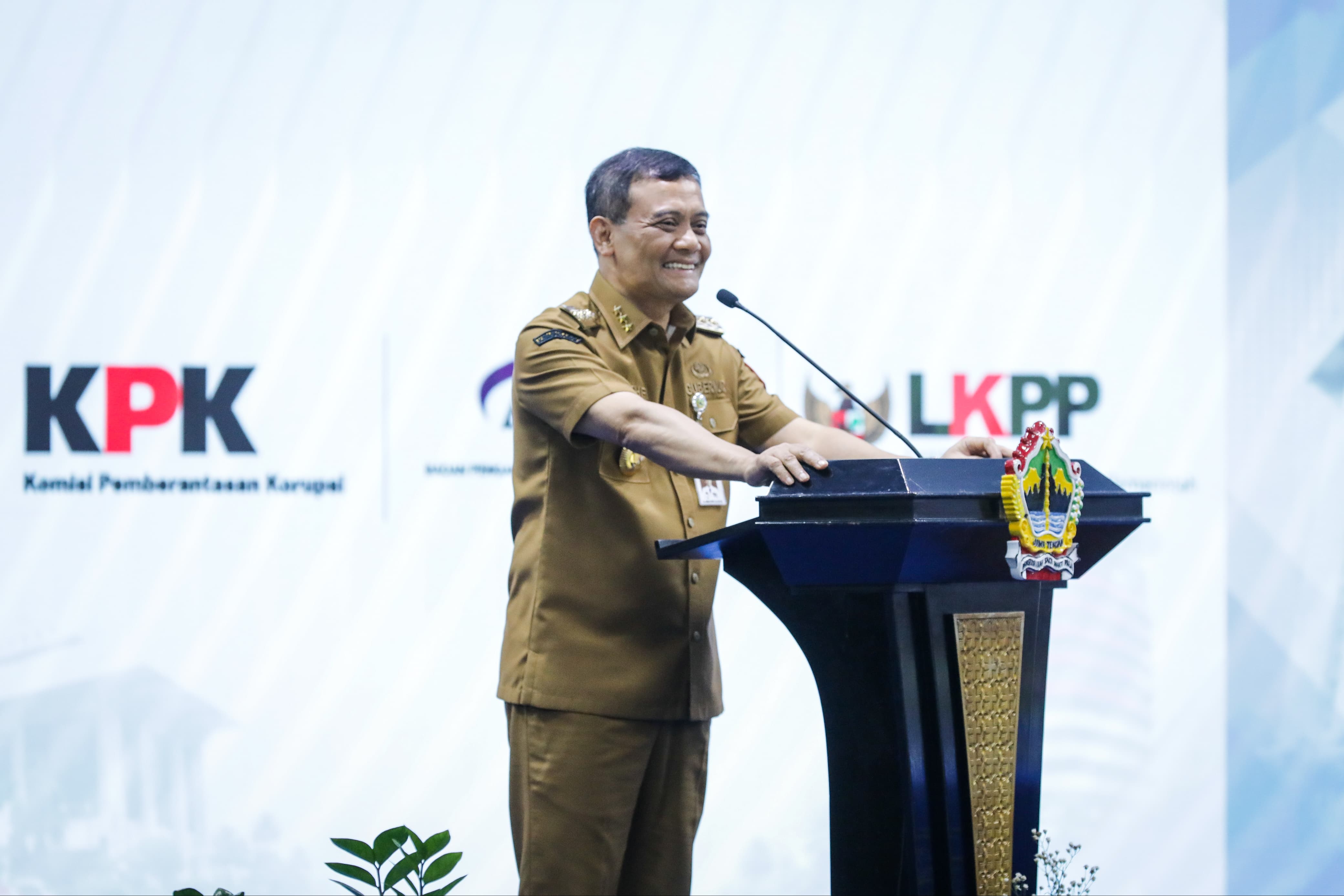
Central Java Governor Ahmad Luthfi has affirmed his commitment to strengthening integrity across all levels of his regional government. The move serves as a foundation for realising clean, effective, and accountable governance.
The commitment was conveyed by Luthfi following the Coordination Meeting on Strengthening Integrity and Preventing Corruption in Regional Government in Semarang on Thursday (20/8). The activity was attended by regional heads and DPRD leaders from Central Java and the Special Region of Yogyakarta.
The coordination meeting was attended by Deputy Minister of Home Affairs Akhmad Wiyagus, KPK leadership member Johanis Tanak, KPK Deputy for Coordination and Supervision Ely Kusumastuti, BPKP Deputy Setya Nugraha, LKPP Deputy Setya Budi Arijanta, and Director General of Regional Autonomy Cheka Virgowansyah.
Also present were Deputy Governor of Yogyakarta KGPAA Paku Alam X, as well as 34 regents/mayors, deputy regional heads, DPRD leaders, and regional secretaries from across Central Java, along with representatives from five regencies/cities in Yogyakarta.
Luthfi appreciated the inter-agency synergy in strengthening corruption prevention efforts. According to him, collaboration with various parties is essential in building individual integrity.
“Integrity is not easy because it requires collective strengthening. The point is, there must be no corruption. That is all,” he said.
He added that the success of building a government with integrity ultimately depends on every person exercising authority. Oversight systems and regulations must be properly adhered to.
Luthfi expressed hope that strengthening integrity would improve the quality of public services and ensure regional development is well targeted.
Therefore, synergy between regional governments and oversight institutions will continue to be strengthened so that every rupiah of the budget provides maximum benefit to the public.
Deputy Minister of Home Affairs Akhmad Wiyagus said the activity was part of the government’s collaboration with the KPK, BPKP, and LKPP to strengthen the integrity of regional heads in managing regional budgets (APBD).
According to him, integrity must be applied concretely at every stage of regional financial management, from planning and budgeting to the implementation of goods and services procurement.
“Our hope returns to each regional head, whether they can truly maintain integrity and operationalise that integrity in regional financial management,” said Wiyagus.
With good governance, he continued, the government can ensure that all budgets are used according to their intended purpose and provide benefits to the public.
“Thus, we can truly believe that not a single rupiah of regional finances is used inappropriately,” he said.
The strengthening of integrity is directed at eight priority areas: planning and budgeting, procurement of goods and services, public services and licensing, APIP oversight, civil service management, management of regional assets, optimisation of regional taxes and levies, and handling of conflicts of interest, gratuities, and complaints.
Attention is also given to the management of regional-owned enterprises (BUMD) and regional public service agencies (BLUD), grants and social assistance, DPRD policy recommendations, financial assistance, regional strategic projects, village funds, natural resources, and national priority programmes in the regions.
KPK leadership member Johanis Tanak also emphasised that integrity is the main key to preventing various forms of misconduct. Integrity must be reflected in the thoughts, words, and actions of every state official.
“The key word is integrity. What is in our minds is expected to be good thoughts, in accordance with religious teachings and applicable laws and regulations,” said Johanis.
He expressed hope that regional government budgets, whether managed by the executive or legislative branches, are truly utilised for development and improving public welfare.
In his remarks, BPKP Head Setya Nugraha encouraged strengthening the capacity of the Government Internal Supervisory Apparatus (APIP). Inspectorates must be able to serve as the eyes and ears of regional heads while providing early warnings against risks in programme implementation.
“APIP must truly be able to provide early warnings and prevent corruption,” said the BPKP Head in his remarks.
He stressed that oversight is not enough if it merely pursues scores and document completeness; it must reflect the actual state of governance. Planning must also be oriented towards outcomes felt by the public, not merely the number of meetings, documents, or the size of budget absorption.